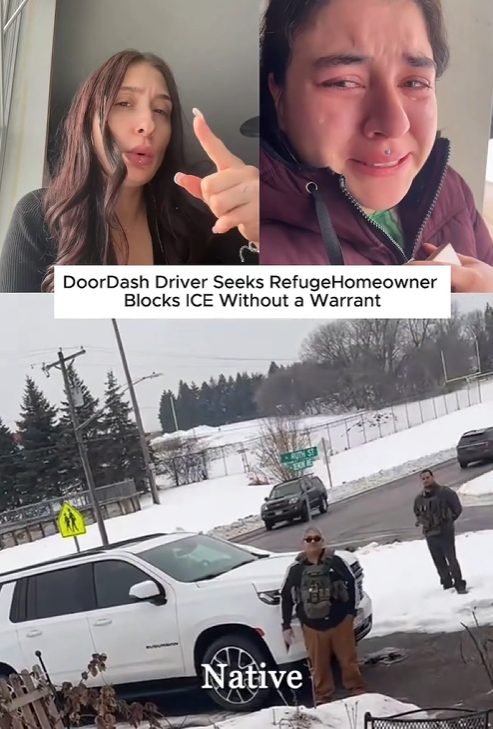
A tense and emotional moment captured on camera is rapidly spreading online, igniting a national debate over rights, responsibility, and fear in today’s divided climate. The viral images show a DoorDash driver in visible distress, a homeowner standing firm, and law enforcement officers waiting outside in the cold—each person convinced they are doing the right thing.
According to the video circulating on social media, the incident unfolded when a DoorDash driver reportedly sought refuge inside a private home after an encounter involving ICE agents. The driver, clearly shaken and in tears, pleads for help, explaining fears of detention and separation from loved ones. Her emotional state has resonated deeply with many viewers, some of whom say her reaction reflects the anxiety countless immigrants live with daily.
On the other side of the standoff is the homeowner, who refuses to allow entry without official documentation. The homeowner is heard insisting that no one—law enforcement included—can enter the property without proper papers. Supporters argue this stance is about constitutional rights and personal safety, not cruelty. “Your home is your last line of protection,” some commenters wrote, emphasizing the importance of warrants and legal process.
Outside, ICE officers and local authorities remain present, standing in the snow as the situation unfolds. The visible police presence adds to the tension, turning what might have been a private dispute into a public spectacle. The contrast between the crying driver, the resolute homeowner, and the silent officers has fueled intense reactions online.
Social media users are sharply divided. One side calls the homeowner a hero for standing up for civil liberties and refusing to cooperate without due process. Others accuse the homeowner of lacking compassion during a moment of human desperation. Meanwhile, many express sympathy for the DoorDash driver, saying no one should feel this level of fear while simply trying to earn a living.
Legal experts chiming in online note that homeowners generally do have the right to deny entry to law enforcement unless a valid warrant is presented. However, they also point out that offering refuge to someone in legal trouble can be complicated and may carry risks depending on the circumstances. This gray area has only added fuel to the online debate.
Beyond the legal arguments, the video has become a symbol of a larger issue. It highlights the emotional toll of immigration enforcement, the power of individual rights, and the moral dilemmas ordinary people face when those worlds collide. The raw expressions captured in the images—fear, determination, and authority—tell a story that statistics and policy debates often fail to convey.