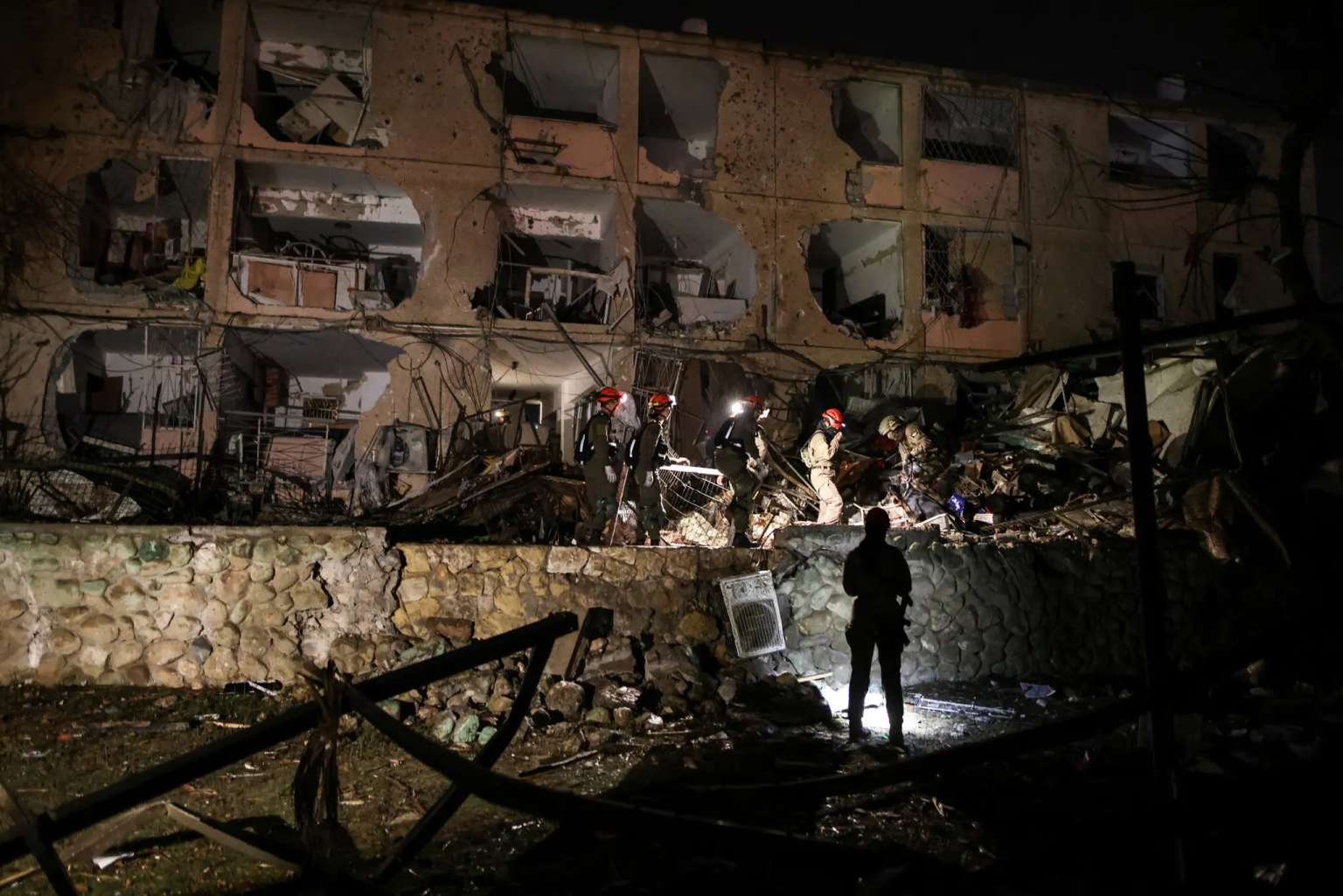
A missile strike in southern Israel on Saturday has intensified already high tensions in the region, after an Iranian projectile penetrated Israeli air defenses and struck a residential area near the city of Dimona. According to Israel’s emergency services, more than 40 people were injured in the attack, with several reported in serious condition.
The missile landed in a neighborhood just miles from the highly sensitive Shimon Peres Negev Nuclear Research Center, a facility long believed by international analysts to play a role in Israel’s undeclared nuclear program. Despite the proximity, officials from the International Atomic Energy Agency (IAEA) confirmed that there is currently no indication that the nuclear site sustained any damage.
Iranian state-affiliated media, including Tasnim News Agency, claimed responsibility for the strike, describing it as retaliation for alleged airstrikes on Iranian nuclear facilities earlier in the week. According to those reports, Iran accused Israel of targeting the Natanz nuclear facility and the Bushehr Nuclear Power Plant—claims that Israeli officials have firmly denied. The United States military has also declined to comment on the allegations.
The attack marks a rare instance in which a missile has bypassed Israel’s advanced defense systems, including the Iron Dome and other interception technologies. The Israeli military acknowledged that it attempted to intercept the missile but failed, and has since launched an internal investigation into the breakdown.
Emergency response teams from Magen David Adom quickly arrived at the scene, treating dozens of injured civilians. Among the most seriously affected was a 10-year-old boy who suffered shrapnel wounds and remains in critical condition. A woman was also reported to have sustained moderate injuries from shattered glass, while many others were treated for minor wounds and shock.
A second missile reportedly struck the nearby city of Arad, causing additional destruction and leaving at least seven individuals seriously injured. Search and rescue teams continued operations into the night, combing through damaged buildings to ensure no victims were trapped beneath debris.
Israeli Prime Minister Benjamin Netanyahu addressed the nation shortly after the incident, calling it “a very difficult evening in the battle for our future.” His statement underscores growing concerns that the situation could escalate into a broader regional conflict.
International reactions have been swift. The IAEA urged all parties to exercise “maximum restraint,” particularly given the risks associated with military activity near nuclear facilities. Experts warn that even a minor miscalculation in such sensitive areas could have catastrophic consequences far beyond the immediate conflict zone.
Security analysts note that Dimona’s proximity to Israel’s nuclear infrastructure makes it an especially symbolic and strategic target. While the absence of damage to the research center has provided some relief, the successful penetration of Israeli defenses raises serious questions about vulnerabilities in the country’s security systems.
As tensions continue to rise, global leaders are closely monitoring the situation. Diplomatic channels remain active, but the risk of further escalation appears high. For civilians on both sides, the latest developments serve as a stark reminder of how quickly conflict can intensify—and how devastating the consequences can be.