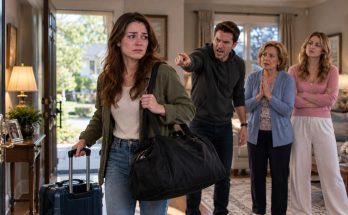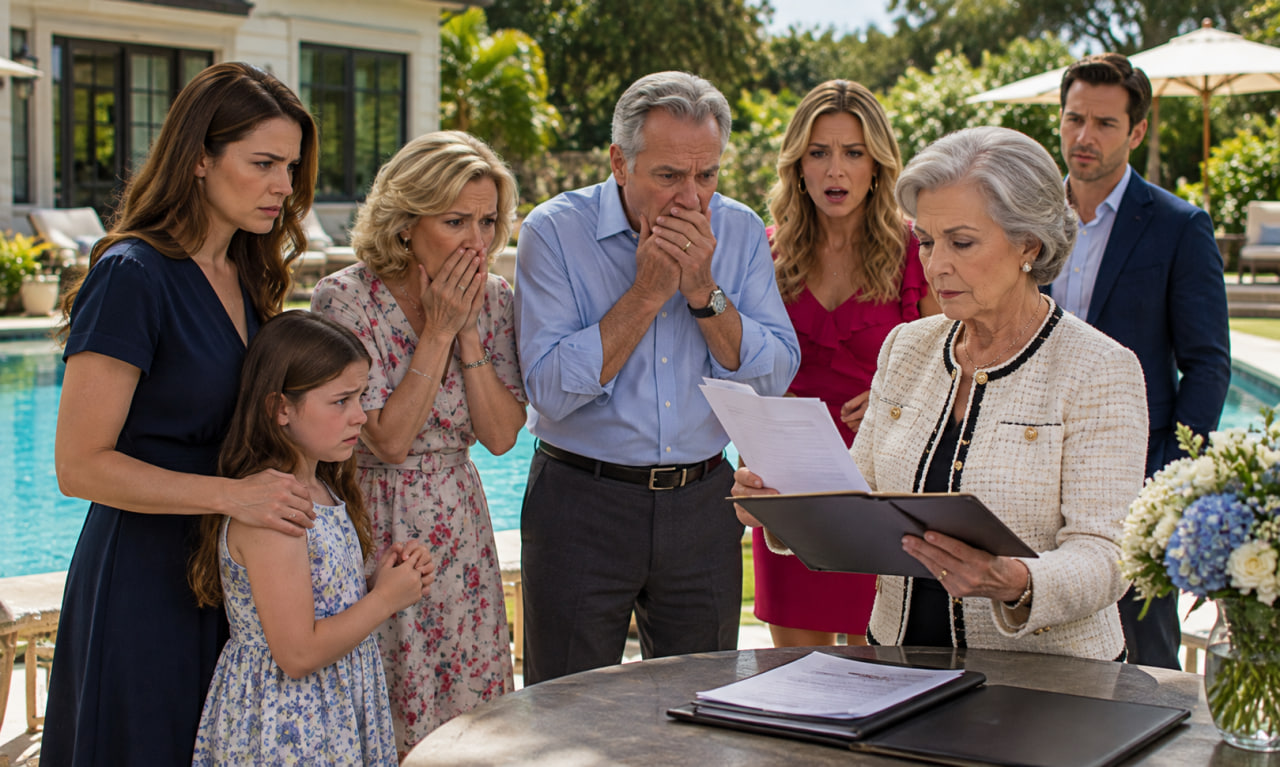
She looked at Grandma.
“Did you?”
“Yes.”
Rachel covered her face.
“Why didn’t you tell me?”
Grandma’s voice softened.
“Because I wanted your father to tell you himself.”
Rachel laughed bitterly through her tears.
“He never would have.”
Grandma didn’t disagree.
Then Dad looked at me.
“What do you want?”
I took a breath.
“I want the money returned.”
He laughed.
“I don’t have four million dollars.”
“You have assets.”
“They aren’t liquid.”
“Then sell them.”
Mom looked horrified.
“You’re going to take our house?”
I shook my head.
“No.”
I pointed toward the papers.
“I’m asking you to return what doesn’t belong to you.”
Dad stared at me.
“And the cello?”
“The cello is already back.”
He looked down.
“I know.”
“You owe Lucy an apology.”
“I apologized.”
“You apologized to me.”
He looked toward the floor.
“You never apologized to her.”
Dad’s face tightened.
“She wouldn’t understand.”
“She understands more than you think.”
I stood.
“She’s eleven, Dad. She’s not stupid.”
The room became quiet.
Grandma slowly opened the final folder.
“This is the last matter.”
Dad looked at it.
“What now?”
Grandma removed a document.
“This is the resignation of Harold Carter as managing trustee of the family business.”
Dad’s face went blank.
“What?”
“You heard me.”
“You can’t do this.”
“I can.”
“You need me.”
“No.”
Grandma shook her head.
“The family needs someone it can trust.”
Dad stared at her.
“I’ve run that business for twenty years.”
“And now you won’t.”
He looked at me.
“You’re replacing me with Emily?”
I hadn’t expected that.
I turned toward Grandma.
“Me?”
She nodded.
“You.”
I laughed nervously.
“I don’t know how to run a business worth millions of dollars.”
“You don’t need to know everything.”
Andrew smiled.
“You’ll have professional management.”
Grandma continued.
“What you need is something your father lost.”
“What?”
“Restraint.”
She closed the folder.
“You know the difference between what belongs to you and what belongs to someone else.”
I looked at my parents.
Dad sat down slowly.
Rachel was still crying.
Mom stared at Grandma with disbelief.
Then Dad said something that surprised all of us.
“I’ll do it.”
Grandma frowned.
“Do what?”
“I’ll return the money.”
Rachel looked up.
Dad swallowed.
“I’ll sell the vacation property.”
Mom turned toward him.
“No.”
“We’ll sell it.”
“You can’t.”
“We can.”
He looked at me.
“I don’t want Lucy growing up thinking her grandfather is a thief.”
I didn’t know what to say.
Dad’s eyes filled with tears.
“I made a terrible mistake.”
He looked at Grandma.
“I made more than one.”
Grandma’s expression softened slightly.
“That is the first honest thing you’ve said today.”
But then Rachel stood.
“I have something to say.”
Everyone looked at her.
She wiped her cheeks.
“I’ll return it too.”
Dad stared at her.
“Rachel…”
“No.”
She shook her head.
“I used the money.”
“You didn’t know.”
“I know now.”
She looked at me.
“I treated Lucy like she didn’t matter.”
My throat tightened.
“I shouldn’t have.”
She looked toward Grandma.
“And I was jealous.”
Nobody moved.
Rachel laughed quietly.
“I’ve been jealous of Emily my entire life.”
Mom looked shocked.
Rachel continued.
“Because she always seemed stronger.”
She looked at me.
“Even when she had less.”
I didn’t know how to respond.
Rachel took a breath.
“I thought getting more things would make me feel like I was winning.”
She glanced toward the pool.
“It didn’t.”
Then she looked at Lucy, who had been waiting outside the office.
I hadn’t realized she was there.
Rachel walked toward her.
She knelt.
“Lucy.”
Lucy looked at her cautiously.
“I’m sorry.”
Lucy didn’t speak.
Rachel continued.
“I was wrong about your cello.”
Lucy looked at me.
I nodded.
Rachel held out her hand.
“I hope someday you’ll forgive me.”
Lucy didn’t take her hand immediately.
Then, slowly, she did.
Rachel cried again.
But this time, she didn’t hide it.
Six months passed.
The pool was never finished.
The construction company removed the unfinished structure, and the backyard was restored.
The vacation property was sold.
Several investments were liquidated.
The money taken from the trust was returned.
Not all at once.
Not easily.
But it was returned.
Dad stepped away from managing the family business.
He began attending counseling.
Mom became quieter.
Rachel sold some of the things she had bought with the money and rebuilt her business honestly.
It wasn’t perfect.
Families rarely become perfect overnight.
But something changed.
The lies stopped.
And Lucy got her cello back.
She also got something else.
Confidence.
Her teacher entered her into a regional youth music competition.
Lucy almost refused.
“I haven’t played well since the cello came back.”
I told her something Grandma had once told me.
“Sometimes losing something teaches you how much it means.”
Lucy practiced.
Every morning.
Every evening.
She played until her fingertips hurt.
Then one Saturday morning, Grandma came to watch her.
Lucy played the same melody she had played the night the cello returned.
But this time, she played it differently.
Stronger.
More confidently.
When she finished, Grandma stood and applauded.
Everyone else followed.
Lucy smiled.
Then Grandma walked toward her.
“I have one more gift.”
Lucy laughed.
“Another cello?”
Grandma smiled.
“No.”
She handed Lucy the brass key.
Lucy looked at it.
“What does it open?”
Grandma looked at me.
“Her future.”
The key belonged to an old music studio Grandma had owned for decades.
It had been closed for years.
Inside were shelves of sheet music, antique instruments, music books, and a beautiful room with tall windows overlooking the garden.
Grandma gave the studio to Lucy through the trust.
Not because Lucy was entitled to millions.
Not because she was special because of her last name.
But because Grandma wanted her to have a place where nobody could tell her that her dreams weren’t valuable.
Years later, Lucy would become a professional cellist.
But that wasn’t the most important thing.
The most important thing was that she never became obsessed with money.
She understood its value.
But she also understood its limits.
And whenever someone asked her about the antique cello, she never told them about the $87,000.
She told them about her great-grandmother.
She told them about the hands that had played it before hers.
And she told them that the greatest inheritance wasn’t money.
It was knowing that someone believed you were worth protecting.
As for Grandma Margaret, she lived long enough to attend Lucy’s first major concert.
She sat in the front row.
When Lucy walked onto the stage carrying the old cello, Grandma smiled.
I sat beside her.
“You’re proud,” I whispered.
Grandma squeezed my hand.
“More than you know.”
The lights dimmed.
Lucy raised her bow.
And the cello spoke.
That warm, beautiful sound filled the theater.
Grandma closed her eyes.
A tear slipped down her cheek.
I leaned closer.
“You okay?”
She smiled.
“I just remembered the day I bought that cello.”
I laughed.
“You never told me.”
“I was waiting for the right ending.”
“What ending?”
She opened her eyes.
“The one where it finally found the right person.”
On stage, Lucy began the final movement.
The music grew louder.
Stronger.
Braver.
And I realized something.
My parents had thought they were selling an antique cello.
They thought they were turning an old object into a swimming pool.
They thought eighty-seven thousand dollars was the story.
It wasn’t.
The cello had been a warning.
The pool had been the evidence.
The inheritance had been the protection.
But Lucy had been the reason.
And when the final note faded through the theater, Grandma stood with everyone else.
She applauded harder than anyone.
Lucy looked into the crowd.
Her eyes found Grandma.
Then me.
And she smiled.
For the first time, I understood what Grandma had meant all those years ago.
Some things are worth more than money.
Some things are worth fighting for.
And sometimes the smallest thing your family tries to take from you is the very thing that reveals everything they were hiding.
The cello had been sold for $87,000.
But it had brought the truth home.
And that was worth far more.
PART 5
The applause continued long after Lucy lowered her bow.
She stood beneath the stage lights, one hand resting gently against the cello that had once belonged to my grandmother.
For a moment, she didn’t move.
Then she smiled.
Not the nervous smile of an eleven-year-old girl who had once stood beside an empty cello stand wondering whether she had done something wrong.
This was different.
This was the smile of a young woman who finally understood that her voice mattered.
I looked at Grandma.
She was crying.
But she was smiling too.
“Go to her,” I whispered.
Grandma shook her head.
“No.”
I looked at her.
“Why not?”
“Because tonight isn’t about me.”
She nodded toward the stage.
“It’s about her.”
The audience began standing.
One person.
Then another.
Then the entire theater.
A standing ovation.
Lucy looked overwhelmed.
She glanced toward the wings, searching for me.
I stood.
I put my hand over my heart.
She saw me.
Then her eyes found Grandma.
Grandma slowly raised one hand.
Lucy smiled.
And for a second, the entire world seemed to disappear.
There was only a great-grandmother.
A granddaughter.
And an old cello between them.
A few minutes later, Lucy came backstage.
She was still holding the cello.
Grandma opened her arms.
Lucy ran into them.
“You were amazing,” Grandma whispered.
Lucy laughed.
“I almost dropped my bow.”
“But you didn’t.”
“I almost forgot the second movement.”
“But you didn’t.”
“I was so scared.”
Grandma pulled back and looked at her.
“Being brave doesn’t mean you’re not scared.”
She touched Lucy’s cheek.
“It means you play anyway.”
Lucy hugged her again.
I watched them and thought about how different that little girl was from the child who had stood beside an empty cello stand years ago.
Then Grandma said something that caught me completely off guard.
“Emily.”
“Yes?”
“I have another surprise.”
I laughed.
“Grandma, I’m beginning to think your surprises are dangerous.”
She smiled.
“Only for people who steal from children.”
I laughed.
Lucy looked confused.
“What surprise?”
Grandma looked at her.
“Come with me.”
We followed her through the theater.
Andrew was waiting outside with a small wooden case.
He handed it to Grandma.
She opened it.
Inside was an old handwritten sheet of music.
Lucy leaned closer.
“What is that?”
“An original composition.”
“Whose?”
Grandma smiled.
“Mine.”
Lucy’s eyes widened.
“You wrote music?”
“A very long time ago.”
“You never told me.”
“I wasn’t very good.”
Lucy laughed.
“Great-Grandma.”
“What?”
“You’re impossible.”
Grandma smiled.
“I wrote it for my mother when I was seventeen.”
She carefully lifted the pages.
“I never performed it.”
“Why?”
Grandma looked at her.
“Because I was afraid.”
Lucy stared at her.
“You?”
“Yes.”
Grandma laughed softly.
“Everyone thinks courage belongs to people who aren’t afraid.”
She handed the pages to Lucy.
“But sometimes courage belongs to people who are terrified and step onto the stage anyway.”
Lucy looked down at the music.
“Can I play it?”
Grandma nodded.
“Someday.”
Lucy hugged the pages to her chest.
“I will.”
That night, after we returned home, Lucy placed the antique cello carefully in its case.
Then she sat beside me.
“Mom?”
“Yes?”
“Can I ask you something?”
“Anything.”
“Do you hate Grandpa?”
The question caught me off guard.
I sat quietly for a moment.
“No.”
“Even after everything?”
“Even after everything.”
“Why?”
I looked at her.
“Because hating someone would mean allowing what they did to control me forever.”
Lucy thought about that.
“Then what do you feel?”
I smiled.
“I feel sorry for him.”
“Why?”
“Because he had a family that loved him, and he almost lost all of them because he thought money was more important.”
Lucy was quiet.
Then she asked:
“Do you forgive him?”
I looked toward the window.
“I don’t know yet.”
And that was the truth.
Forgiveness isn’t always something you give because someone apologizes.
Sometimes it comes years later.
Sometimes it never comes.
Sometimes the healthiest thing you can do is stop being angry without pretending the hurt never happened.
That was what I was learning.
The following morning, I received a message from my father.
Just four words.
Can we talk?
I stared at the screen.
I almost deleted it.
Instead, I replied.
Tomorrow.
He came to my house the next afternoon.
Alone.
No Mom.
No Rachel.
No excuses.
He stood on the porch holding a small box.
I let him inside.
He sat at the kitchen table.
The same kitchen table where, years earlier, he had casually told me that Lucy’s cello was “just an instrument.”
He placed the box in front of me.
“What is it?”
“Open it.”
Inside was a photograph.
It was old.
Very old.
It showed my grandfather sitting in a chair with the cello across his knees.
He was smiling.
Beside him stood Grandma Margaret as a young woman.
And on the floor was my father.
Maybe six years old.
He was holding the cello bow.
I stared at the picture.
“I’ve never seen this.”
“I found it in the attic.”
Dad’s voice cracked.
“I found it after the concert.”
I looked at him.
“Why bring it to me?”
“Because I finally understood something.”
He swallowed.
“That cello wasn’t an antique to you.”
“No.”
“It wasn’t an antique to Lucy.”
“No.”
He looked down.
“It was family.”
I nodded.
“Yes.”
Dad rubbed his eyes.
“I spent my entire life thinking being the one with money meant I was the one with power.”
He laughed sadly.
“I was wrong.”
I didn’t say anything.
He continued.
“I thought if I gave Rachel enough, she would succeed.”
“She might have.”
“I thought if I controlled everything, nobody could take anything from me.”
He looked at me.
“But I was the one taking things.”
His eyes filled with tears.
“I took from you.”
He paused.
“I took from Lucy.”
Then he whispered:
“And I took from myself.”
I looked at him for a long time.
“What do you want from me?”
“Nothing.”
He shook his head.
“I just wanted to say I’m sorry.”
I nodded.
“Thank you.”
He looked surprised.
“That doesn’t mean everything is fixed.”
“I know.”
“It doesn’t mean I forget.”
“I know.”
“It doesn’t mean you automatically get your place back in Lucy’s life.”
“I know.”
I took a breath.
“But it means I’m willing to see what you do next.”
Dad nodded.
“I’ll take that.”
He stood.
At the doorway, he stopped.
“Emily?”
“Yes?”
“Your grandmother was right.”
“About what?”
He smiled sadly.
“You don’t have to fight me anymore.”
Then he left.
I watched him walk down the driveway.
For the first time, I didn’t feel victorious.
I felt free.
Months passed.
Rachel continued rebuilding her life.
She sold the house she had purchased with money from the trust and moved into a smaller home.
She and I slowly began talking again.
Not like before.
Something had changed.
But perhaps that was okay.
Some relationships don’t return to what they were.
They become something more honest.
My mother eventually apologized too.
It wasn’t dramatic.
There was no crying.
No speech.
She simply came to my house one morning and said:
“I was wrong.”
I looked at her.
She continued.
“I kept telling myself I was protecting the family.”
She looked down.
“But I was protecting the people who had the most power.”
She took a breath.
“I should have protected Lucy.”
I nodded.
“Yes.”
She cried then.
I didn’t hug her immediately.
But eventually I did.
Not because the past disappeared.
Because I didn’t want to carry it anymore.
And Grandma?
Grandma kept going.
She turned ninety-three.
Then ninety-four.
Then ninety-five.
She complained about getting older.
She complained about doctors.
She complained about the food at the assisted living center.
And she complained most of all when people treated her like she was fragile.
“I survived raising your father,” she would say.
“I can survive pudding.”
Lucy visited her every weekend.
Sometimes she brought her cello.
Sometimes she simply sat beside her.
One afternoon, Lucy brought the old composition Grandma had written decades earlier.
“I’m ready.”
Grandma looked at her.
“For what?”
“To play your song.”
Grandma’s eyes filled with tears.
“You’re sure?”
“Yes.”
“When?”
“Next month.”
Grandma smiled.
“Then I suppose I had better practice listening.”
The performance was small.
No giant theater.
No newspaper reporters.
No cameras.
Just family and a few friends.
Lucy stood at the front of Grandma’s music studio.
She placed the cello between her knees.
Then she looked at Grandma.
“Ready?”
Grandma nodded.
Lucy lifted her bow.
The first note trembled.
Then the second.
Then the music found its shape.
It was beautiful.
Not perfect.
Beautiful.
Grandma closed her eyes.
I sat beside her.
Halfway through the piece, I noticed her breathing had changed.
“Grandma?”
She opened her eyes.
“I’m fine.”
But I knew.
The song ended.
Lucy lowered her bow.
For several seconds, nobody moved.
Then Grandma stood.
Slowly.
Everyone applauded.
She walked toward Lucy.
Lucy put the cello down and hugged her.
Grandma whispered something into her ear.
“What did she say?” I asked later.
Lucy smiled.
“She said I played it better than she ever could.”
I laughed.
“That sounds like Grandma.”
Lucy nodded.
Then she looked at me.
“She also said something else.”
“What?”
“She said the cello finally finished its journey.”
I looked at Grandma.
She was sitting in her chair, smiling.
I didn’t understand what Lucy meant.
Not until later.
That night, Grandma went to sleep peacefully.
She never woke up.
She was ninety-five years old.
She died surrounded by the people she had fought so hard to protect.
When I received the call, I sat on the floor.
I couldn’t breathe.
Lucy came running.
“Mom?”
I looked at her.
“She’s gone.”
Lucy understood immediately.
She wrapped her arms around me.
And for the first time in years, I cried without trying to stop myself.
Not because I was angry.
Because I was grateful.
The funeral was small.
My father stood beside me.
Rachel stood on my other side.
There were no arguments.
No accusations.
No discussions about money.
Just family.
Afterward, Andrew handed me a final envelope.
I recognized Grandma’s handwriting.
For Emily.
My hands shook as I opened it.
Inside was one page.
I read it silently.
Then I read it again.
And finally, I understood the final secret.
Grandma had known she was dying.
She had written:
My dearest Emily,
If you’re reading this, then I have finally run out of time.
You may think I gave Lucy the cello because it was valuable.
I didn’t.
I gave it to her because I wanted her to understand something your generation sometimes forgets.
You cannot measure love by price.
The cello was worth eighty-seven thousand dollars.
But the lesson it carried was priceless.
When your parents sold it, I knew exactly what they had done.
I could have simply demanded the cello back.
But I needed you to see the truth.
You spent years believing you were the least important person in your family.
You weren’t.
You were the one who kept giving.
You were the one who sacrificed.
You were the one who protected everyone else.
And finally, you learned to protect yourself.
That is your real inheritance.
Not the money.
Not the properties.
Not the trust.
The ability to know your own worth.
Give Lucy everything I couldn’t give you.
Give her freedom.
Give her confidence.
Give her the courage to walk away from anyone who tells her she isn’t valuable.
And if she ever asks what I wanted her to remember about me, tell her this:
I wanted her to play.
Not because the world was listening.
But because her voice deserved to exist.
Love,
Grandma.
I couldn’t read anymore.
I folded the letter.
That evening, I went into Lucy’s room.
She was sitting beside the cello.
“Mom?”
I sat beside her.
“Great-Grandma left you something.”
“What?”
I handed her the letter.
Lucy read it.
By the time she reached the end, she was crying.
She pressed the paper against her chest.
“I miss her.”
“So do I.”
“Mom?”
“Yes?”
“Do you think she can hear me?”
I smiled through my tears.
“I think so.”
Lucy looked at the cello.
Then she picked up the bow.
“Then I want to play for her.”
She opened the case.
The old cello caught the light.
For a moment, I remembered that terrible morning years earlier.
The empty stand.
Lucy asking if she had done something wrong.
The pool.
The $87,000.
The lies.
The documents.
The courtroom threats.
The family falling apart.
And then rebuilding itself differently.
I realized something.
If my parents had never sold that cello, perhaps none of us would have discovered the truth.
Perhaps Grandma would have died believing her children were still the people she remembered.
Perhaps I would have continued believing I was powerless.
Perhaps Lucy would have grown up thinking love meant tolerating whatever people did to you.
But the cello had forced the truth into the light.
Lucy lifted the bow.
“Mom?”
“Yes?”
“Will you stay?”
I smiled.
“Always.”
She began to play.
The first note filled the room.
Warm.
Deep.
Alive.
I closed my eyes.
And somewhere in that music, I could almost hear Grandma laughing.
Not because everything had been perfect.
It hadn’t.
Not because nobody had been hurt.
They had.
But because the cello was still being played.
The family had changed.
The truth had been told.
And the little girl who once believed she had done something wrong had finally learned that she was never the problem.
Years later, when Lucy performed on the biggest stages in the country, reporters sometimes asked about the antique cello.
They wanted to know its value.
They wanted to know its history.
They wanted to know how much it was worth.
Lucy always gave the same answer.
“I don’t know.”
They would laugh.
She never did.
Then she would say:
“It was worth enough to teach my family what really matters.”
And whenever someone asked her what that meant, she would look at the cello.
Then she would smile.
“Some things aren’t supposed to be sold.”
And she would begin to play.
Because in the end, my parents thought they had sold a cello for $87,000.
They hadn’t.
They had sold the illusion that they could control everything.
They had sold the lie that Lucy didn’t matter.
They had sold the secret that our family had been hiding for years.
And what came back wasn’t just an antique instrument.
It was the truth.
It was dignity.
It was forgiveness without forgetting.
It was a family forced to become honest.
And most importantly, it was a little girl’s voice.
A voice that nobody could ever take away again.
The cello had once stood silently in the corner of a music room.
Then someone tried to turn it into a swimming pool.
Instead, it became the thing that changed all of our lives.
And every time Lucy played it, I remembered Grandma’s final lesson:
The greatest inheritance isn’t what someone leaves in your hands.
It’s what they leave in your heart.