PART7-My Daughter Said Her Friend Smelled Like “Dead Food”—Then We Discovered What Was Happening at Home
PART 7
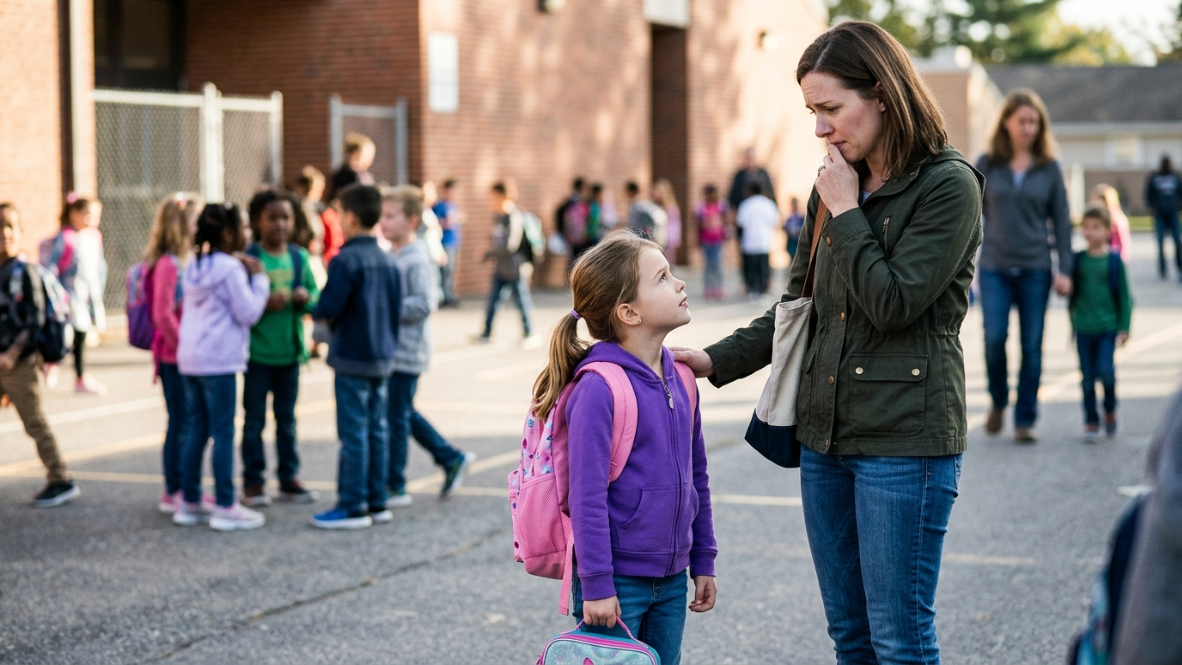
That night, after the fair, Chloe and I sat on our porch.
She leaned against me.
“Mom?”
“Yes?”
“Were you mad at me that day?”
I looked at her.
“At first.”
“Because I said Sophie smelled?”
“Yes.”
She looked down.
“I thought I did something bad.”
I wrapped my arm around her.
“You didn’t.”
“But I said something mean.”
“You said something that sounded mean.”
She looked at me.
“What’s the difference?”
“Sometimes the words sound wrong even when the heart behind them is trying to help.”
She thought about that.
“Like when I said she smelled like dead food.”
I laughed softly.
“Yes.”
She smiled.
“Do you think I should’ve said something different?”
“Maybe.”
“What?”
I looked at her.
“Maybe next time, tell me exactly what you notice.”
She nodded.
“Okay.”
Then she leaned against me again.
“Mom?”
“Yes?”
“Will you listen next time?”
The question hurt more than anything else.
Because I remembered how she had tried to tell me earlier that week.
Sophie doesn’t want to sit with me anymore.
And I had called her dramatic.
I kissed the top of her head.
“Yes.”
“Even if you’re busy?”
“Especially if I’m busy.”
She smiled.
“Promise?”
“Promise.”
We sat quietly.
The neighborhood was peaceful.
Cars passed in the distance.
A dog barked somewhere down the street.
The world looked ordinary.
But I knew better now.
Ordinary moments could hide extraordinary warnings.
A child refusing to go home.
A bruise beneath a sleeve.
A strange smell.
A frightened look.
A sentence that sounded rude.
A backpack held too tightly.
None of them should automatically be treated as proof of something terrible.
But none of them should automatically be dismissed either.
Sometimes a child is simply being a child.
And sometimes a child is trying desperately to tell you something they don’t yet have the words to explain.
That day in the schoolyard, I thought my daughter had embarrassed me.
I thought she needed to learn manners.
Instead, she taught me something far more important.
She taught me to listen before judging.
She taught me that children notice things adults overlook.
And she taught me that sometimes the strangest sentence can carry the most important message.
Years later, people would still ask me how we discovered what happened to Sophie.
They expected some dramatic detective story.
They expected hidden cameras.
Secret documents.
A brilliant investigation.
The truth was much simpler.
An eight-year-old girl noticed something was wrong.
Another eight-year-old girl refused to stay quiet.
And one mother finally stopped being embarrassed long enough to listen.
That’s how Sophie was found.
That’s how Rebecca was rescued.
And that’s how two little girls changed all of us.
I still think about that afternoon sometimes.
The spring banners.
The lemonade.
The laughter.
The woman in the sunglasses.
The little plastic bag.
And my daughter’s small hand tightening around mine.
If I could go back, I wouldn’t erase that embarrassing moment.
I would thank her for it.
Because what I thought was a rude comment was actually a warning.
What I thought was childish cruelty was courage.
And what I thought was the smell of something dead…
was a little girl’s desperate way of telling us that someone she loved was still alive.


One Comment on “PART7-My Daughter Said Her Friend Smelled Like “Dead Food”—Then We Discovered What Was Happening at Home”