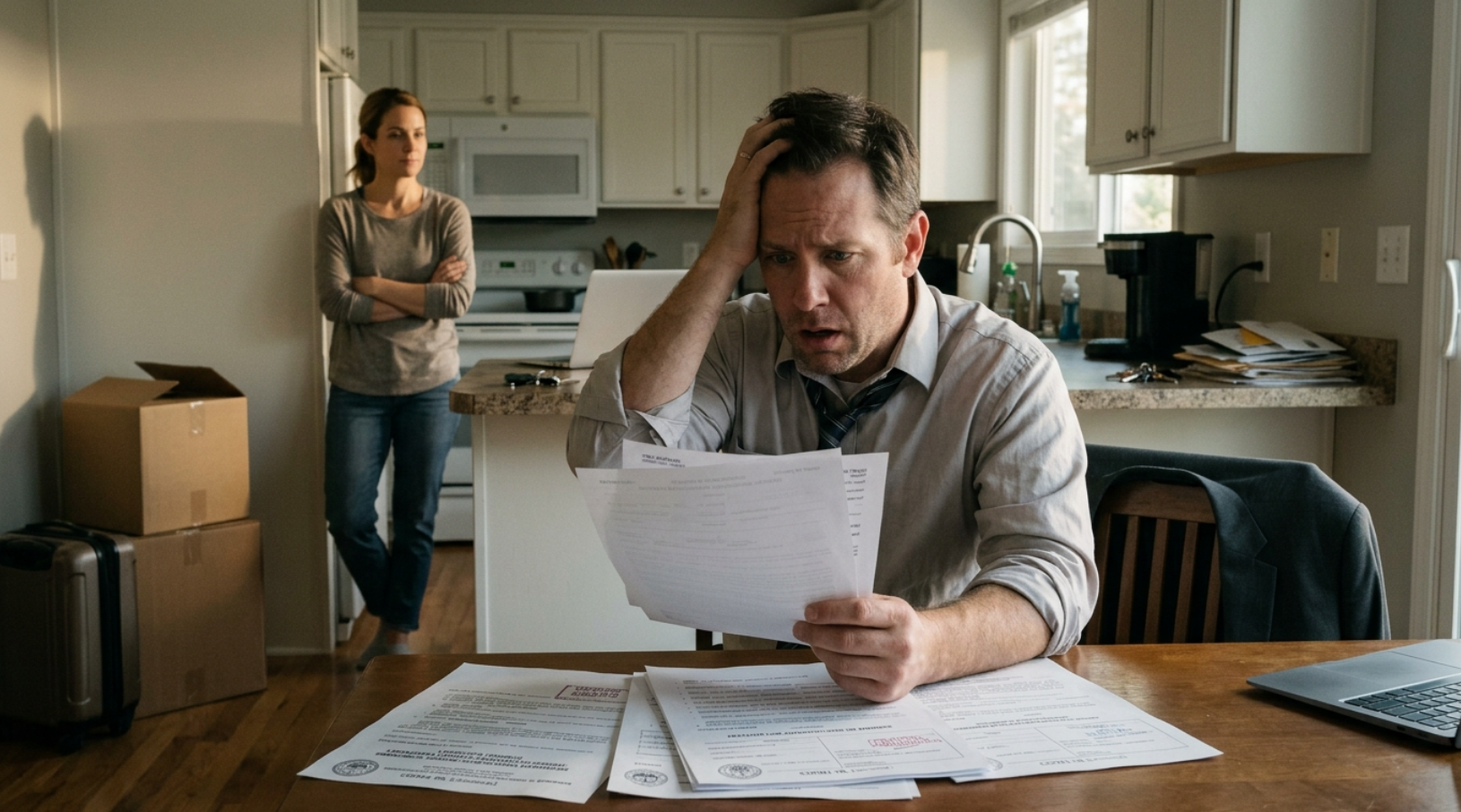
FINAL PART
Because it wasn’t just a washing machine.
It was the first ordinary purchase I had made in years without preparing a defense for it.
That weekend, I repaired the loose gate at the entrance to the property. I hired someone to help with the heavy work instead of doing everything myself.
I had spent years treating my own labor as if it had no value.
Now I was learning that my time mattered, too.
I also replaced the broken porch light, serviced the air conditioner, and arranged for the fence to be inspected.
I wasn’t trying to make the house perfect.
I was trying to make it comfortable.
The eleven acres had always been a source of pride for my father. He had worked hard to leave me something solid in an uncertain world.
For a long time, I had believed that protecting the property meant keeping everything exactly as it was.
Now I understood that protecting it also meant protecting the person who lived there.
Me.
One Saturday morning, I walked down to the pond with a cup of coffee.
The water reflected the pale blue sky.
A heron stood near the far bank, perfectly still.
I thought about my father and the note he had left me.
Never let anyone convince you that you have no place in this world.
I finally understood what he had meant.
A home was not valuable because it was expensive.
It was valuable because it gave you somewhere to stand when everything else became uncertain.
And for the first time in a very long time, I felt that I was standing on solid ground.
Travis and I eventually separated.
The financial settlement had resolved the disputes covered by the agreement, but it could not repair the trust that had been broken.
We had several difficult conversations about our marriage.
He admitted that he had become obsessed with controlling our finances because he feared losing the lifestyle he had worked so hard to build.
He also admitted that he had mistaken my patience for agreement.
I told him that I had spent years making myself smaller because I believed a good wife should avoid conflict.
Neither of us could undo those years.
We could only decide what to do with the truth now that it was finally in front of us.
We did not reconcile.
There was no dramatic revenge, no public humiliation, and no triumphant moment in which Travis lost everything.
Instead, we followed the legal process for ending our marriage, addressed the remaining matters through our attorneys, and began building separate lives.
I learned to manage my own accounts.
I learned to read every financial statement.
I learned to ask questions before signing documents.
And I learned that independence did not mean refusing help from others.
It meant being able to accept help without surrendering my right to make decisions.
Melissa began visiting on Sunday afternoons. We would sit on the porch, drink iced tea, and talk about everything except the divorce.
Sometimes we talked about our childhoods.
Sometimes we discussed recipes.
Sometimes we said nothing at all.
The house slowly became a place of peace rather than a place where I rehearsed arguments in my head.
I planted flowers beside the front steps.
I cleaned out the workshop and donated tools I no longer needed.
I even started taking a pottery class at a community center in Lake Charles.
I had wanted to try pottery for years, but Travis always said it was a waste of time.
The first bowl I made leaned badly to one side.
The instructor called it charming.
I brought it home and placed it on the kitchen counter.
It was imperfect.
It was mine.
And I loved it.
One evening in early spring, Travis called.
His offshore hitch had ended, and he was preparing to move into a rental apartment.
“I wanted to ask you something,” he said.
“All right.”
“Do you ever think we could have saved our marriage?”
I looked out the window toward the pond.
“Maybe, if we had faced the truth sooner.”
He was quiet.
“I really did think I was doing what was best.”
“I believe you thought that. But you didn’t ask me what was best for me.”
“I know.”
For a moment, I remembered the man I had married.
The young man who had held my hand at my father’s funeral.
The man who had promised that we would build a good life together.
I didn’t hate him.
But I no longer confused loving someone with accepting everything they did.
“I hope you find peace, Travis,” I said.
“You, too, June.”
When the call ended, I put the phone down and returned to my pottery.
I didn’t feel victorious.
I felt free.
Nearly a year after the day I crossed the street to the courthouse, I received a letter from my father’s estate attorney.
The envelope contained a copy of an old document and a short note explaining that the office was updating its records.
I sat at the kitchen table and opened it.
Inside was a letter Daddy had written shortly before he died.
I had read it once before, years ago, but I had forgotten how much of himself he had placed on those pages.
My dear June,
You have always tried to keep everyone happy. When you were little, you would give away the last cookie so nobody would feel left out. When you grew older, you became the person who solved everyone’s problems.
That is a beautiful quality, but I hope you never confuse kindness with disappearing.
The world will sometimes ask you to prove your worth by how much you can endure. You do not have to accept that bargain.
If you marry, I hope you find someone who respects your strength instead of depending on your silence.
If life becomes difficult, remember that you can begin again. You do not need to be fearless. You only need to take the next honest step.
The house is yours, but the house is not the most important thing I am leaving you.
What matters is that you know you deserve a life in which you are treated with respect.
All my love,
Daddy.
I pressed the letter against my chest.
For the first time since the divorce began, I cried without trying to stop myself.
I cried for my father.
I cried for the younger version of myself who had believed that keeping a marriage peaceful meant keeping her own needs quiet.
I cried for the years I had spent postponing small joys because someone else had convinced me they were unnecessary.
Then I folded the letter carefully and placed it beside the deed.
Outside, the afternoon sun fell across the oak trees.
The house was quiet.
Not the tense silence that had filled it when Travis and I were barely speaking.
This was a different kind of quiet.
A peaceful one.
I made a cup of tea and walked onto the porch.
A light breeze moved through the branches, and somewhere near the pond, a bird called across the water.
I thought about the day Travis had laughed at me over the phone.
I earn it, June. I decide who touches it.
At the time, I had believed those words were a verdict on my life.
Now I understood that they were only evidence of how he saw the world.
They were not the truth about me.
My worth had never depended on my salary.
My right to be respected had never depended on whose name appeared on a bank account.
And my ability to begin again had never depended on my husband’s permission.
I had lost a marriage.
I had endured uncertainty, legal bills, difficult conversations, and the painful discovery that someone I loved had hidden important parts of our financial life from me.
But I had not lost myself.
That evening, I walked down the gravel driveway and stood beneath the oldest oak tree on the property.
Daddy had planted it when I was seven.
Its branches stretched wide above me, sheltering the road from the fading sun.
I placed one hand against its rough trunk.
“I’m all right, Daddy,” I whispered.
For the first time in a long time, I knew it was true.
Travis had believed that because he earned the money, he controlled the future.
He had believed that because June rarely argued, she would never challenge him.
And he had believed that a woman who spent her days maintaining a house and caring for a family had nothing of her own.
He was wrong.
June did not win by destroying him.
She won by refusing to let his decisions define her life.
She gathered the records. She asked questions. She found an attorney. She protected her rights and insisted that the financial facts be examined fairly.
She didn’t need to prove that she was stronger than Travis.
She needed to remember that she had never been powerless.
The house her father left her remained a place where she could rebuild her life. The money dispute was resolved through documented agreements. And the woman who once apologized for replacing a broken washing machine learned to make decisions without asking permission.
One year later, June sat on her porch with a cup of coffee, watching the sunlight move across her eleven acres.
A new washing machine hummed inside the house.
The fence was repaired.
Flowers bloomed beside the steps.
And for the first time in years, June no longer wondered whether she was allowed to enjoy the life she had worked so hard to maintain.
She simply lived it.
Because sometimes, the most satisfying ending isn’t watching someone else lose everything.
It’s discovering that you no longer need their approval to have a life of your own.
And the seventeen days Travis thought would teach his wife a lesson became the days that taught June the most important lesson of all: never confuse someone else’s control with your own lack of power.


One Comment on “FINAL PART: My Husband Removed Me From Our Bank Accounts and Said He Controlled the Money—17 Days Later, He Discovered I Could Stand on My Own”