PART5
He pushed the envelope toward me.
“There’s a letter in there.”
I opened it.
Inside was a handwritten note and a small business card.
The note read:
Kayla,
My daughter has told me that you are trying to find your feet after a difficult night. I spent most of my life working for the county, and I know a number of people who own rental properties in this area. If you need help finding affordable housing, please call the number on the card. I will gladly provide a reference for you based on what I witnessed.
You helped me when you had every reason to keep driving. I would like to help you if I can.
Walt Bennett.
I read the note twice.
Then I looked up.
“Thank you. Really.”
Walt waved a hand.
“There’s no obligation. I just wanted you to know that you have people in this world who appreciate what you did.”
Dana leaned against the kitchen counter.
“And Dad isn’t the only person who gets to decide whether you’re a good person.”
That sentence stayed with me long after they left.
Because somewhere along the way, I had allowed my father’s opinion to become the measurement I used for everything.
If he approved, I was good.
If he disapproved, I had failed.
I had spent years trying to earn a kind of respect that always seemed to move just beyond my reach.
Now, for the first time, I wondered whether the problem had ever been me.
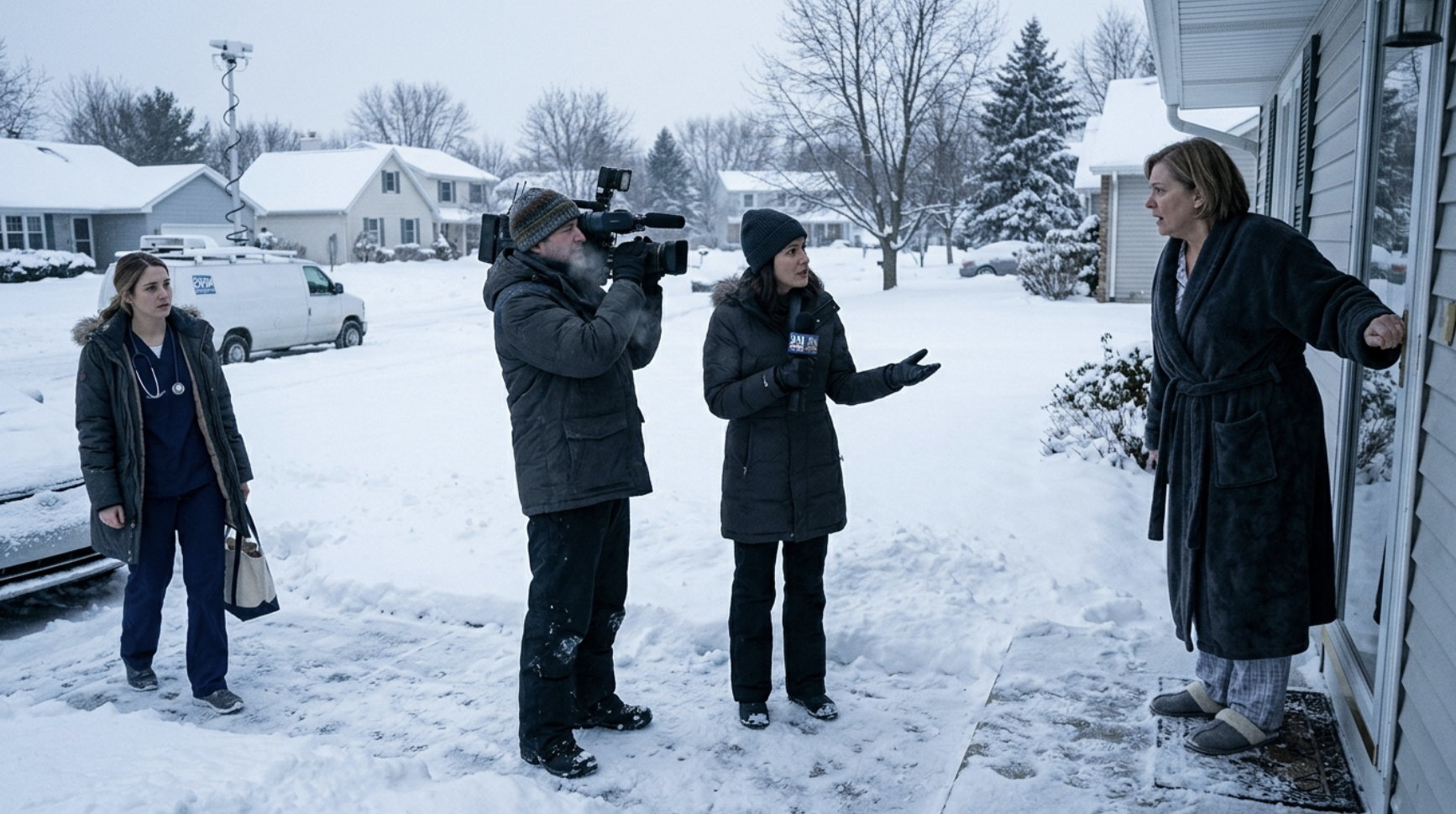
On Monday morning, my father’s school district announced that it would conduct a formal review of the incident.
The district did not accuse him of any professional misconduct. The review concerned his public statements and whether his conduct aligned with the character and family-responsibility values he regularly promoted in school programs.
Dad had spent fifteen years working in education.
He was the kind of man who delivered speeches about responsibility, respect, and accountability. He volunteered at school events, helped organize food drives, and frequently spoke at assemblies about the importance of making good choices.
His reputation mattered to him.
Not just because he wanted to be respected.
Because he had built his identity around being the man who always knew what was right.
And now people were asking him questions he couldn’t answer with a prepared speech.
By Tuesday, the story had reached a regional newspaper.
A reporter contacted me and asked whether I would provide an interview.
I declined.
I wasn’t interested in making my father the center of my life anymore.
I wanted to work.
I wanted to pay my bills.
I wanted to sleep through the night without remembering the cold.
But the story continued to follow my family.
A former student posted a memory of Dad publicly humiliating him for arriving late to an after-school event.
Another person described being told that a personal emergency was no excuse for missing a mandatory meeting.
Someone else shared a photograph of a school presentation in which Dad stood beneath a banner reading, Character Is What You Do When No One Is Watching.
The comments were relentless.
Some were cruel.
Some were unfair.
A few people seemed more interested in punishing him than understanding what had happened.
I didn’t enjoy watching it.
Whatever my father had done to me, I didn’t want strangers threatening him or attacking my mother online.
So I posted a brief statement on my own social media account.
I shared what happened because I was asked a direct question, and I answered honestly. I don’t want anyone harassing my family. My goal was never to ruin someone’s life. I only wanted the truth to be acknowledged. Please respect our privacy while we work through this.
Then I turned off notifications.
I couldn’t control what the public thought of my father.
I couldn’t control what the school district decided.
And I couldn’t control whether my family would ever understand me.
I could only decide what kind of person I wanted to be.
For the next several days, I focused on my patients.
An elderly woman recovering from pneumonia asked me to help her call her daughter.
A young father whose baby had been admitted to the pediatric unit stood crying near the elevator, terrified because he didn’t understand what the doctor had told him.
A woman recovering from surgery needed someone to explain her discharge instructions slowly, because she was too embarrassed to admit she hadn’t understood them the first time.
I helped each of them.
Not because I wanted recognition.
Not because I expected anyone to write about it.
But because caring for people was the reason I had become a nurse.
And every time I walked into a patient’s room, I remembered something important.
My father’s approval was not what made me good at my job.
My willingness to show up, pay attention, and treat people with dignity did.
On Thursday evening, Tyler called me.
I almost didn’t answer.
We had exchanged a few messages since I moved out, but he hadn’t visited the apartment.
When I picked up, he sounded exhausted.
“Hey.”
“Hey.”
A long silence followed.
Then he asked, “Can I come over?”
I looked around my little apartment.
“Sure.”
He arrived twenty minutes later with a paper bag containing two sandwiches and a bottle of orange juice.
“I didn’t know what you had in the fridge.”
“Mostly leftovers and coffee.”
He nodded.
“Sounds like you.”
We sat at the small kitchen table.
For a while, we talked about ordinary things. His job. My shifts. The weather. The fact that our town’s roads still looked as though a giant had covered them in white cement.
Eventually, Tyler put down his sandwich.
“I need to tell you something.”
I waited.
“When I was eighteen, I came home at 2 a.m. after a party. Dad was furious. He told me I was irresponsible and threatened to kick me out.”
I remembered that night. I had been in my bedroom when Dad shouted at him.
“He made me write an apology,” Tyler continued. “He said if I ever embarrassed the family again, he would stop paying my college expenses.”
I didn’t understand where he was going with this.
“He didn’t lock you out,” I said.
“No. He didn’t.”
Tyler stared at his hands.
“Because Mom woke up and convinced him to let me in. She said it was too cold, and I was his son.”
The room became very quiet.
“He told me the next day that I owed him for the rest of my life because he had given me another chance.”
I felt something twist inside my chest.
Tyler continued.
“I thought that was normal. I thought all families worked like that. If Dad helped you, he got to use it against you later.”
I leaned back in my chair.
“Why are you telling me this now?”
“Because when I saw you sitting in your car, I remembered that night. And I knew exactly what Dad was doing.”
His eyes filled with tears.
“But I went inside anyway. I took off my coat, got a drink, and went to bed. I didn’t even ask whether you were okay.”
I didn’t know what to say.
“I should have helped you,” he whispered.
“Yes,” I said.
He looked up, startled by my honesty.
I took a breath.
“You should have.”
He nodded, and a tear rolled down his cheek.
“I know.”
For years, I had protected Tyler from Dad’s anger whenever I could. I had helped him with schoolwork, covered for him when he made mistakes, and lent him money when his account was empty.
I loved my brother.
But love didn’t mean I had to pretend he hadn’t hurt me.
“I forgive you for being afraid,” I told him. “But I need you to understand that being afraid doesn’t make what you did okay.”
He wiped his face.
“I understand.”
“And if something like that ever happens again, I need you to stand up for what’s right. Even if Dad gets angry.”
Tyler nodded.
“I will.”
I wanted to believe him.
But trust wasn’t something we could restore in one conversation.
It would take time.
As he stood to leave, he hesitated near the door.
“Kayla?”
“Yeah?”
“Do you think Dad will ever apologize?”
I looked at my grandmother’s photograph on the nightstand.
“I don’t know.”
Then I looked back at him.
“But I can’t spend my life waiting for him to become someone else.”
Tyler lowered his eyes.
For the first time, I think he understood that I wasn’t trying to punish our father.
I was trying to stop letting him decide how much my life was worth.


One Comment on “PART5: My Father Locked Me Out During a Blizzard—One Year Later, He Finally Understood What He Had Lost”