PART7
I noticed the guest bedroom had been converted back into a bedroom.
“Jenna’s office is upstairs now,” he explained.
I smiled.
“That’s nice.”
He looked embarrassed.
“I keep thinking about what I told you when you called me.”
I sat down.
“What part?”
“That there wasn’t room for you.”
He looked around the spacious living room.
“There’s room for everything in this house. Furniture. Decorations. Guests we want to impress. I just didn’t make room for my own mother.”
His eyes filled.
“I can’t change that day.”
“No,” I said. “You can’t.”
“But I can make sure I never treat you that way again.”
I reached for his hand.
“Then do that, Michael.”
He squeezed my fingers.
For the first time, I saw my eldest son without the armor of success he had worn for so many years.
I saw a frightened boy who had grown into a man who believed love had to be earned through achievement.
I wished Walt had lived long enough to witness this moment.
But perhaps the lesson had arrived when it was supposed to.
Stephanie’s road was less straightforward.
She and Mark eventually sold their expensive house and moved into a smaller one. They worked with a financial counselor, reduced their spending, and began rebuilding their savings.
Stephanie struggled with the change.
At first, she was embarrassed when friends asked why they had moved.
Then one day, she called me laughing.
“Mom, my daughter asked why our new house doesn’t have a swimming pool.”
“What did you tell her?”
“I told her that a swimming pool doesn’t make a family happy.”
I smiled.
“And what did she say?”
Stephanie laughed again.
“She asked if we could buy a dog instead.”
For the first time in years, Stephanie sounded genuinely happy.
She began volunteering with the charitable fund I had established in Walt’s name, helping elderly people complete applications for housing assistance.
One afternoon, she visited a woman who had been sleeping in her car after losing her apartment.
When Stephanie returned, she called me.
“Mom, I met a woman today who had worked her entire life. She raised two children, paid her bills, and never asked anyone for anything. Then she got sick, missed several months of work, and lost her home.”
Her voice trembled.
“I kept thinking about what I said to you. I suggested a shelter as if it were nothing.”
I listened quietly.
“Now I understand,” she continued. “I wasn’t just refusing to give you a room. I was refusing to see you.”
I closed my eyes.
“That’s a painful thing to understand, sweetheart.”
“I know. But I don’t want to be that person anymore.”
“Then don’t be.”
And slowly, she wasn’t.
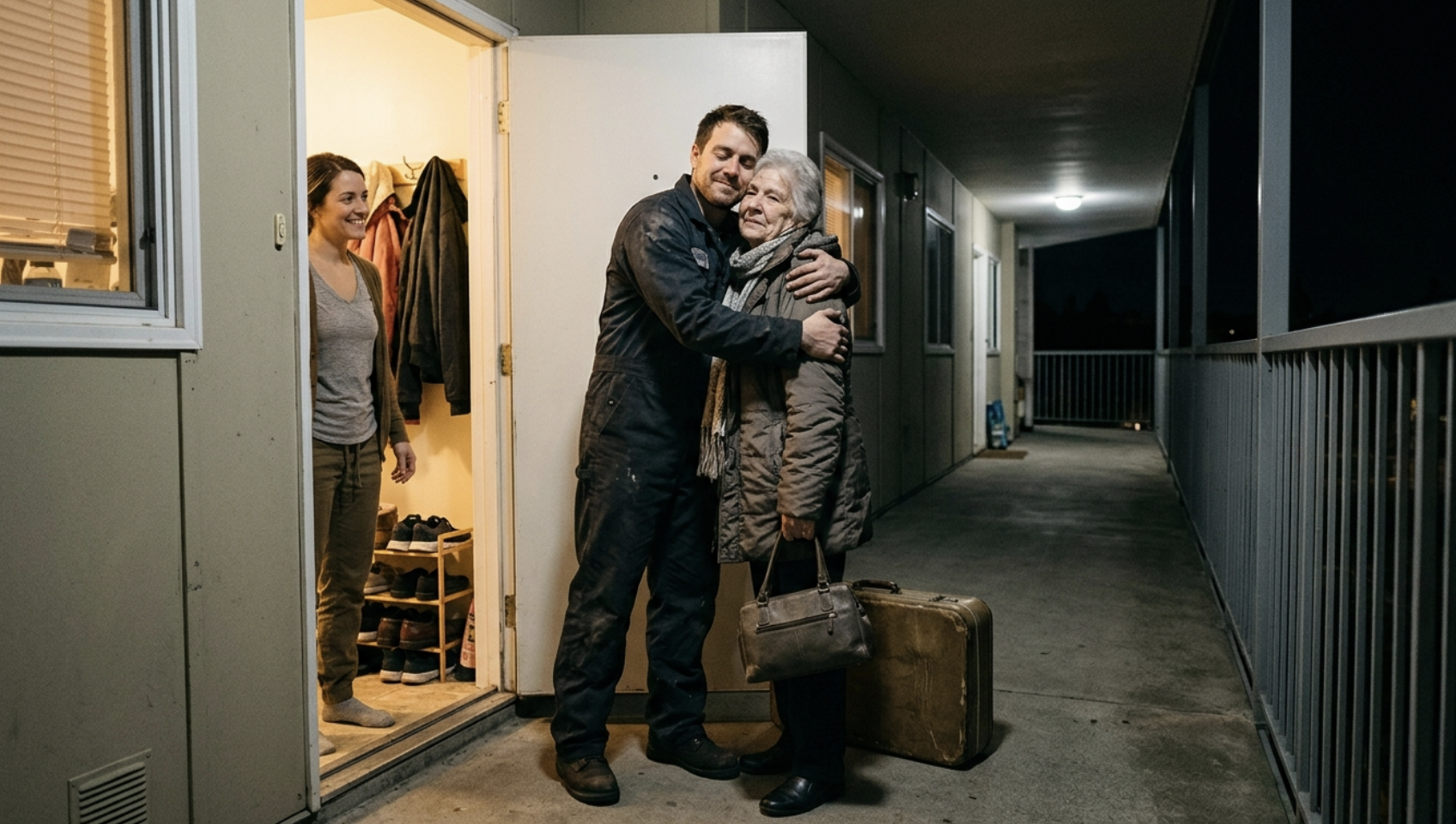
Almost a year after Walt died, I invited all three of my children to my new home for Thanksgiving.
This time, there were no envelopes waiting on the table.
There were no secrets.
There was only food, laughter, and the familiar sound of my grandchildren running through the house.
Michael arrived early and helped Danny carry chairs from the garage.
Stephanie brought a homemade apple pie and immediately began arguing with Danny about whether it needed more cinnamon.
Kayla was in the kitchen preparing Walt’s favorite roast, while the boys set the table.
For a moment, I stood in the doorway and watched them.
This was what I had wanted all along.
Not obedience.
Not repayment.
Not even apologies.
Just my family, together.
After dinner, Michael raised his glass.
“I’d like to say something.”
Danny groaned playfully.
“Here comes the executive speech.”
Everyone laughed.
Michael smiled, then looked at me.
“Mom, last year, I thought Dad’s letters were about money. I thought the trust was a judgment about which child deserved more.”
He paused.
“But I’ve come to understand that Dad wasn’t trying to tell us who was worth more. He was trying to show us what we had forgotten.”
He looked at Danny.
“You taught me that showing up matters more than talking about how busy you are.”
Then he turned to Stephanie.
“And you reminded me that admitting you’ve made mistakes is better than spending your life pretending you haven’t.”
Stephanie wiped her eyes.
Michael finally faced me.
“Mom, I can’t give you back the day you called me. I can’t erase the way I made you feel. But I can promise to spend the rest of my life making sure you never have to wonder whether I love you.”
I felt tears slipping down my cheeks.
“I don’t need you to spend your life making up for one day, Michael. I need you to spend it being my son.”
He nodded.
Then Danny stood.
“I want to say something, too.”
He reached into his pocket and pulled out a small photograph.
It was the same picture from his envelope: him at seventeen beside Walt and the old blue pickup truck.
“I had this framed,” he said.
He handed it to me.
On the back, beneath Walt’s original words, Danny had written a new sentence.
The greatest inheritance was knowing that Dad saw me.
I pressed the photograph against my chest.
For a moment, I couldn’t speak.
Then I looked at my children.
“Your father would have loved this evening.”
Danny smiled.
“He would’ve complained about how much the food cost.”
Michael laughed.
“And then he would’ve eaten three servings.”
Stephanie raised her glass.
“To Dad.”
We all raised ours.
“To Dad.”
And in that little house, with its crowded dining room and imperfect furniture, I felt Walt’s presence more strongly than I ever had in our old home.
Not because of the money he had left.
But because the truth he had planted in our family was finally growing into something good.
A few months later, I visited Walt’s grave alone.
I brought flowers from my garden and sat beside his headstone.
The morning was quiet. The wind moved gently through the trees.
“Well, Walt,” I whispered, “you certainly knew how to make an impression.”
I told him about Danny’s garage, Michael’s Sunday calls, and Stephanie’s work with the housing fund.
I told him about the grandchildren, who were growing taller every month.
Then I told him something I had not said aloud before.
“I was angry with you at first.”
I brushed a fallen leaf away from the stone.
“I wondered why you made me carry that secret. Why you wanted me to discover how our children would behave when they thought I had nothing.”
I paused.
“But I understand now.”
The money had not made my children selfish.
It had not made Danny generous.


One Comment on “PART7: I Told My Three Children I Was Homeless After My Husband Died—Only One Opened His Door, and His Father’s Secret Changed Everything”
Comments are closed.