PART7
Matthew, if you are reading this, then I am no longer here to explain myself. I am sorry I kept certain things from you. I did not want your childhood to become a courtroom before you were old enough to understand what had happened.
Your parents made their choices. I made mine.
I chose you.
Not because of the money. Not because of the family name. Not because I expected anything in return.
I chose you because you deserved someone who would come back.
Love, Elijah.
I sat on the floor.
And I cried.
Not the kind of crying that comes from anger.
The kind that comes when you realize someone loved you so completely that they spent their entire life protecting you from a truth you weren’t ready to carry.
The following morning, I called Denise Carter.
“I need you to investigate something else.”
“What is it, Matthew?”
“Find out whether Elijah left any additional documents concerning the arrangement with my parents in 1994.”
She was quiet for a moment.
“Are you sure you want to reopen all of this?”
I looked at the notebook.
“Yes.”
“All right. I’ll start immediately.”
Three days later, Denise called.
She had found something.
A lawyer who had represented Elijah in 1994 was still alive.
His name was Thomas Whitaker.
He was eighty-six years old and living in a retirement community outside Columbus.
According to Denise, he had kept copies of several documents from the original arrangement.
I drove there the following morning.
Mr. Whitaker was sitting near a large window when I arrived.
He was thin, wore a gray cardigan, and had a pair of reading glasses hanging from a cord around his neck.
When Denise introduced me, he looked at my face for several seconds.
Then he smiled sadly.
“You must be Matthew.”
I nodded.
“You knew me?”
“I knew about you before you knew about me.”
He motioned toward a chair.
“Elijah spoke about you constantly.”
I sat down.
“I found his notebook.”
Mr. Whitaker nodded.
“I wondered whether he had kept it.”
“Why didn’t he tell me about my parents?”
The old attorney folded his hands.
“Because Elijah believed you had already suffered enough.”
He opened a drawer beside his chair and removed a thick envelope.
“This is what he asked me to preserve.”
Inside were copies of the original agreement between Elijah and Arthur.
There was also a letter written by Arthur.
I read it carefully.
In it, my father acknowledged that Elijah had offered to take temporary custody of me if my parents were unable to provide a safe home.
But the most important document was a handwritten statement signed by Arthur.
It read:
I understand that Elijah Marsh will provide financial support for Matthew’s care and education. In exchange, I agree that I will not interfere with his guardianship arrangement as long as Matthew is safe and properly cared for.
The document had been signed one week before the Greyhound incident.
My father had agreed to let Elijah care for me.
Then he abandoned me anyway.
“Why is this important?” I asked.
Mr. Whitaker adjusted his glasses.
“Because it establishes that your father knew Elijah was prepared to take responsibility for you. It also contradicts the claim that Elijah manipulated you or your parents.”
He reached for another document.
“And there’s something else.”
It was a letter from Elijah to Arthur, dated three days after my abandonment.
Arthur,
I waited at the station until the police arrived. I have been informed that Matthew is now under the care of child services. I am prepared to pursue guardianship immediately.
You have made a terrible decision. But I will not allow Matthew to suffer because of it.
If you ever decide to become the father he deserves, you may contact me. Until then, I will do everything in my power to give him a safe home.
Elijah.
My eyes moved to the bottom of the page.
There was a handwritten response from Arthur.
Just one sentence.
Keep him. We are finished with him.
I closed my eyes.
I had spent twenty-two years wondering whether my parents had regretted abandoning me.
Now I had the answer.
They had not merely walked away.
They had confirmed it in writing.
Mr. Whitaker placed a hand on the folder.
“Elijah never wanted you to use these documents against anyone. He simply wanted them preserved in case the truth was ever needed.”
I looked at him.
“Thank you.”
He smiled.
“Your father was a good man, Matthew.”
I shook my head gently.
“Elijah wasn’t my father by blood.”
Mr. Whitaker looked directly at me.
“That was never the important part.”
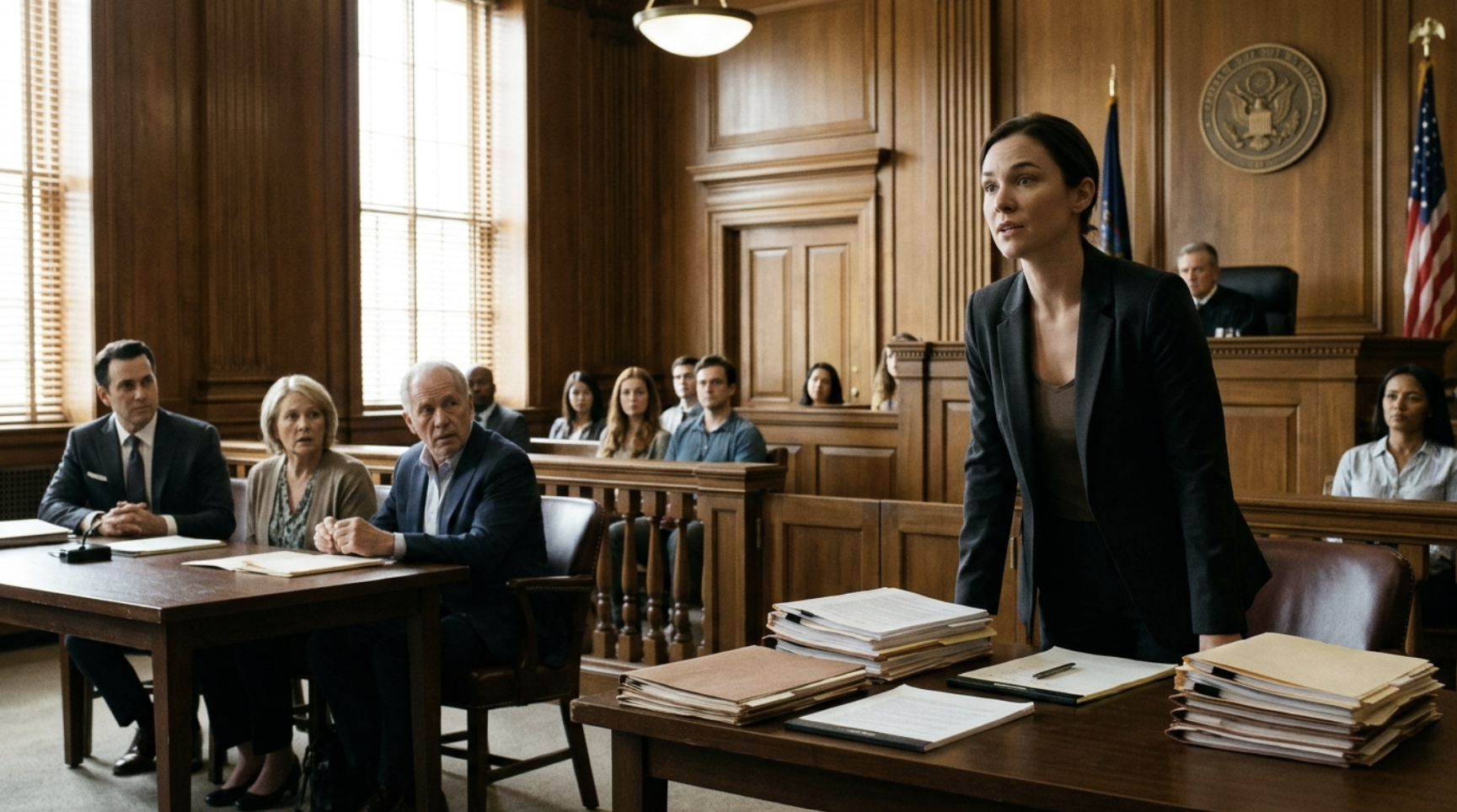
The final hearing took place three weeks later.
This time, the courtroom was packed.
My parents had requested an emergency hearing to challenge the validity of Elijah’s will.
Their attorney argued that Elijah had become emotionally dependent on me and that I had influenced his financial decisions during his final years.
He also argued that the original guardianship arrangement demonstrated a long-standing conflict between Elijah and Arthur.
But we had answers.
The medical records showed Elijah had been mentally competent when he signed the will.
His physician confirmed that he understood his financial affairs and made independent decisions.
The two witnesses who had attended the signing testified that Elijah had clearly explained why he wanted me to inherit his estate.
And the video recording was particularly powerful.
The judge watched Elijah sitting in his lawyer’s office.
He was wearing a dark blue sweater.
His hair was white.
His hands were resting on the desk.
The attorney asked him:
“Mr. Marsh, do you understand that you are leaving your entire estate to Matthew Marsh?”
Elijah smiled.
“I understand perfectly.”
“Do you understand that some members of your extended family may object?”
“I expect they will.”
“Would you like to explain why you have made this decision?”
Elijah looked toward the camera.
Then he spoke.
“Matthew came into my life when he was eight years old. He was frightened, confused, and convinced that something was wrong with him because his parents had left him.”
He paused.
“I spent many years trying to teach him that he was not responsible for their choices.”
My throat tightened.
Elijah continued.
“I paid for his education because I believed in his future. I supported him because I wanted him to have opportunities I never had. But I never expected him to repay me.”
He leaned forward slightly.
“Some people believe inheritance should be determined by blood. I believe it should be determined by love, responsibility, and the life someone builds.”
The attorney asked:
“Are you leaving Matthew your estate because he is legally your adopted son?”
Elijah smiled.
“No. I’m leaving it to him because he is my son in every way that matters.”
I lowered my head.
I could no longer see the screen clearly.
The recording ended.
Judge Wynn remained silent for several seconds.
Then she turned toward my parents’ attorney.
“Counsel, do you have any evidence contradicting the medical findings or the testimony of the witnesses?”
He stood.
“Your Honor, we believe the circumstances surrounding the relationship warrant further investigation.”
“That is not an answer to my question.”
He hesitated.
“No, Your Honor. Not at this time.”
Judge Wynn looked through the file.
Then she began delivering her decision.
“The plaintiffs have failed to establish any legal entitlement to the estate of Elijah Marsh. Their biological relationship to the defendant does not create a right to property that was independently owned and properly transferred through a valid will.”
My mother began shaking her head.
The judge continued.
“The defendant’s adoption decree and the termination of the plaintiffs’ parental rights establish that the plaintiffs have no parental authority over him.”
She paused.
“Furthermore, the court finds that the evidence raises serious concerns about the plaintiffs’ conduct surrounding the abandonment of the defendant as a minor and their subsequent representations concerning his disappearance.”
My father looked toward his attorney.
Judge Wynn continued.
“The plaintiffs’ challenge to the will is dismissed. The court also denies their request to freeze or distribute the estate.”
My mother started crying.
But the judge wasn’t finished.
“Regarding the allegations of fraudulent insurance activity and the documents submitted during this proceeding, the court will refer the relevant materials to the appropriate authorities for independent review. This court makes no criminal finding today, but the evidence warrants further investigation.”
She looked directly at my parents.
“Finally, the plaintiffs’ conduct in bringing this action without establishing a valid legal basis raises concerns about bad faith. The court will consider the defendant’s properly supported request for attorney fees and any other relief available under applicable law.”
Then she struck her gavel.
“That concludes today’s hearing.”
It was over.
Twenty-two years after my parents had left me on a wooden bench, they had finally lost the right to tell me what my life was worth.
But the story didn’t end in that courtroom.
Several months later, the insurance company reopened its investigation into the original claim.
The authorities reviewed the old police report, the insurance application, the recovered letters, and the correspondence showing that my parents knew I was alive.
The matter eventually resulted in a formal finding that the original claim had involved material misrepresentations.
My parents were required to repay the disputed insurance proceeds, together with applicable interest and penalties.
Separate legal proceedings followed concerning the false statements and the financial records.
Their attorney withdrew from representing them after the inheritance case collapsed.
Their financial problems became public.
The house they had lived in for decades was eventually sold to satisfy outstanding debts.
My father tried contacting me twice.
The first time, he left a voicemail.
“Matthew, we need to talk. Your mother isn’t doing well. Whatever happened between us, we’re still family.”
I listened to it once.
Then I deleted it.
The second time, he sent a letter.
It was four pages long.
He wrote about his regrets.
He wrote about his financial problems.
He wrote about how difficult life had been in 1994.
But nowhere did he write the sentence I had waited twenty-two years to hear.
I’m sorry I left you.
Instead, he wrote:



One Comment on “PART7: My Parents Abandoned Me at a Greyhound Station When I Was 8—22 Years Later, They Sued Me for the $3.8 Million Inheritance Left by the Stranger Who Raised Me…”
Comments are closed.