PART6
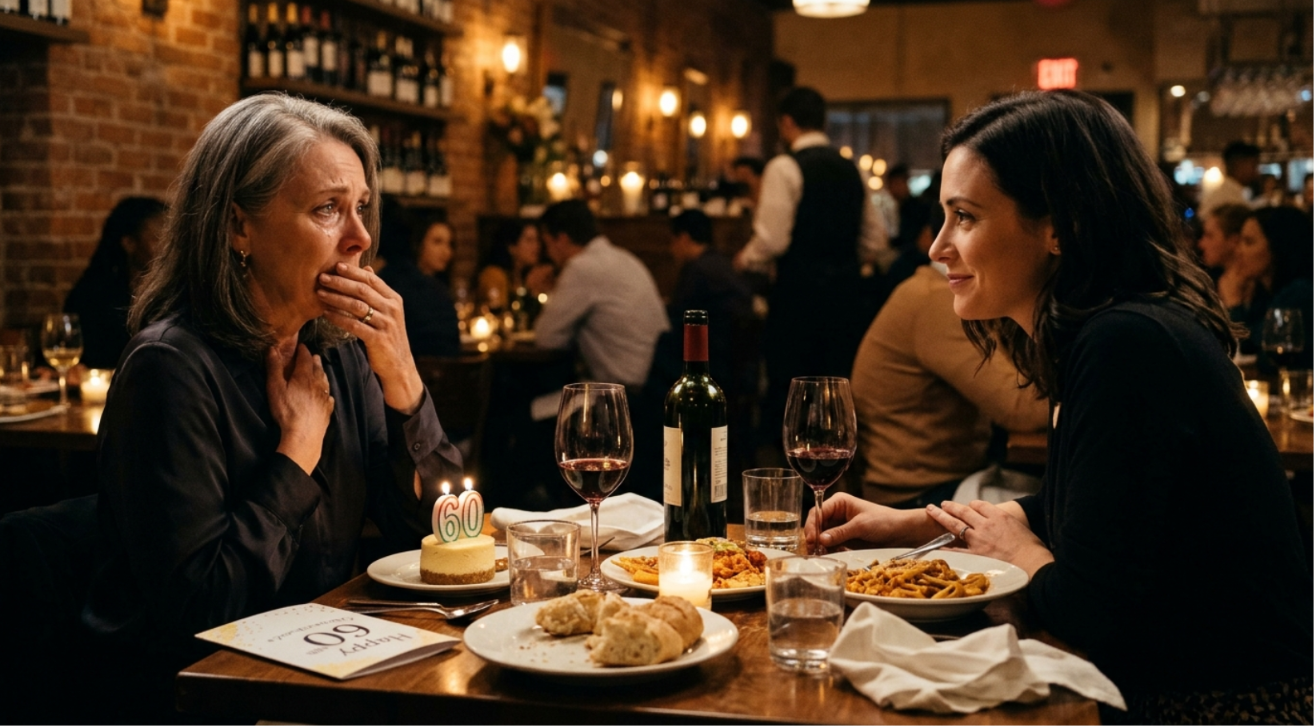
“I didn’t need expensive gifts or a beautiful birthday dinner. I wanted my daughter to ask how I was doing. I wanted to sit in my own living room without feeling like I was interrupting somebody else’s life.”
She began crying.
“I know, Mom.”
I reached across the table and touched her hand.
“But an apology doesn’t erase everything. Trust takes time.”
“I understand.”
“And you need to understand something else. I will help you when I can, but I will never again support you financially at the expense of my own security.”
She nodded.
“That’s fair.”
We sat quietly for a moment.
Then she asked, “Are you going to leave the house to me?”
There it was.
The question I had been expecting.
I gently released her hand.
“Sarah, your inheritance is not something you are entitled to decide while I’m still alive.”
She looked embarrassed.
“I didn’t mean it like that.”
“Perhaps you didn’t. But I need you to understand that I have my own future to protect.”
She nodded.
“I understand.”
I looked at my daughter.
I wanted to believe her.
But I had learned that words were only the beginning.
Over the next few weeks, Sarah and I began speaking more regularly.
Sometimes she called just to ask how I was.
Sometimes she sent photographs of things she thought I might like for my garden.
Once, she invited me to lunch.
I accepted.
Greg, however, remained angry.
He refused to apologize.
He continued insisting that they had been unfairly treated and that the house should eventually belong to them.
Thomas handled the property matter through the proper legal process.
Sarah and Greg eventually found a rental apartment that they could afford.
They moved out after the required legal procedures were completed.
I didn’t celebrate.
I didn’t stand in the driveway smiling while they loaded their belongings.
I simply watched from a distance as the moving truck pulled away.
When the house was finally empty, I returned one last time.
I walked through the living room.
I stood in the kitchen.
I looked at the doorway where Sarah had once marked her height as a little girl.
I remembered the birthdays, the Christmas mornings, and the years when my husband was still alive.
I had loved that house.
But I understood something now.
A house could hold memories without being the place where your future had to remain.
I locked the front door and handed the keys to the real estate agent.
I had decided to sell the property.
Not because I hated Sarah.
Not because I wanted to punish Greg.
But because I didn’t want to spend the rest of my life wondering whether someone would eventually return and claim what was mine.
The sale went through several months later.
I used the proceeds to strengthen my retirement savings, pay for the cottage, and establish a charitable fund in my husband’s memory.
I also updated my will with Thomas.
My daughter would receive something when I was gone, but it would be determined by my wishes, not by pressure, assumptions, or promises that I had never made.
The rest of my estate would support a local organization that helped older people facing financial abuse and housing insecurity.
Thomas said it was a thoughtful plan.
I thought my husband would have agreed.
Six months after my sixtieth birthday, I celebrated another small occasion.
It was a Saturday afternoon.
My garden was blooming, and the maple tree had begun turning gold.
I invited a few old friends over for lunch.
Sarah came too.
She arrived carrying flowers and a homemade pie.
Greg didn’t come.
I didn’t ask why.
We ate together, laughed about old memories, and spent the afternoon sitting in the garden.
At one point, Sarah walked over to the rose bushes.
“Mom,” she said, “can I ask you something?”
“Of course.”
“Do you ever regret what happened?”
I looked at the garden.
Then I looked at her.
“Sometimes I regret that it took us so long to understand each other.”
She nodded.
“But do you regret leaving?”
I shook my head.
“No.”
She looked down.
“I thought you would eventually forgive us and come back.”
I smiled gently.
“Forgiveness doesn’t mean returning to the same situation that hurt you.”
She was quiet.
Then she said, “I think I’m finally beginning to understand that.”
I reached for her hand.
“I hope you do, sweetheart.”
We stood together for a while.
The afternoon sunlight fell across the garden.
A light breeze moved through the roses.
And for the first time in years, being with my daughter didn’t feel like an obligation.
It felt like a choice.
A choice we were both learning to make.
That evening, after everyone had gone home, I sat on my porch with a cup of tea.
My phone buzzed.
A message from Sarah appeared.
Thank you for today, Mom. I love you.
I read it twice.
Then I replied.
I love you too. Always have.
I placed my phone beside me and looked at the sky.
I was sixty years old.
I had a small house, a garden, a modest retirement account, and a life that finally belonged to me.
I didn’t need to be wealthy.
I didn’t need a huge home.
I didn’t need anyone to tell me that I was useful.
And I certainly didn’t need to earn my place in the world by paying someone else’s bills.
For three years, my daughter and her husband had mistaken my kindness for weakness.
They believed that because I was getting older, I was becoming powerless.
They believed that because I stayed quiet, I had nothing to say.
But they were wrong.
The white envelope hadn’t made me powerful.
It had simply put into writing what I had finally learned to believe.
I was still a mother.
I was still a woman who loved her family.
But I was also a person.
A person with rights, dreams, boundaries, and a future.
And at sixty, I was finally beginning to live it.
The greatest gift I gave myself on my sixtieth birthday wasn’t a new house, a bank account, or even my freedom. It was the decision to stop making myself smaller just to make other people comfortable.



One Comment on “PART6: On My 60th Birthday, My Daughter Told Me I Was No Longer Welcome in My Own Home—So I Handed Her a White Envelope That Changed Everything”
Comments are closed.