PART7
But it was the first conversation with my father in years that didn’t involve Steven, money, or an argument about what I owed the family.
I considered that a beginning.
Not a complete reconciliation.
A beginning.
Two months later, Steven contacted me.
His message was simple.
Can we talk? Just you and me.
I stared at it for several minutes.
Eventually, I agreed to meet him at a coffee shop.
When I arrived, he was already sitting at a table near the window.
He looked different.
The expensive clothes were gone. He wore a plain shirt and jeans. There were dark circles under his eyes.
He stood when he saw me.
“Thanks for coming.”
I sat down.
“What do you want to talk about?”
He looked at his coffee.
“I owe you an apology.”
I waited.
He rubbed his hands together.
“I know you probably think I’m only apologizing because I didn’t get the money.”
“I don’t know what you think.”
He nodded.
“Fair enough.”
For a while, he struggled to find the words.
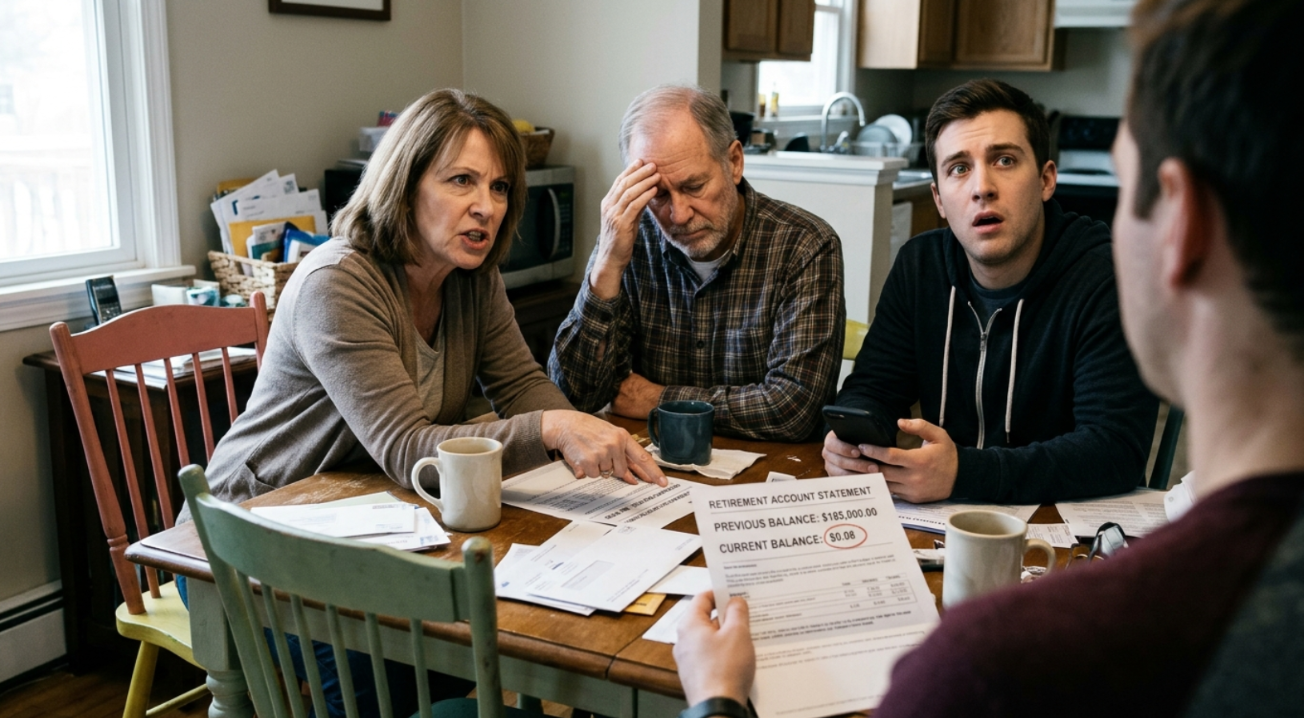
Then he finally said, “I knew the account was yours. I knew Grandma left it to you. But Mom kept telling me that you didn’t need it. She said you were young, that you had no children, and that it made more sense for me to use it.”
I looked at him.
“And you believed her?”
He gave a small, bitter laugh.
“I wanted to believe her.”
“Why?”
“Because I was drowning, Margaret.”
He explained that his debts had become overwhelming.
He had been trying to maintain a lifestyle he could no longer afford. The larger house, the truck, the vacations, and the constant pressure to appear successful had gradually become a financial burden.
He had borrowed money to cover other loans.
Then he had borrowed more to cover those.
Eventually, he had convinced himself that my retirement account was the solution.
“Mom said Grandma would have wanted the money to help the whole family,” he said.
I shook my head.
“Grandma specifically told me it was mine.”
“I know that now.”
“You knew it then.”
He looked away.
That was the first time he didn’t try to argue.
After a long silence, he said, “I’m paying you back for the $6,000.”
“Claire already returned it.”
“I know. But I want you to know I understand that I owed it.”
I nodded.
“Good.”
He looked at me.
“Can we ever go back to how things were?”
I considered the question.
“No.”
His face fell.
“But maybe we can build something different,” I continued. “Something where you don’t expect me to rescue you and I don’t have to defend myself every time I say no.”
He nodded slowly.
“I understand.”
I hoped he did.
But I also understood that an apology was only the beginning.
Trust would take much longer.
Before leaving, Steven said something that surprised me.
“Mom keeps saying you changed.”
I smiled faintly.
“Maybe I did.”
“She says you’re cold now.”
I looked directly at him.
“I’m not cold, Steven. I’m just no longer available to be treated like an emergency savings account.”
For the first time, he smiled.
A small, uncomfortable smile.
But it was genuine.
We said goodbye.
And I went back to the bakery.
The biggest change happened almost a year after that Sunday dinner.
I was preparing a large wedding order when my mother walked into the bakery.
She looked around before approaching the counter.
“Margaret.”
I put down my notebook.
“Hello, Mom.”
She looked at the cakes in the display case.
“You’ve done well.”
“Thank you.”
She stood there awkwardly.
Then she said, “Your father tells me you’re thinking about opening another location.”
“I’m considering it.”
“That’s wonderful.”
I waited.
She looked toward the office.
“Can we talk privately?”
I led her inside.
She sat down and placed her handbag on the floor.
For a moment, she looked like the woman who had raised me.
Then she began speaking.
“Steven and Claire are doing better.”
“I’m glad.”
“They’re working through their debts. Claire has been very firm about their finances.”
“That’s good.”
Mom nodded.
Then she looked at me.
“Steven told me you met.”
“Yes.”
“He said you were willing to speak to him.”
“I was.”
She folded her hands.
“I think it’s time we put everything behind us.”
I leaned back.
“What does that mean?”
“It means we’re family. We shouldn’t keep fighting over something that happened a year ago.”
I looked at her.
“Something?”
She sighed.
“Margaret, I know mistakes were made.”
“Which mistakes?”
She seemed surprised by the question.
“What?”
“Tell me exactly which mistakes you think were made.”
She looked uncomfortable.
“I shouldn’t have handled the account without talking to you.”
“You didn’t just handle the account. You tried to give Steven withdrawal privileges.”
“I thought it was the best decision.”
“You submitted a document with my signature on it.”
Her expression changed.
“I never intended to hurt you.”
“Intentions don’t erase what happened.”
She looked down.
For a moment, I thought she might finally apologize.
Then she said, “You have to understand that I was worried about Steven.”
I nodded.
“I understand that.”
“He was struggling.”
“I understand that too.”
“And I thought you could help.”
I looked at her.
“Mom, you didn’t ask me to help. You decided that my future belonged to someone else.”
She pressed her lips together.
“I didn’t think you would ever need that much money.”
I almost laughed.
“You didn’t know what my future would look like. You just decided it wasn’t important enough.”
She became quiet.
Then she said something I will never forget.
“I suppose I always thought you would be fine. You were independent. You never complained. Steven needed more attention.”
There it was.
The explanation I had spent years trying to understand.
Because I was responsible, I received less.
Because I didn’t demand help, people assumed I didn’t need it.
Because I worked quietly, my achievements became invisible.
I looked at my mother.
“I was fine because I worked hard to become fine. That doesn’t mean you were allowed to take advantage of me.”
She wiped her eyes.
“I am sorry, Margaret.”
I waited.
This time, she continued.