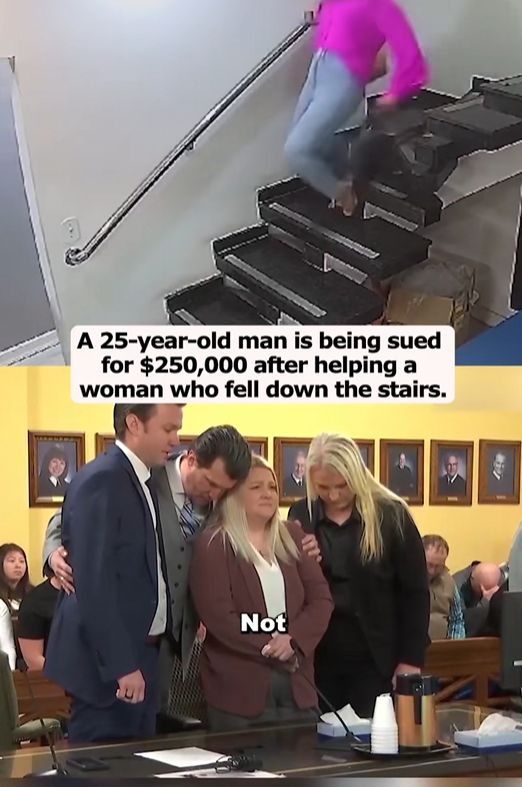
A 25-year-old man is facing a $250,000 lawsuit after what began as a simple act of kindness turned into a complex legal dispute that is now drawing widespread attention.
According to reports, the incident took place in a residential apartment building late in the evening. The man, whose identity has not been publicly disclosed, was returning home when he heard a loud noise coming from the stairwell. Upon investigating, he discovered a woman lying at the bottom of the stairs, visibly injured and struggling to move.
Witnesses say the man immediately rushed to help. He reportedly checked if the woman was conscious, attempted to keep her calm, and called emergency services. While waiting for paramedics to arrive, he tried to assist her into a more comfortable position, believing she may have suffered a serious fall.
Emergency responders later transported the woman to a nearby hospital, where she was treated for multiple injuries, including a fractured wrist and a concussion. At the time, the man was praised by neighbors for stepping in quickly and potentially preventing further harm.
However, the situation took an unexpected turn weeks later when the woman filed a lawsuit against him, seeking $250,000 in damages.
The lawsuit alleges that the man’s attempt to move her after the fall may have worsened her injuries. According to the legal claim, the woman argues that she should not have been touched or repositioned before medical professionals arrived, and that his actions, although intended to help, resulted in additional physical harm.
Legal experts note that cases like this often fall into a gray area. In many places, “Good Samaritan” laws are designed to protect individuals who offer assistance in emergency situations. These laws generally prevent helpers from being held liable, provided their actions were reasonable and not reckless.
However, the outcome of such cases can depend heavily on specific details — including whether the person had any form of medical training, the severity of the situation, and whether their actions could be interpreted as negligent.
The man’s legal team has stated that he acted purely out of concern and had no intention of causing harm. They argue that he responded in a high-pressure situation where immediate assistance was necessary, and that he followed what any reasonable person would do in the same circumstances.
“This was a moment of instinct and humanity,” a representative close to the case said. “He saw someone injured and chose to help. Punishing that kind of behavior sends a dangerous message.”
The case has sparked intense debate online and within the local community. Some people believe the lawsuit is unfair and could discourage others from helping in emergencies. Others argue that individuals should be cautious when intervening in medical situations without proper training.
As the legal proceedings continue, the case raises broader questions about responsibility, compassion, and the risks people may face when stepping in to help others.
For now, what began as a moment of kindness has evolved into a legal battle — one that could have lasting implications not just for those involved, but for how society views acts of help in moments of crisis.