BREAKING NEWS: Prince William Speaks After Surgery — “I’m Fighting, But I Can’t Do It Alone”
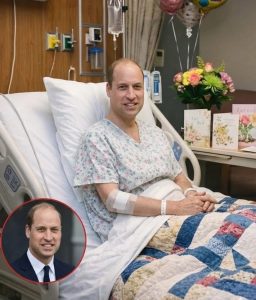
After weeks of silence that fueled concern across the United Kingdom and beyond, Prince William has finally broken his quiet, offering a rare and deeply personal update on his health following recent surgery.
In a candid statement released through palace sources, the Prince of Wales confirmed that the procedure itself is now behind him.
However, he was clear that recovery is ongoing – and far from easy.
“I’m fighting,” William shared, “but I can’t do it alone.”
Those few words were enough to send a wave of emotion through royal watchers and supporters around the world.
Known for his steady composure, sense of duty, and reluctance to center attention on himself,
Prince William’s openness marks a striking departure from royal tradition — and a powerful moment of vulnerability from a future king.
A Period of Silence That Sparked Concern
Speculation surrounding Prince William’s health began weeks ago when he unexpectedly stepped back from several public engagements.
Palace aides initially described the absence as precautionary and routine, offering few details.
While the royal family has long guarded personal medical matters, the lack of information inevitably led to growing public concern.
As days turned into weeks, social media filled with messages of support, prayers, and quiet worry.
Many noted that this period followed an already emotionally taxing year for the Prince of Wales, who has carried an increasingly heavy share of royal responsibilities amid family health challenges and global pressures facing the monarchy.
Royal insiders now confirm that the decision to remain silent was deliberate — a choice made to prioritize recovery and protect family privacy during the most critical phase.
Surgery Behind Him, Recovery Ahead
According to palace officials, the surgery was successful and carried out without complications.
However, they emphasized that the procedure required a meaningful recovery period, one that demands rest, patience, and careful medical supervision.
While specific details of the surgery have not been disclosed — in keeping with royal protocol — sources stress that there is no immediate cause for alarm.
Still, William himself acknowledged that healing is not a straight path.
“Recovery is a process,” he reportedly told those close to him. “There are good days and harder ones.”
That honesty has resonated deeply with the public.
For many, it humanizes a figure often seen through the lens of ceremony, uniform, and expectation.
A Rare Glimpse Behind the Crown
Prince William’s words reflect a broader shift in how he approaches leadership.
In recent years, he has become one of the most vocal advocates for mental health awareness, particularly among men.
Through initiatives like Heads Together, he has repeatedly challenged the stigma around asking for help — a message now underscored by his own experience.
Royal commentators note that this moment reinforces William’s evolving image: not just as a future monarch shaped by tradition, but as a leader willing to acknowledge struggle.
“This isn’t weakness,” one royal historian observed.
“It’s strength through honesty — and it aligns closely with how William sees modern leadership.”
Global Support Pours In
Following the release of the statement, messages of support arrived from across the globe.
Crowds gathered outside royal residences left handwritten notes and flowers.
Public figures, veterans’ organizations, mental health advocates, and faith leaders all voiced solidarity.
From London to Sydney, New York to Nairobi, the sentiment was consistent: encouragement, patience, and gratitude for William’s transparency.
Online, hashtags expressing support for the Prince of Wales quickly trended, with many sharing personal stories of recovery and resilience inspired by his words.
The Role of Family During Recovery
Sources close to the royal household describe the Prince as being surrounded by strong family support during this time.
His focus, they say, remains firmly on healing — and on being present as a husband and father.
Observers note that Prince William has often spoken about how fatherhood reshaped his priorities, grounding him during moments of pressure and uncertainty.
That perspective appears to be guiding his recovery approach as well.
Palace aides confirmed that his return to full public duties will be gradual, carefully aligned with medical advice.
For now, engagements are being reviewed on a case-by-case basis, with senior aides stepping in where necessary.
What Comes Next for the Prince of Wales
As the heir to the throne, Prince William occupies a uniquely demanding role — one that balances tradition, public expectation, and personal endurance.
His recovery period is not only a personal chapter, but a moment that may subtly reshape how the monarchy communicates vulnerability in the modern age.
Royal experts suggest that this episode could mark a turning point, setting a precedent for greater openness around health and well-being within the institution.
“What we’re seeing,” one commentator said, “is a monarchy learning to speak the language of humanity.”
A Story Still Unfolding
For now, Prince William’s journey continues quietly, away from the spotlight he has carried since birth.
Surgery may be behind him, but recovery – physical and emotional – remains a work in progress.
What comes next is not yet written.
But one thing is clear: the Prince of Wales is not facing it alone.
As messages of love, prayer, and solidarity continue to arrive from around the world, they echo his own words back to him — a reminder that even those born to lead can lean on others when the road gets hard.
And in that shared humanity, many see not just a prince recovering from surgery, but a future king redefining strength for a new generation.