Speechless Crowds Greet William and Kate in Stirling: The Royal Arrival That Stopped Scotland in Its Tracks.
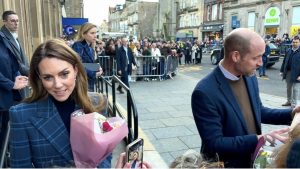
Prince William and Catherine, the Princess of Wales—known in Scotland as the Duke and Duchess of Rothesay—arrived in Stirling on January 20, 2026, for a day of engagements that highlighted unique Scottish heritage traditions and left onlookers visibly stunned. The couple’s visit to Stirling and Falkirk marked their second joint public appearance of the year, following a hospital visit earlier in January, and drew hundreds of well-wishers who lined the streets in excited anticipation.
The day began with an impromptu stop at The Kelpies, the iconic 30-meter horse-head sculptures near Falkirk. William and Kate posed for photographs in front of Duke and Baron, learning about the mythology and craftsmanship behind the monumental artworks that celebrate Scotland’s equine heritage and industrial past. The surprise appearance caught many off guard, with locals and tourists alike pausing in awe as the royals emerged from their vehicle, smiling and waving to the growing crowd. Onlookers described the moment as “magical,” with gasps rippling through the gathering as the couple took time to chat and pose for selfies.
From there, the Duke and Duchess headed to Stirling, where they visited the National Curling Academy. Welcomed by athletes, coaches, and staff, they watched training sessions and tried their hand at the sport ahead of the upcoming Winter Olympics and Paralympics in Milano-Cortina. Catherine, showing her competitive side, delivered a strong shot and celebrated with high-fives and laughter, while William concentrated intently on his attempts. The princess begged for “another go” after one slide, drawing cheers from the team and revealing her playful enthusiasm for the ice-based activity. The couple’s lighthearted banter and genuine interest in the athletes’ preparations for global competition created a warm, engaging atmosphere.

Next, they stopped at Radical Weavers, a handweaving studio and independent charity in Stirling dedicated to tackling social isolation through traditional tartan weaving. William and Kate met artisans, observed the intricate process, and learned how the craft connects communities and inspires new generations. A sweet moment unfolded when the prince assisted his wife during a demonstration, hopping in chivalrously to help her with the loom—captured on camera and quickly shared online. The couple’s coordinated outfits—Catherine in a blue tartan coat with a black turtleneck, William in a blue blazer over brown and collared shirts—added a touch of Scottish flair, symbolizing their respect for local traditions.
The highlight for many came outside Radical Weavers, where hundreds gathered on Murray Place to greet the royals. William and Kate spent time shaking hands, accepting flowers, and posing for photos, including a subtle PDA moment with arms around each other. Onlookers were left speechless by the couple’s approachable demeanor—pausing for selfies, chatting warmly, and showing genuine appreciation for the turnout. One fan noted the crowd’s reaction: “They just froze in awe—it’s not every day you see the future king and queen right there, so down-to-earth.” The couple’s easy rapport and smiles contrasted with formal royal expectations, creating an electric yet heartfelt energy.
The visit concluded with a stop at The Gothenburg pub in Fallin, a community-run venue in a former mining village. William and Kate heard how the pub gives back to locals, fostering connection in the area. Their presence drew cheers and more selfies, reinforcing the day’s theme of heritage linking communities.
This Scottish outing coincided with Prince Harry’s court appearance in London for his privacy lawsuit against Associated Newspapers—400 miles away—adding a layer of public interest amid ongoing family dynamics. Yet William and Kate focused on positivity, shining a spotlight on Scottish crafts, sports, and community spirit. Kensington Palace described the engagements as celebrating how traditions “continue to connect communities and inspire new generations.”
Public response was overwhelmingly warm. Social media flooded with videos of the arrival, curling attempts, and crowd interactions, with fans praising the couple’s “realness” and “joy.” Comments highlighted Catherine’s laughter and William’s supportive gestures, calling it a “perfect day for Scotland.” The visit underscored the Waleses’ commitment to the UK nations, with Stirling’s historic significance—home to Stirling Castle and site of key battles—providing a fitting backdrop.
Onlookers’ stunned reactions stemmed from the royals’ accessibility: no barriers, plenty of time for personal exchanges, and visible delight in the moment. One local told reporters, “We were speechless—they’re so normal, yet so regal.” The day blended tradition with modernity: ancient crafts revived, curling for future Olympics, and a pub revitalizing a village.
As the couple departed, the crowds lingered, buzzing with excitement. The Stirling visit reminded many why the monarchy endures—moments of connection that transcend protocol. In a year of challenges and recoveries, William and Kate offered a glimpse of unity, heritage, and simple human warmth, leaving Scotland—and the world—speechless in the best possible way.