Denying the Undeniable: When Desperate Lies Fail in Front of the Bench
The Challenge of High-Definition Evidence
In the modern criminal justice system, digital surveillance and video evidence play a decisive role in establishing the truth. While defendants have the right to challenge legal procedures, attempting to outright deny clear, high-definition video footage depicting oneself committing a crime rarely succeeds in convincing a judge or jury.
A High-Stakes Embezzlement and Fraud Trial
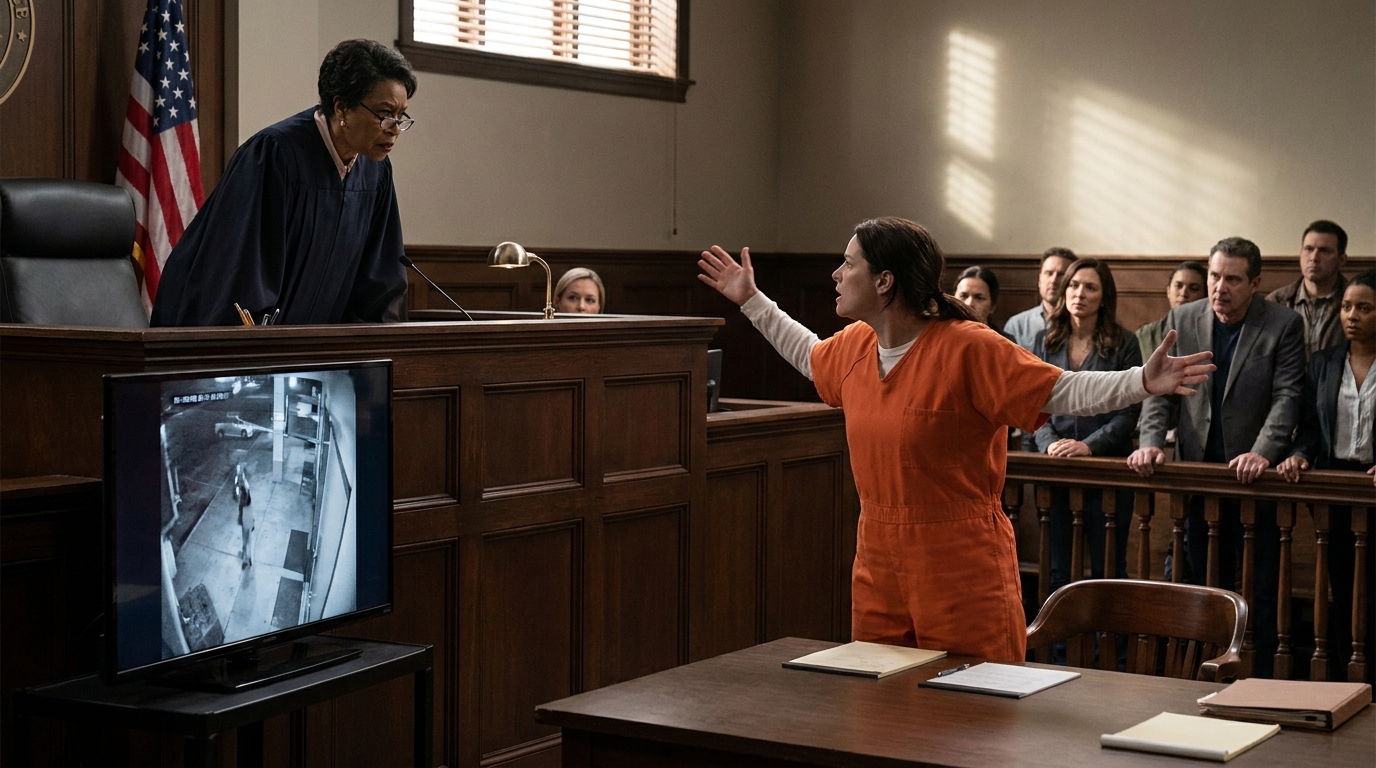
The case involved a middle-aged corporate accountant accused of stealing hundreds of thousands of dollars from her employer over several years. While her defense team claimed she was framed by co-workers, prosecutors presented a series of crystal-clear security videos showing the defendant entering restricted safes and tampering with financial records late at night.
Frantic Denials at the Defense Table
As the prosecutor played the video clips on the courtroom monitors, the defendant panicked. Refusing to listen to her attorney’s advice to remain quiet, she stood up at the defense table, interrupting the proceedings by shouting angrily that the footage was fabricated using modern digital manipulation and was “not her.”
The Judge’s Firm Response
The presiding Black female judge immediately halted the outburst with a firm strike of her gavel. Pointing out that forensic digital experts had already verified the authenticity of the video logs and timestamps under oath, the judge noted that the defendant’s continuous denials showed a complete unwillingness to accept responsibility or show genuine remorse.
Swift Conviction and Maximum Sentence
Concluding that the evidence left zero room for reasonable doubt, the judge issued a guilty verdict on all fraud counts and sentenced the woman to fifteen years in federal prison. The defendant stood frozen in shock as bailiffs escorted her away, realizing that her desperate attempts to lie had only ensured a harsher penalty.
A Lesson in Legal Accountability
This courtroom incident demonstrates that physical and digital evidence will always outweigh frantic arguments. Attempting to deceive the court when confronted with objective proof only damages a defendant’s credibility and leads to strict judicial consequences.