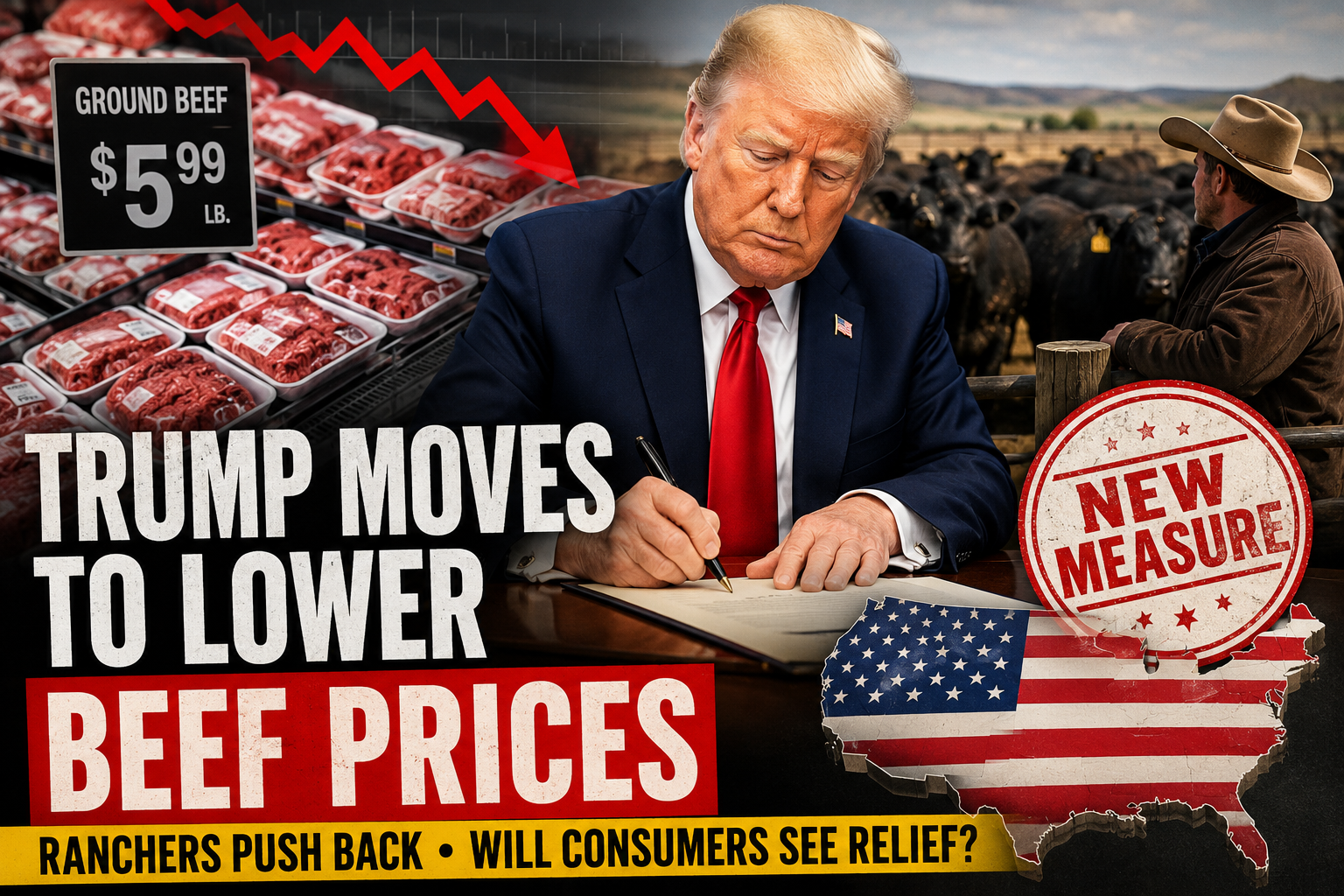
Trump Moves to Lower Beef Prices — But U.S. Ranchers Are Pushing Back
WASHINGTON — President Donald Trump has signed a new measure aimed at bringing down high beef prices for American consumers, but the move is already facing opposition from U.S. farmers and cattle ranchers.
The proclamation, signed August 26, temporarily expands the amount of lean beef trimmings that can enter the United States under the lower, in-quota tariff rate.
Under the new policy, the U.S. will make room for an additional 300,000 metric tons of eligible lean beef trimmings during a roughly 90-day period beginning September 1.
Why is the administration taking action?
Beef prices have remained elevated as the U.S. cattle supply has tightened.
According to the White House, the American cattle herd has fallen to its lowest level in roughly 75 years, while drought, wildfires and restrictions related to livestock disease have added pressure to supplies. The administration says USDA forecasts beef production will fall around 4% in 2026 compared with 2025.
The administration argues that temporarily increasing lower-tariff imports of lean beef trimmings could increase the supply available for producing ground beef and help make it more affordable for consumers.
How will the 300,000-ton increase work?
The additional quota will be divided into three tranches:
- 100,000 metric tons: September 1–30
- 100,000 metric tons: October 1–30
- 100,000 metric tons: beginning October 31 and running until the quota is filled or November 30
The proclamation also directs officials to monitor whether qualifying imported lean beef trimmings are being sold at prices 25% below the relevant market price. If that does not happen, the president could terminate the remaining additional quota.
U.S. ranchers push back
The plan has drawn criticism from American agricultural organizations.
Reuters reports that the American Farm Bureau Federation and other cattle-industry groups have raised concerns that expanding lower-tariff imports could put additional pressure on domestic producers who are already dealing with drought, high costs and the challenge of rebuilding cattle herds.
The disagreement creates a difficult balancing act: consumers want relief from high grocery prices, while ranchers want policies that do not undermine domestic cattle producers.
Will beef prices actually fall?
That remains uncertain.
The administration expects the additional imports to help increase ground-beef supply and lower prices, but some economists and market participants have questioned how much the temporary measure alone can change retail prices because the underlying cattle shortage remains significant.
Consumers therefore should not assume that supermarket beef prices will immediately fall when the policy begins September 1.
What happens next?
The temporary increase begins September 1, and federal officials will monitor beef supplies, import prices and domestic market conditions during the program.
Whether shoppers ultimately see meaningful savings — and how much pressure the policy puts on American ranchers — will become clearer as the additional imports reach the U.S. market.
This is a developing story. We will update this report as new information becomes available.