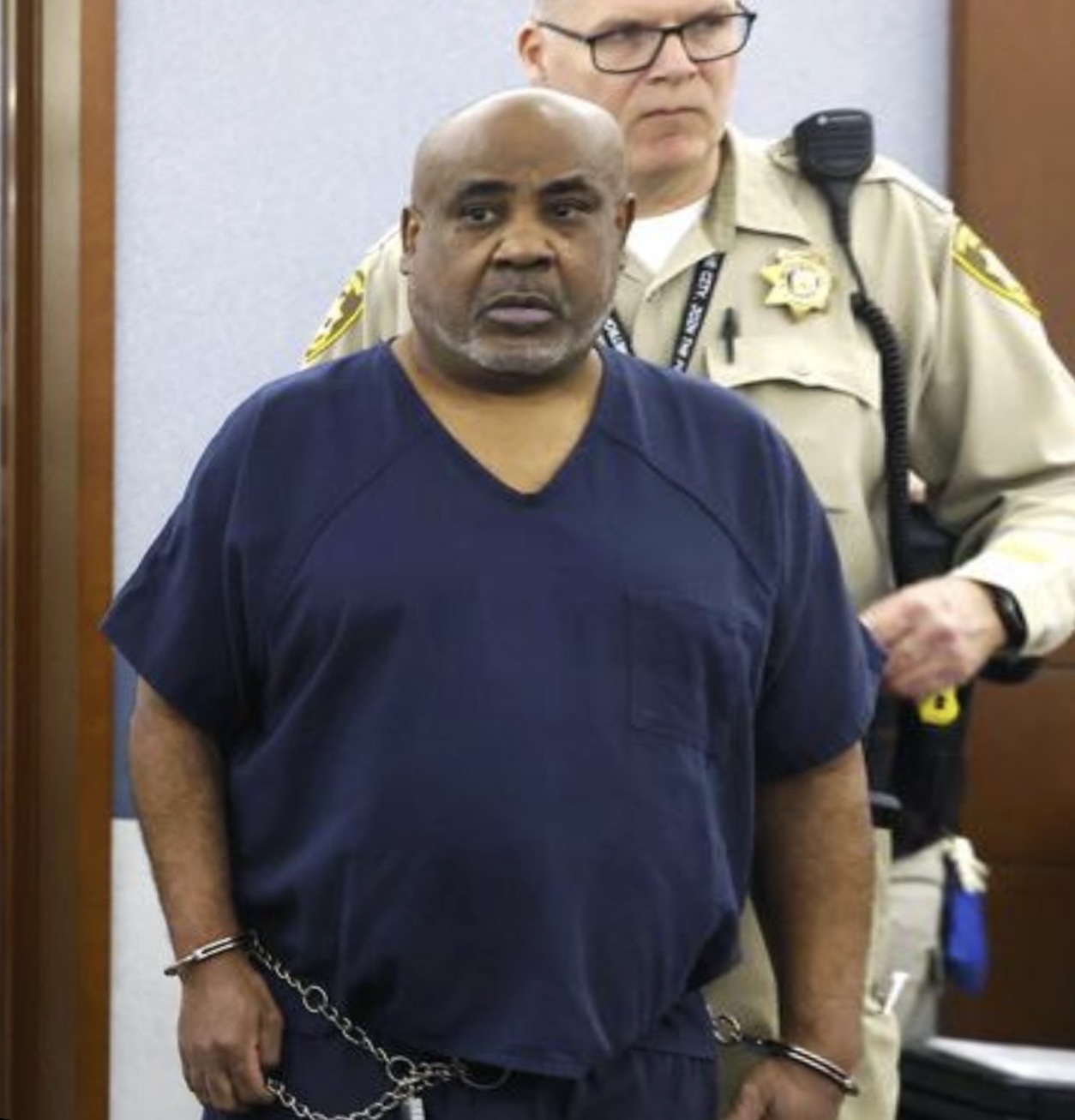
Tupac Shakur Murder Case: Duane “Keffe D” Davis Found Guilty Nearly 30 Years Later
LAS VEGAS — Nearly three decades after the killing of rap icon Tupac Shakur shocked the music world, a Nevada jury has delivered a historic verdict. Duane “Keffe D” Davis, 63, was found guilty of first-degree murder with a deadly weapon for his role in orchestrating Shakur’s 1996 killing.
The Clark County jury deliberated for nearly three hours before returning the unanimous guilty verdict following a trial in Las Vegas. Davis was not accused of personally firing the shots that killed Shakur. Prosecutors instead argued that he organized the retaliatory attack and supplied the firearm used by the group. Nevada law allows someone who participates in planning or facilitating a killing to be held criminally responsible even if that person was not the shooter.
What Happened to Tupac Shakur?
On September 7, 1996, Shakur was riding in a BMW driven by Death Row Records executive Marion “Suge” Knight after attending a boxing event in Las Vegas.
While their vehicle was stopped, a white Cadillac pulled alongside it and gunfire erupted. Shakur was struck multiple times and was hospitalized in critical condition. He died six days later at age 25. Knight survived.
The killing became one of the most famous unsolved cases in American music history.
Why Prosecutors Said Davis Was Responsible
Prosecutors argued that the attack was retaliation for an altercation earlier that evening involving Shakur, his associates and Davis’ nephew.
According to evidence presented at trial, Davis and three other men later traveled in a white Cadillac searching for Shakur and Knight. Davis had previously told investigators that he passed a firearm toward the back seat before the shooting occurred.
Prosecutors relied heavily on Davis’ own statements over the years, including recorded conversations with investigators, media interviews and material from his 2019 memoir Compton Street Legend. Police had suspected Davis for years but said the investigation gained momentum after he publicly discussed his involvement.
Davis’ defense challenged that evidence. His attorney argued that Davis’ public accounts were unreliable, exaggerated for money and could not be adequately corroborated. The jury ultimately rejected the defense argument and convicted him.
An Emotional Verdict
The verdict produced emotional scenes inside the courtroom. AP reported that Shakur’s sister, Sekyiwa “Set” Shakur, cried and embraced prosecutors after the decision was announced, while Davis’ son covered his face with his hand.
The conviction represents the first conviction connected to Shakur’s killing, bringing a major legal resolution to a case that has fascinated music fans, investigators and the public for decades.
What Happens Next?
Davis has said that he plans to appeal the conviction. Reuters reports that his sentencing is scheduled for October 13, 2026. He faces a maximum sentence of life in prison without the possibility of parole.
For hip-hop history, the verdict is particularly significant. Shakur was one of the most influential rappers of his generation, and his death became closely associated with the violent East Coast-West Coast rivalry that defined part of the 1990s rap era. Nearly 30 years later, the Las Vegas verdict marks a dramatic turning point in one of America’s best-known celebrity murder cases.