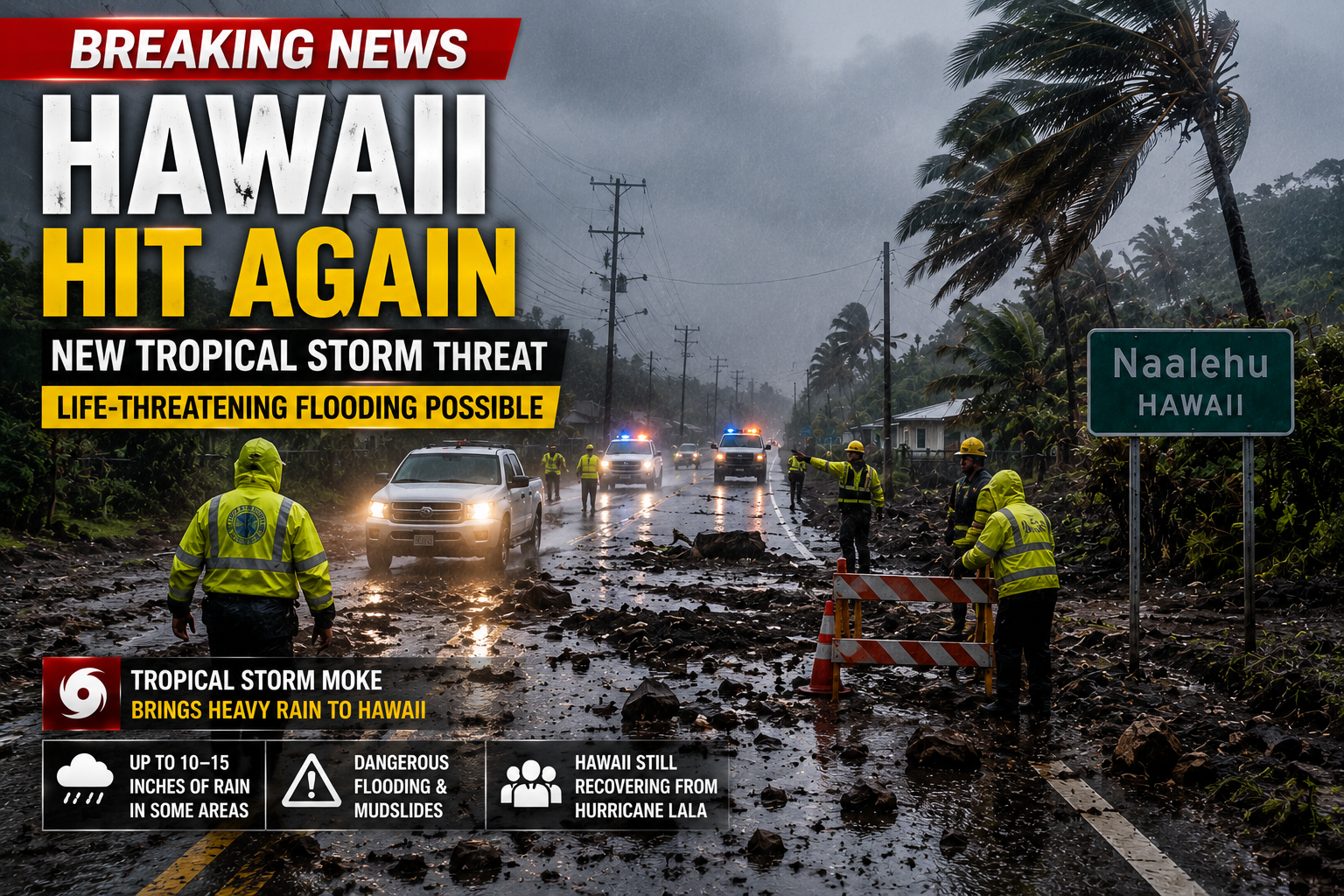
Hawaii Hit Again: Tropical Storm Moke Brought Heavy Rain and Flood Threat After Hurricane Lala
HONOLULU, Hawaii — Hawaii faced a second round of dangerous tropical weather in August when Tropical Storm Moke passed south of the islands, bringing heavy rain and renewed flooding concerns to communities still recovering from Hurricane Lala.
Moke’s biggest threat was not a direct landfall but the additional rainfall it brought to already saturated areas of Hawaii’s Big Island. Forecasters warned at the time that the combination could trigger dangerous flash flooding and mudslides.
Big Island Faced the Greatest Threat
As Moke approached Hawaii, the storm carried sustained winds of about 50 mph before later weakening.
The National Weather Service issued a Flood Watch for the Big Island, warning that 5 to 10 inches of rain could fall over windward and southeastern slopes, with isolated locations potentially receiving up to 15 inches.
Officials were particularly concerned because the ground was already saturated from Hurricane Lala.
Hawaii County Mayor Kimo Alameda advised residents to stay off roads and shelter in place as a precaution while the storm passed. Shelters were also opened for residents who needed them.
Hawaii Was Still Recovering From Hurricane Lala
Moke arrived as communities were dealing with significant destruction left by Hurricane Lala.
Lala’s powerful winds and torrential rainfall damaged roads and bridges, brought down trees and power lines, triggered flooding and mudslides, and swept some buildings from their foundations. Two storm-related deaths were ultimately reported.
The northeast coast of the Big Island recorded an extraordinary 43.54 inches of rainfall from Lala, according to the National Weather Service figures cited by AP.
More than 6,500 customers on the Big Island were also still without electricity as Moke approached, adding to concerns about the second round of severe weather.
Flooding and Mudslides Were the Main Concern
Unlike a powerful hurricane making a direct strike, Moke’s primary danger to Hawaii came from moisture circulating around the storm.
The National Weather Service warned that additional heavy rainfall could rapidly overwhelm streams and flood-prone areas because the soil was already saturated.
Officials also warned of possible property damage from rapid runoff, particularly across the windward and southeastern portions of the Big Island.
Eastern Maui was forecast to receive as much as 6 inches of rain, while smaller amounts were possible across other Hawaiian islands.
Moke Eventually Weakened and Moved Away
The threat eventually diminished.
Moke weakened from a tropical storm to a tropical depression on August 23 while moving westward away from Hawaii.
By 11 p.m. HST on August 24, the National Hurricane Center declared that Moke was no longer a tropical cyclone and issued its final advisory on the system.
At that point, the storm’s remnants were moving farther west and the NHC listed no remaining hazards affecting land.
For Hawaii, Moke’s arrival so soon after Hurricane Lala highlighted how vulnerable communities can remain when another tropical system arrives before recovery from the previous storm is complete.