PART5
The findings did not automatically prove every allegation, and Miles cautioned us not to assume the final legal outcome.
But the financial trail was becoming clearer.
Some money had been used for household expenses. Some had gone toward Glenn’s vehicle. Other funds had moved through accounts controlled by Vivian.
A portion had also been used to pay debts that Vivian had never mentioned to Grandma.
When confronted with the records, Vivian claimed she had intended to repay everything.
But she had no written repayment agreement with me, and I had never known the money existed.
The distinction was important.
You cannot repay someone for money they never agreed to lend you and pretend the original decision was harmless.
Meanwhile, my mother began visiting regularly.
At first, I kept our conversations short.
She brought groceries, helped fold laundry, and occasionally watched Maisie while I attended medical appointments.
She didn’t ask me to forgive her.
She simply showed up.
One afternoon, while Maisie was sleeping, my mother found me sorting through Owen’s belongings.
I had kept his old jacket in a box beneath the bed because I couldn’t bear to decide what to do with it.
My mother touched the sleeve.
“He was a good man,” she whispered.
“Yes.”
“I wish I had spent more time getting to know him.”
I continued folding the clothes.
“So do I.”
She sat beside me.
“I know I can’t make up for the months you were alone. But if you let me, I want to be part of Maisie’s life.”
I looked at her.
“Being part of her life means being honest with her. It means showing up when things are difficult. And it means never asking her to hide something wrong just because the person who did it is family.”
My mother nodded.
“I understand.”
“I’m not ready to pretend everything is fine.”
“I don’t expect you to.”
That was the first conversation we had in years that ended without either of us pretending.
Then, in January, Miles called Grandma with an update.
The bank had completed another stage of its review.
A substantial portion of the missing money had been traced to accounts and payments associated with Vivian and Glenn. Some funds might be recoverable through legal proceedings, while others required further investigation.
There was also a new development.
An independent document examiner had identified concerns with the authorization Vivian had submitted.
Miles explained that the signature and supporting paperwork required further examination before any definitive conclusion could be drawn.
But the questions were serious enough that the matter had been referred to the appropriate authorities.
Grandma listened carefully.
“Proceed according to the evidence,” she said. “I don’t want revenge. I want the truth.”
After she ended the call, she sat quietly for several minutes.
Then she looked at me.
“I loved Vivian like a daughter.”
“I know.”
“I still love her. But loving someone doesn’t mean protecting them from the consequences of their choices.”
I thought about that for a long time.
For most of my life, I had believed family loyalty meant forgiving quickly and keeping private problems hidden.
Now I was learning that genuine loyalty sometimes required the opposite.
It required honesty.
It required boundaries.
And sometimes it required allowing someone you loved to face consequences you wished they had never created.
A week later, Vivian contacted me directly.
Her message was brief.
We need to talk. Just you and me.
I showed it to Miles before responding.
He advised me not to meet her alone while the investigation was ongoing.
So I agreed to a conversation at his office, with him present.
Vivian arrived looking tired and older than I remembered.
She wore the same expensive coat she had worn on Thanksgiving, but her confidence was gone.
For a moment, I saw the aunt who had once taught me to bake cookies.
Then I remembered the messages, the transfers, and the months I had spent counting coins.
She sat across from me.
“I want you to know I never wanted you to suffer.”
I waited.
“I thought I could use the money temporarily. Glenn’s business was struggling, and we had debts. I believed I could replace everything before anyone noticed.”
“Why didn’t you ask Grandma for a loan?”
“Because she would have said no.”
The answer was immediate.
And it told me more than any apology could have.
She knew Grandma wouldn’t approve.
She knew the money was intended for me.
She took it anyway.
“And when you realized I was struggling?” I asked.
Vivian lowered her eyes.
“I told myself you would eventually manage.”
“You knew I had a baby.”
“I know.”
“You knew I had lost Owen.”
“Yes.”
“You knew I was injured.”
She began to cry.
“Yes, Natalie.”
I leaned forward.
“Then why did you let me believe I was alone?”
She covered her face.
For a long time, she said nothing.
Finally, she whispered, “Because if you knew about the money, everything would have fallen apart.”
I felt something inside me settle.
Not forgiveness.
Not hatred.
Clarity.
“You weren’t protecting me,” I said. “You were protecting yourself.”
Vivian looked up.
“I know that now.”
I stood.
“I hope you take responsibility for what happened. But I won’t lie for you, and I won’t tell Grandma to stop the investigation.”
She nodded through her tears.
“I understand.”
I left the office without embracing her.
It was the first time I had ever walked away from a family member without trying to make their pain easier to bear.
And although it hurt, I felt stronger for it.
The next chapter would not be decided by Vivian’s promises.
It would be decided by the evidence, the law, and the choices each of us made afterward.
By spring, the case had moved beyond the family.
The relevant authorities were reviewing the records, and the financial investigation had established that the $180,000 Grandma intended for me had not been delivered to me as she believed.
The process was slow.
There were interviews, document requests, bank reviews, and difficult conversations. Miles reminded us repeatedly that recovering the money and determining legal responsibility were separate matters.
Grandma didn’t demand a dramatic public confession.
She didn’t organize another family gathering to humiliate Vivian.
She let the evidence speak.
Meanwhile, she made sure Maisie and I had a safe place to live.
She arranged for my medical needs to be addressed and helped me find a financial adviser who had no connection to anyone in the family.
She also insisted that the remaining funds she personally provided be handled transparently, with records I could review myself.
“I want you to have control over your life,” she told me. “Not dependence on me, and certainly not dependence on anyone who believes your vulnerability gives them permission to make decisions for you.”
I took her advice seriously.
I used part of the support to clear urgent bills and arrange the physical therapy I had postponed. I created a modest budget for Maisie’s needs and kept the rest protected while the legal process continued.
I also began looking for work I could do around childcare.
It wasn’t easy.
Some mornings, my wrist hurt so badly that opening a jar was difficult. Some nights, Maisie woke every two hours, and I wondered how I would manage an interview the following day.
But I kept going.
I found a part-time bookkeeping position with a small local company. The work was flexible, and my accounting background helped me rebuild my confidence.
The first time I received a paycheck, I sat in my car and cried.
It wasn’t a fortune.
It wasn’t enough to erase the previous year.
But it was mine, earned through my own effort, and it represented something I had feared losing forever: the ability to build a future.
I bought Maisie a new blanket.
It was soft, pale yellow, and covered in tiny white stars.
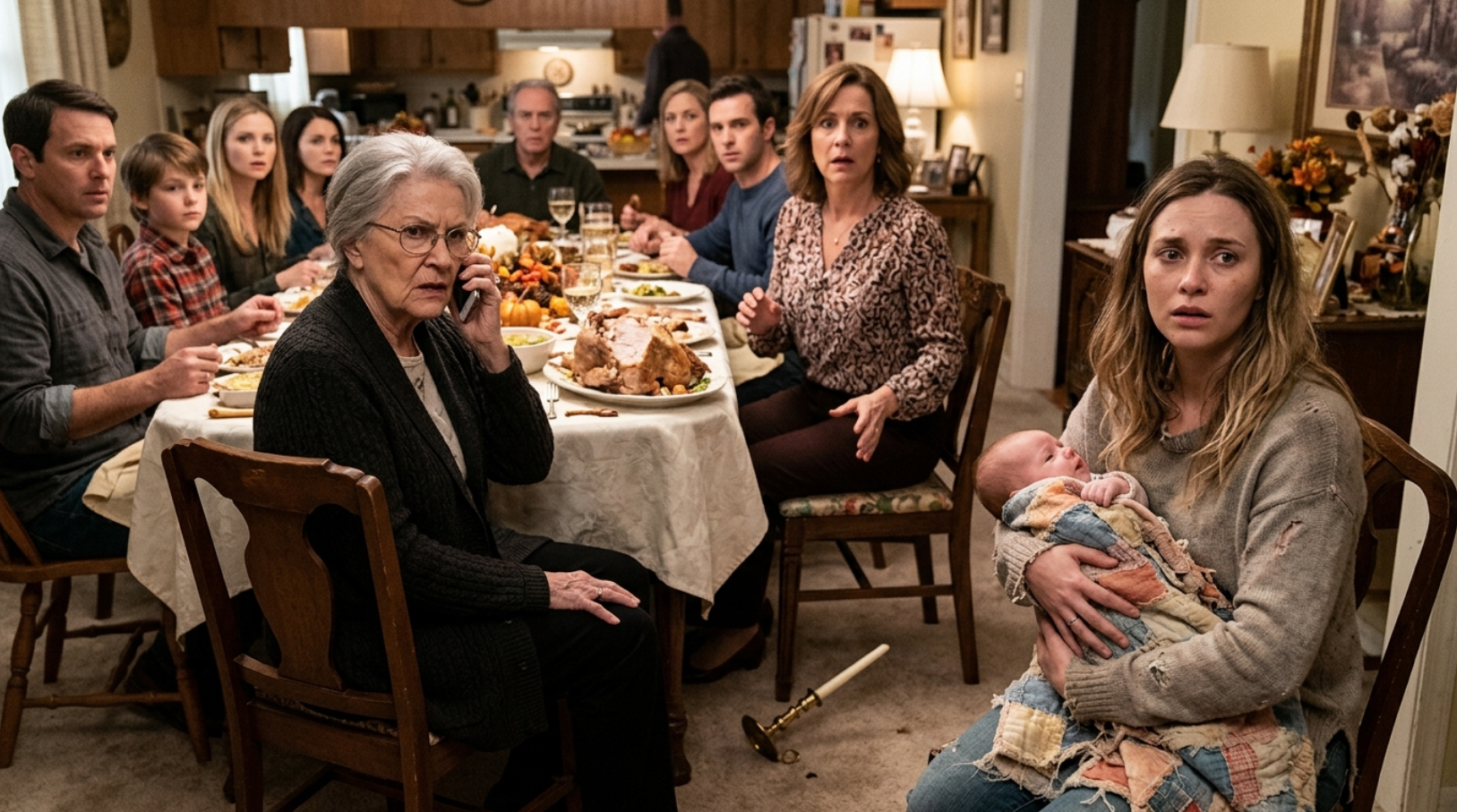
When I wrapped her in it, I thought of the secondhand blanket Grandma had noticed on Thanksgiving.