PART6
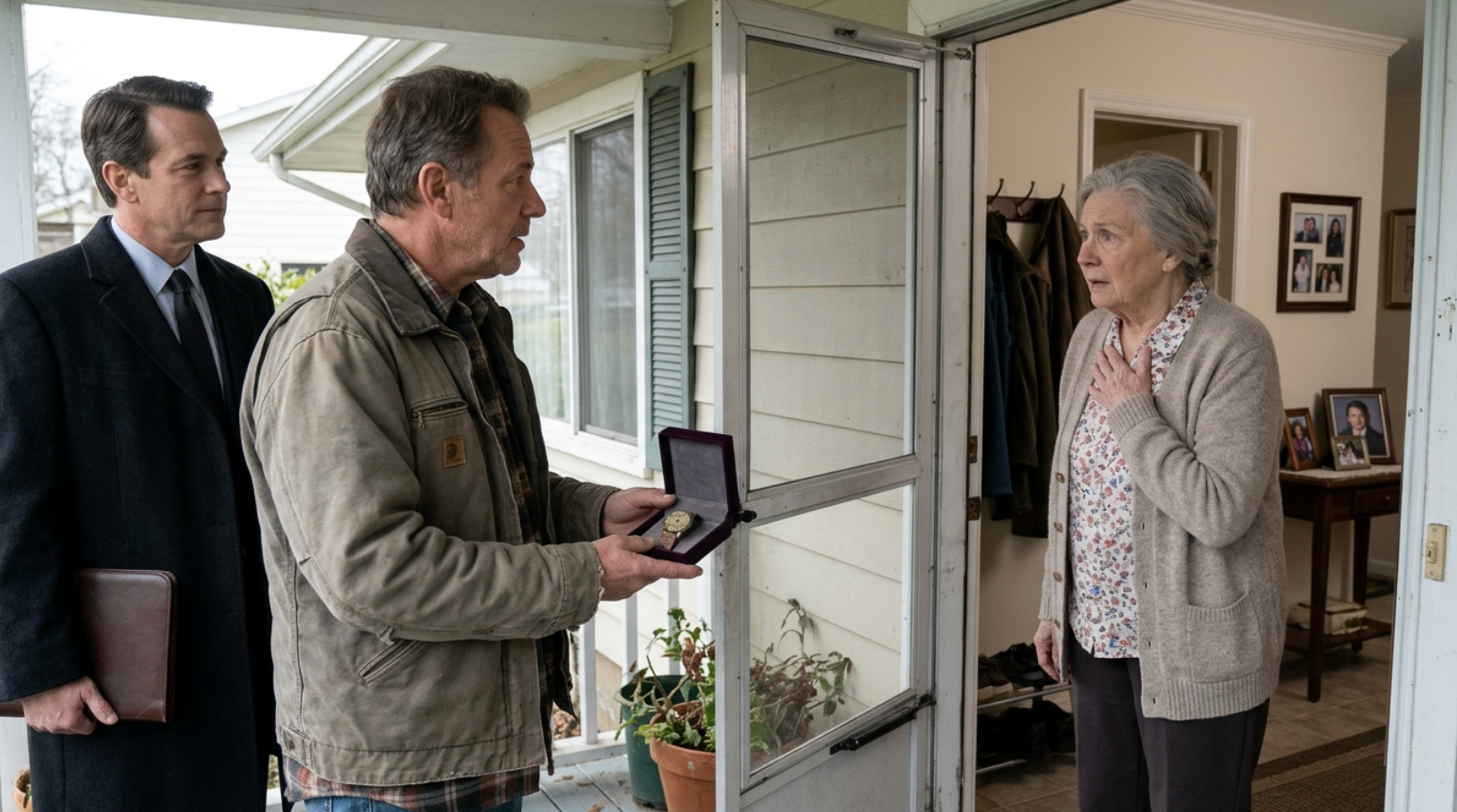
He had located someone who could authorize access to the former mill property.
The building was still standing, although much of the original equipment had been removed. The old locker rooms were in a section that had been closed for decades.
“We can visit Thursday morning,” he said. “I would prefer that we go together. If we find anything, we need to document it properly.”
Mom agreed to come.
I took the day off work.
On Wednesday evening, I received a text from Scott.
Don’t go to the mill.
I stared at the message for a long time.
Then I called him.
He answered on the fourth ring.
“Why shouldn’t we go?” I asked.
“Because it’s a waste of time.”
“You don’t know that.”
“Dad worked there for thirty years. He probably left some old junk in a locker. What are you expecting to find? A million dollars?”
“I expect to find whatever he wanted Mom to find.”
Scott sighed.
“Jen, listen to me. Sometimes the dead leave things behind because they don’t want anyone to know about them.”
“Then why would Dad write down the locker number?”
“I don’t know!”
His voice rose so suddenly that I pulled the phone away from my ear.
For a moment, neither of us spoke.
Then he said more quietly, “Just leave it alone.”
“Why?”
“Because Mom has been through enough.”
I almost laughed.
“That’s what you’re worried about? Mom going through more pain?”
“Don’t start.”
“You stole from her, Scott. You took the one thing she kept beside Dad’s glasses. You left her thinking she’d misplaced it. You don’t get to use her feelings as an excuse now.”
He said nothing.
I continued.
“If there’s something in that mill that hurts Mom, we’ll deal with it. But I’m not going to let you decide what she gets to know about her own husband.”
“Dad wouldn’t have wanted this.”
“You don’t know what Dad wanted. That’s why we’re going.”
I ended the call.
My hands were shaking.
Not because I was afraid of the mill.
Because I was beginning to understand that whatever lay inside Locker 214 had the power to frighten my brother more than the consequences of stealing from our mother.
That night, I barely slept.
At six the next morning, I drove to Mom’s house.
She was already dressed, sitting at the kitchen table with Dad’s watch beside her.
She had wound it carefully, although it no longer kept time.
“I thought you might want to bring it,” she said.
I nodded.
She placed it in the velvet box and slipped it into her handbag.
Then she stood and picked up the photograph.
“We should bring this too.”
The drive to the old mill took forty minutes.
The building appeared beyond a row of bare trees, its tall brick walls dark against the gray winter sky. A faded sign hung above the main entrance. Most of the windows were boarded up, and weeds had grown through cracks in the parking lot.
It was difficult to imagine thousands of workers arriving there every morning, their lunch pails in their hands, ready to spend another day beside roaring machinery.
Dad had been one of them.
Mr. Cole was waiting by the gate with a representative from the property management company.
After introductions and a brief explanation of our purpose, we were escorted inside.
The air smelled of dust, old metal, and damp concrete.
Our footsteps echoed through the empty corridors.
We passed a former maintenance room, a row of offices, and a break room with faded paint on the walls.
Then the representative stopped beside a heavy door.
“Locker rooms are through here,” he said. “Most of the lockers were removed during the first renovation. A few of the old units were left behind.”
He unlocked the door.
Beyond it was a long room lined with metal lockers.
Some hung open. Others were dented or rusted shut. Numbers had been painted over so many times that they were difficult to read.
Mom walked slowly along the row.
Her fingers brushed the cold metal.
“Your father used to complain about this place,” she murmured. “He said the lockers were so small that you couldn’t turn around without hitting your elbows.”
I smiled sadly.
“That sounds like Dad.”
At the far end of the room, the representative stopped beside a bank of old gray lockers.
“Here we are. These are the ones that were never removed.”
I looked at the numbers.
208.
209.
210.
My heart began to pound.
211.
212.
213.
Then—
214.
The locker was taller than the others, with a rusted handle and a small keyhole.
Mom took the photograph from her handbag and looked at the back.
“The three of us knew the truth,” she whispered.
Mr. Cole put on a pair of gloves.
“Before we open it, I want to document its condition.”
He took photographs of the locker, the number, the handle, and the surrounding area.
Then he examined the keyhole.
“There is a lock,” he said. “But it looks old.”
The property representative brought over a maintenance worker with a set of tools.
After checking that the locker belonged to the abandoned facility and that we had permission to open it, the worker carefully removed the damaged lock.
The door resisted at first.
Then it gave way with a long metallic groan.
Inside was a pair of dusty work gloves, a small metal lunch tin, and a bundle wrapped in an oilcloth.
Nothing else.
Mom covered her mouth.
I stared at the bundle.
Mr. Cole carefully lifted it out and placed it on a clean surface.
The oilcloth had been folded around something flat and rectangular.
He loosened the ties.
Inside was a thick black ledger.
Its cover was cracked, and the pages were yellowed at the edges.
A second envelope lay beneath it.
On the envelope, Dad had written four words.
For Margaret. Read first.
Mom reached for it, but her hands trembled too much to open it.
I held her fingers.
“Take your time.”
She drew a shaky breath and opened the envelope.
Inside was a single sheet of paper.
The handwriting was unmistakably Dad’s.
Margaret,
If you have found this, then the watch has finally brought you here.
I need you to understand something before you read the ledger.
For most of our life together, I told myself I was protecting you by keeping quiet. I thought that if I carried the burden alone, you and the children could live without fear.
But silence has a price, and I have paid it for forty-five years.
The truth inside this book could destroy the reputation of a man who spent decades pretending to be honest. It could also restore what was taken from people who had no power to defend themselves.
I did not keep this for revenge.
I kept it because one day, someone might finally be brave enough to ask the right questions.
If that day has come, please don’t let what happened to me happen to anyone else.
I am sorry I could not tell you sooner.
All my love,
Harold.
Mom lowered the letter.
For a long time, she didn’t move.
Then she looked at the black ledger.
“Open it,” she whispered.
Mr. Cole turned the cover carefully.


One Comment on “PART6: My Brother Sold Dad’s 51-Year-Old Watch for $40—Then a Shop Owner Found a Secret Inside That Changed Our Family Forever”
Comments are closed.