PART4
“What?”
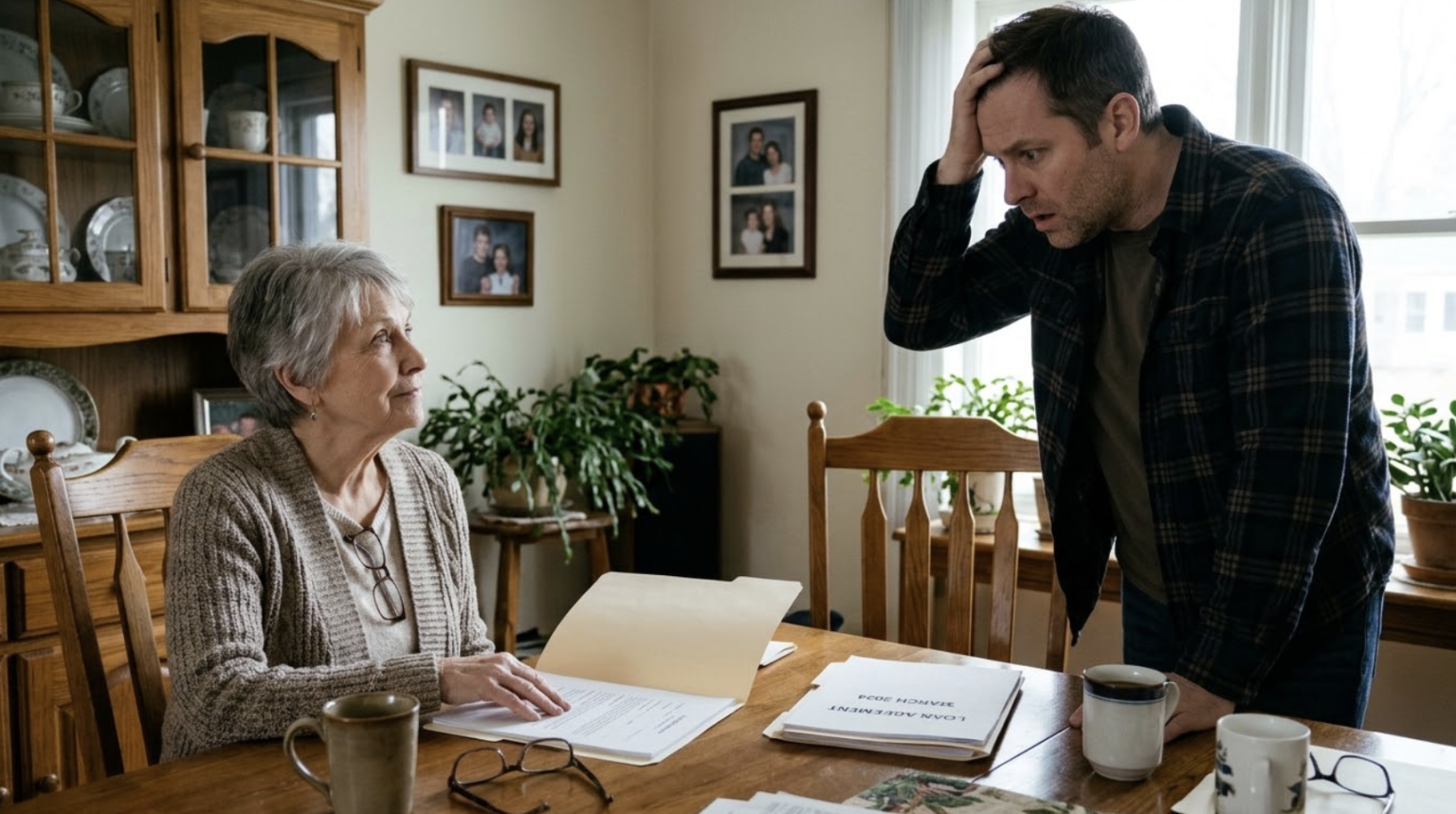
“He signed a legal agreement in March. The money was an advancement against his future inheritance. He received it early because he asked for it.”
“But he said it was a gift.”
“It was money I gave him under a documented estate arrangement. He knew exactly what he was signing.”
I heard her moving around.
Then she said, “He never told me that.”
“Did he tell you that the house was legally his?”
Another pause.
“Yes.”
I closed my eyes.
There it was.
The truth.
My son had not simply been impatient. He had been making promises with property he didn’t own.
“Jenna, I want to ask you something. Have you already spent money preparing to move?”
She hesitated.
“We ordered some furniture. Her parents were going to help us with the renovations. We also paid a contractor to come out and look at the kitchen.”
“How much?”
“About six thousand dollars.”
I felt a headache beginning behind my eyes.
“Jenna, I am sorry you were told something that wasn’t true. But I never agreed to give away my house. I never agreed to move into the apartment over the garage. And I never authorized any renovations.”
She was silent for several seconds.
Then her voice became smaller.
“Does Kyle really not own the house?”
“No, sweetheart. He doesn’t.”
She exhaled.
“Then we have a problem.”
I almost laughed.
Yes.
We certainly did.
“Jenna, I don’t want to fight with you. You’ve always been welcome here. But I need you to understand that this is my home. I am not going anywhere.”
“I understand.”
She sounded different now.
Less confident.
More thoughtful.
“Can I ask you something?”
“Of course.”
“Did you know Kyle was telling people the house was his?”
“No. I only found out today.”
She didn’t respond.
Then she said, “I’m going to talk to him.”
We ended the call.
I sat there for a long time.
I had hoped that after the conversation with Mr. Dunne, Kyle might calm down and think about what he had done.
Instead, I was beginning to see how much of this had been planned without my knowledge.
The next morning, I called Mr. Dunne.
I explained the conversation with Jenna and told him about Kyle’s statements concerning the house.
He listened carefully.
“Margaret, I think we should arrange a meeting.”
“Why?”
“Because I want to make sure your estate documents, property records, and financial arrangements are all in order. I also want to discuss your wishes regarding future changes.”
“Do you think I need to worry?”
“I think you should be careful. That is different from saying you need to be afraid.”
I appreciated that answer.
“All right. When?”
“Tomorrow morning.”
Before hanging up, he added something.
“Margaret, I also want to remind you that you are under no obligation to discuss your financial arrangements with anyone unless you choose to.”
I thanked him.
Then I spent the afternoon doing something I hadn’t done in years.
I went through Frank’s old filing cabinet.
It was tucked into the small office off the kitchen.
Frank had always been meticulous about paperwork. Every insurance document, tax return, property record, and bank statement had its own folder.
I found our original house deed.
I found the farm rental agreements.
I found the life insurance paperwork.
And at the very bottom, inside a brown envelope marked ESTATE PLANNING, I found a handwritten letter from Frank.
My name was written across the front.
I sat down before opening it.
The letter was dated October 2019, less than a year before he died.
Margaret,
If you’re reading this, I hope it means I’ve lived long enough to annoy you for another twenty years. But if I haven’t, I want you to remember something.
You and I built our life together. Every brick in that house, every acre we bought, every dollar we saved came from both of us.
I know Kyle. I love him, but I worry about him. He wants everything immediately. I hope he grows out of that.
If he ever makes you feel guilty for protecting what we worked for, don’t let him.
You deserve to enjoy the life we built. Don’t spend your remaining years being afraid of disappointing someone.
Love always,
Frank.
I read it twice.
Then I pressed the letter against my chest.
For a moment, I could almost hear him laughing in the kitchen.
“Well, Frank,” I whispered, “you certainly knew your son.”
I folded the letter carefully and placed it in my purse.
The next morning, I went to Mr. Dunne’s office.
He reviewed the documents, confirmed the ownership arrangements, and made several recommendations for keeping my records organized.
He also suggested that I obtain independent legal advice if I ever faced pressure to transfer property or change my estate arrangements.
I agreed.
We discussed the $120,000 advancement.
He explained that the agreement was designed to prevent the early payment from being counted again as though it had never happened. The exact effect on Kyle’s eventual share would depend on the final estate accounting and the terms of the documents.
Then he looked at me.
“Margaret, may I ask you something?”
“Certainly.”
“Do you still want Kyle to receive the remaining portion of his inheritance?”
I looked down at my hands.
It was a difficult question.
For years, I had imagined leaving him everything Frank and I had worked for.
I had pictured him keeping the farmhouse in the family, maintaining the fields, and perhaps bringing his children here someday.
But I had never imagined him standing in my living room telling me to leave.
“I don’t know,” I admitted.
Mr. Dunne nodded.
“That’s perfectly reasonable. You don’t have to decide today.”
I thanked him.
Before I left, he made one final suggestion.
“Don’t make any changes because you’re angry. Make them because they reflect what you genuinely want.”
I carried those words home.
For the next two weeks, I heard nothing from Kyle.
No phone calls.
No visits.
No messages asking how I was.
I began to settle back into my routine.
Every morning, I watered the flowers.
I checked the mailbox.
I made breakfast.
Sometimes I walked down to the edge of the property and watched the farm equipment moving across the rented fields.
It was peaceful.
But the silence didn’t last.
On a Thursday afternoon, Kyle arrived with Jenna.
He looked exhausted.
His shirt was wrinkled, and he hadn’t shaved.
Jenna looked uncomfortable.
“Mom,” he said.
“Hello, Kyle.”
“Can we come in?”
I stepped aside.
They entered the living room.
Kyle looked at Frank’s chair, then at the fireplace.
He seemed to remember something.
“Mom, I owe you an apology.”
I said nothing.
He continued.
“I shouldn’t have told you to move out. I shouldn’t have assumed the house was mine.”
“That’s a start.”
He looked down.
“Jenna and I have been talking.”
Jenna sat on the sofa.
“We’ve been trying to understand what happened,” she said.
I looked at her.
“And?”
She turned toward Kyle.
“He told me you were going to give him the house eventually. He said the inheritance money was just the beginning.”
Kyle rubbed his forehead.
“Jenna, we already discussed this.”
“No, Kyle. We discussed the money. We didn’t discuss the fact that you told my parents you owned a house that wasn’t yours.”
He looked embarrassed.
I stayed quiet.
Jenna turned back to me.
“I want you to know that I never intended to push you out. I thought you had agreed to it.”
“I believe you.”
“Thank you.”
Then Kyle spoke.
“Mom, there’s another problem.”
I looked at him.
“What now?”
He took a deep breath.
“The boat.”
I waited.
“I can’t afford it.”
I almost expected that answer.
He explained that the payments, storage fees, insurance, maintenance, and fuel had become overwhelming.
He had also accumulated credit card debt.
The $12,000 he had told me about was nearly gone.
He had listed the boat for sale, but the market wasn’t giving him what he expected.
“How much do you owe?” I asked.
He hesitated.
“About sixty-eight thousand.”
I looked at him.
“Sixty-eight thousand dollars?”
“Between the loan and other expenses.”
Jenna stared at him.
“You told me it was forty.”
“I didn’t want to worry you.”
She shook her head.
I looked at my son.
“Kyle, what exactly are you asking me?”
He swallowed.
“I was hoping you could help me with the debt.”
I felt a familiar sadness.
Not anger.
Sadness.
Because even after everything, he had come back asking for money.
Again.
“How much?”
“Maybe fifty thousand.”
I looked at him for a long moment.
Then I shook my head.
“No.”
His face tightened.
“Mom, please.”
“No, Kyle.”
“You have the money!”
“That doesn’t mean you are entitled to it.”
“I know I made mistakes.”
“Yes, you did.”
“I’ll pay you back.”
I leaned forward.
“With what?”
He didn’t answer.
I continued.
“You came here in March asking for $120,000. I gave it to you. Four months later, you came back wanting my house. Now you’re asking me for another $50,000 because you bought something you couldn’t afford.”
His eyes filled with frustration.
“So I’m supposed to lose everything?”
I looked at him.
“No. You’re supposed to take responsibility for what you chose.”
Jenna looked down at her hands.
For several seconds, nobody spoke.
Then she surprised me.
“Kyle, I think we need to leave.”
He turned toward her.
“What?”
“We need to go home and figure this out ourselves.”
“But—”
“No. Your mother has already helped us. We cannot keep asking her to fix our decisions.”
Kyle looked at me.
I didn’t say anything.
Finally, he stood.
“Fine.”
They walked toward the door.
Jenna stopped beside me.
“I’m sorry, Margaret.”
I gently touched her arm.
“I know.”
After they left, I stood in the doorway watching their car disappear.
I felt sorry for them.
But I didn’t feel responsible for rescuing them.
And that was something I was learning to accept.
Three weeks later, Kyle called.
This time, he didn’t ask for money.
“Mom, I sold the boat.”
I was sitting on the porch, reading a book.
“How much did you get?”
“Seventy-four thousand.”
“That’s good.”
“Not really. I still lost a lot.”
“Well, at least the payments are gone.”
He sighed.
“Yeah.”
There was a long silence.
Then he said something I hadn’t heard from him in years.
“I’m sorry, Mom.”
I closed my book.
“For what?”
“For everything.”
I waited.
He continued.
“I think I got carried away. When you gave me the money, I felt like I had finally made it. I wanted people to see that I could afford nice things. I wanted to prove something.”
“To whom?”
“Everybody, I guess.”
I looked out at the fields.
“Your father never cared what people thought about his possessions.”
“I know.”
“He cared about what he could provide for his family.”
“I know, Mom.”
“And he never bought anything just to make somebody else jealous.”
Kyle laughed quietly.
“Yeah. Dad would have hated that boat.”
I smiled.
“Your father would have asked how much fuel it burned before he even looked at the engine.”
For the first time in months, we laughed together.
Then Kyle became serious again.
“Mom, I want to ask you something.”
“Go ahead.”
“Can I come over this weekend? Just to visit?”
I looked at the porch.
The empty chair beside me was Frank’s.
“Of course.”
“Without talking about money or the house.”
“That would be nice.”
He arrived Saturday morning.
He brought groceries.
Not expensive wine.
Not a polished speech.
Just a bag of oranges, bread, coffee, and a small box of chocolates.
He walked into the kitchen and placed everything on the counter.
“I didn’t know what you needed, so I bought a little of everything.”
I smiled.
“You didn’t have to do that.”
“I know.”
We spent the morning talking.
He told me about work.



One Comment on “PART4: My Son Demanded His Inheritance Early, Then Tried to Kick Me Out of My Own House—But One Document He Signed Changed Everything”
Comments are closed.