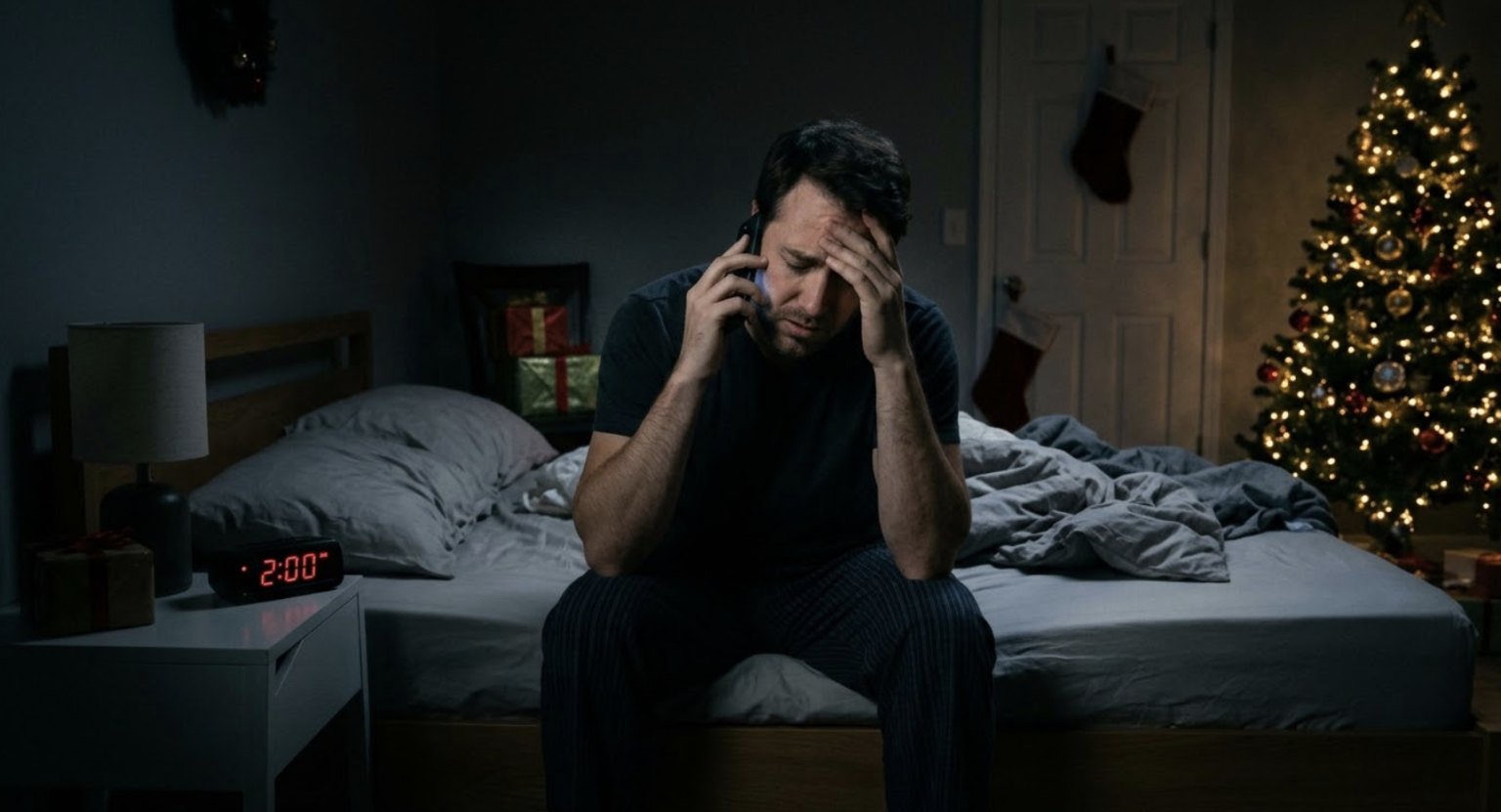
PART5
“We’re going to help you establish the identity theft record and provide documentation you can use with the banks, credit bureaus, and other institutions. It may take time, but we’re documenting the evidence.”
That was the first time I had felt something close to relief.
Not because everything was solved.
But because someone finally understood that I was a victim too.
The next week, I received a letter from my father.
It was handwritten.
I recognized his handwriting immediately.
I almost threw it away without opening it.
But curiosity won.
Joshua,
I don’t know how to begin this letter. I have spent several nights thinking about what happened, and every time I try to explain it, I realize I have no explanation that makes it right.
We knew Tanner was in trouble. We knew he had been gambling. We knew he had debts. We were scared that if we told you, you would refuse to help. So we decided to use your information and tell ourselves we would fix it before you found out.
I don’t know when we became the kind of parents who could make that decision. I keep telling myself we were trying to save our son. But the truth is, we were protecting one son by putting the other at risk.
I thought you were strong. I thought you could handle anything. I thought you had a good job, a good life, and enough money to recover if something went wrong.
I never stopped to think that you had worked for all of it. I never asked what it would cost you. I simply assumed you would help us because you always had.
I was wrong.
I am sorry.
Dad.
I read the letter three times.
Then I placed it in a drawer.
I didn’t call him.
I didn’t forgive him.
Not because I wanted revenge.
But because an apology was not a magic key that could unlock the door to the trust he had destroyed.
For the first time, I understood that I could accept someone’s apology without immediately giving them access to my life.
I could hear him without agreeing to rescue him.
I could love someone and still stay away.
In February, I received a letter from Tanner’s attorney.
Tanner wanted to speak with me.
The letter said he was remorseful.
He wanted to explain.
He wanted to apologize.
And he wanted me to consider helping him with legal expenses.
I stared at the last sentence for a long time.
Even now.
Even after everything.
He was still asking.
I didn’t respond to the attorney.
Instead, I sent a message through the proper channel stating that I would not provide financial assistance and would cooperate fully with the investigation.
Three days later, Tanner called me from the detention facility.
I answered.
“Joshua.”
His voice was quieter than I remembered.
“Why are you calling?”
“I just want to talk.”
“Talk.”
He took a breath.
“I know I messed up.”
I said nothing.
“I know you’re angry.”
“I’m not angry anymore.”
He laughed weakly.
“That’s worse.”
“Maybe.”
“Mom says you won’t even talk to Dad.”
“That’s true.”
“He’s not doing well.”
I leaned against the kitchen counter.
“Tanner, I’m not going to discuss Mom and Dad with you.”
He was quiet.
Then he said, “I never thought it would get this bad.”
I closed my eyes.
“How much of my identity did you use?”
“I don’t know exactly.”
“How many accounts?”
“I don’t know.”
“How many signatures?”
He started breathing heavily.
“Joshua, I didn’t plan for this.”
I almost interrupted.
But I waited.
“I thought I could get money, pay everything back, and nobody would know. Mason said it was easy. He told me everybody did it. He said we could move the money around and fix it later.”
“Who is everybody?”
“I can’t tell you everything.”
“Why?”
“Because I don’t know what they’re going to do.”
I sat down.
“Are you afraid of Mason?”
Tanner didn’t answer.
That silence told me more than his words.
“Tanner, listen to me. If someone threatened you, tell your lawyer. Tell the investigators. But don’t ask me to lie. Don’t ask me to send money. Don’t ask me to take the blame.”
He started crying.
“I know.”
“Do you?”
“Yes.”
I waited.
Then he said, “I’m sorry I used your name.”
It was the first apology I had heard from him that didn’t include the word but.
I didn’t know what to do with it.
“Why?”
He sobbed.
“Because I thought you’d always bail me out. I thought you would be mad for a few days, then you’d send money. Mom said you’d come through. Dad said we just needed to keep you calm until everything was handled.”
I felt my throat tighten.
“So you didn’t think about what would happen to me?”
“No.”
The answer was so simple.
So honest.
So devastating.
I looked at the wall.
“Tanner, I hope you get the help you need. I hope you stop gambling. I hope you learn how to live without taking from other people. But I cannot save you.”
He cried harder.
“You’re really not going to help me?”
“I’m helping you by telling the truth.”
He didn’t speak.
Then I said, “I’m going to end this call.”
“Joshua—”
“Goodbye, Tanner.”
I hung up.
And this time, I didn’t feel guilty.
In March, my mother sent me an email.
The subject line was:
PLEASE COME HOME.
She said my father was struggling.
She said Tanner was facing serious consequences.
She said Skyler was angry and refusing to speak to anyone.
She said the family was falling apart.
Then she wrote:
We need to sit down as a family and decide how to move forward. You cannot keep punishing us forever.
I read the email.
Then I replied.
I am willing to meet with you and Dad in a public place. I will not discuss the investigation, financial liability, or any request for money. I will not meet with Tanner unless it is arranged through his attorney or the investigators. If those boundaries are not acceptable, I will not attend.
My mother agreed.
We met at a restaurant in Denver.
My parents arrived first.
My father looked thinner.
My mother looked tired.
Skyler didn’t come.
For the first twenty minutes, we talked about ordinary things.
The weather.
My work.
My apartment.
Then my mother put her napkin down.
“Joshua, we want our family back.”
I looked at her.
“What does that mean?”
“It means we want you to stop talking to the police.”
I stared at her.
“Mom, the investigation is not something I control.”
“You can tell them you don’t want to press charges.”
“I can tell them the truth. That’s what I’ve been doing.”
My father leaned forward.
“Joshua, we made mistakes.”
“Yes.”
“We’re sorry.”
I nodded.
“Okay.”
My mother looked surprised.
“Okay?”
“You’re sorry. I heard you.”
“Then why can’t we move forward?”
I took a slow breath.
“Because you think an apology means I have to trust you again.”
My father looked down.
My mother began crying.
“We are your parents.”
“I know.”
“Everything we did was for this family.”
“No. Everything you did was to protect Tanner. And when you ran out of options, you decided I would pay.”
My mother shook her head.
“That’s not true.”
I took my phone out.
I didn’t play the recordings.
I didn’t show them the messages.
I didn’t need to.
I simply said, “Dad admitted that you both knew about the accounts. You knew my identity was being used. You knew Tanner was gambling. You knew there was money being moved. You told me it was an assault and demanded twenty thousand dollars.”
My mother stared at me.
My father closed his eyes.
Then I asked the question I had wanted to ask since Christmas.
“Did you ever think about what would happen if I went to jail for something Tanner did?”
My mother started crying.
My father didn’t answer.
“Did you think about my career? My house? My future? My reputation? Did you think about the people who trusted me?”
My father whispered, “We didn’t think it would happen.”
I shook my head.
“You didn’t think it would happen to me.”
The silence was long.
Then my mother reached across the table.
“Joshua, please. We can fix this.”
I moved my hand away.
“No. You can’t fix this by asking me to forget.”
She broke down.
My father stared at his coffee.
And for the first time, I saw them without the roles they had played in my childhood.
Not as the parents I had spent my life trying to please.
Not as people who always knew what was best.
Just two adults who had made terrible decisions and were now facing the consequences.
I stood.
“I hope one day we can have a relationship again. But it won’t be the same one. I’m not going to pay your bills. I’m not going to rescue Tanner. I’m not going to co-sign anything. I’m not going to give you my documents. And I’m not going to accept being called selfish for protecting myself.”
My mother looked up.
“Then what are we supposed to do?”
I looked at her.
“Live your lives. Take responsibility. And stop expecting me to carry them.”
I left the restaurant.
For the first time, I didn’t look back to see whether they were following me.
The investigation lasted months.
There were interviews, financial records, bank statements, forensic reports, and more paperwork than I had ever seen in my life.
At first, every new discovery made me feel worse.
Then something changed.
I stopped being afraid of the next phone call.
I stopped checking my phone every five minutes.
I stopped waking up wondering whether another account had been opened in my name.
I began to understand that the investigation was no longer something happening to me.
It was something I was helping resolve.
In April, Detective Ramirez called.
“Joshua, I have an update.”
I was sitting at my desk in the architecture office, reviewing plans for a commercial building.
“What happened?”
“We’ve identified additional individuals involved in the financial activity. Mason Reed has been arrested. Several accounts have been frozen, and financial institutions are cooperating with the investigation.”
I put down my pencil.
“What about Tanner?”
“He’s facing charges related to identity fraud and financial offenses. The evidence includes communications, documents, and transactions. His attorney is handling his case.”
“And my parents?”
“Your father has been interviewed. Investigators have evidence that he knowingly assisted with some of the identity misuse. Prosecutors are reviewing his conduct and determining the appropriate charges. Your mother’s involvement is still being examined.”
I closed my eyes.
I had wanted the truth.
Now I had it.
And it was ugly.
“Will I have to testify?”
“Possibly. We’ll let you know if that becomes necessary.”
I thanked him.
After the call, I sat quietly at my desk.
The other architects were discussing a project in the conference room.
Someone was laughing.
A printer was running.
The world was continuing.
And I was beginning to continue with it.
In May, my credit report finally began to change.
The fraudulent accounts were under dispute.
The inquiries were being reviewed.
The banks had received the police documentation.
Some accounts were removed from my report after the institutions completed their investigations. Others remained under review.
I hired an attorney who specialized in identity theft and financial fraud.
For the first time, I wasn’t trying to handle everything alone.
I paid for professional help.
I stopped thinking that asking for help made me weak.
I had spent years giving money to people who never intended to repay me.
Now I was spending money to protect myself.
It was the best investment I had made in years.
My attorney told me something I never forgot.
“Joshua, you don’t have to prove that you’re a good son by accepting financial responsibility for someone else’s crimes.”
I sat there, listening.
“Your family may have their own consequences. Your job is to protect your legal position and your future. Let the evidence speak.”
I nodded.
And for the first time, I believed it.
My thirty-third birthday came in June.
I didn’t plan anything special.
I went to work.
I had coffee.
I reviewed drawings.
I ate lunch with a colleague.
Then, around 6:00 p.m., my phone rang.
Mom.
I almost didn’t answer.
But I did.
“Happy birthday, Joshua.”
Her voice was soft.
“Thank you.”
There was a pause.
Then she said, “I bought you a cake.”
I didn’t respond.
“I know you probably don’t want to see me.”
“Mom, what do you want?”
She sighed.
“I just wanted to wish you a happy birthday.”
I waited.
Then she said, “Your father is going to court.”
I knew.
My attorney had already informed me that my father’s case was moving forward.
“Okay.”
“He’s scared.”
I closed my eyes.
“Mom, I can’t help him.”
“I know.”
She sounded different.
Not angry.
Not demanding.
Just tired.
Then she said something I hadn’t heard from her in months.
“I’m sorry, Joshua.”
I didn’t speak.
“I know you don’t believe me. But I am. I keep thinking about that night. The phone call. The money. The things I said to you. I keep hearing myself telling you that you were dead to me.”
My throat tightened.
“I was wrong.”
I looked out the office window.
The sun was setting over Denver.
“I don’t know what to say,” I whispered.
“You don’t have to say anything.”
For a moment, we just sat on the phone.
Then she said, “I hope you have a good birthday.”
“Thank you.”
I ended the call.
I didn’t cry.
I didn’t feel healed.
I didn’t suddenly forgive her.
But I didn’t feel the same burning anger either.
I was beginning to understand that I didn’t have to decide the future of my relationship with my mother on one birthday phone call.
I could take my time.
And I could choose.
The first major court hearing was in August.
I flew back to Las Vegas.
Not because my parents asked me to.
Not because Tanner needed me.
Not because someone was threatening to destroy the family.
I went because my name was involved, and I wanted to hear the truth in a place where nobody could rewrite it.
The courthouse was cold.
The hallway smelled like coffee and paper.
My attorney sat beside me.
Detective Ramirez was there.
Tanner entered with his attorney.
He looked different.
His hair was shorter.
His face was thinner.
He didn’t look like the man in Skyler’s private jet photograph.
He looked like someone who had finally realized that life did not always give you another chance to make the same mistake.
When he saw me, he stopped.
For a second, I thought he might say something.
But he simply nodded.
I nodded back.
Nothing more.
The hearing was not dramatic.
There were no shouting matches.
No speeches.
No television cameras.
Just attorneys, evidence, questions, and decisions.
The prosecutor presented the evidence involving the fraudulent documents, the accounts, and the communications.
Tanner’s attorney argued his position.
My father’s attorney did the same.
The court did not resolve everything that day, but the process moved forward.
And when I heard my name read aloud alongside the evidence, I felt something strange.
I was no longer embarrassed.
I was no longer ashamed.
I was not the person who had forged those documents.
I was not the person who created those accounts.
I was not the person who moved that money.
I was the person whose identity had been stolen.
That distinction mattered.
More than I could ever explain.
Months later, Tanner entered a plea agreement covering the charges he admitted to. He agreed to cooperate with the financial investigation, provide information about the accounts, and accept the consequences of his actions.
Mason Reed was prosecuted separately.
My father also faced legal consequences for his role in knowingly assisting with the identity misuse.
My mother was not charged in the final case, but investigators documented her involvement in the communications surrounding the attempted payment and the effort to keep me unaware. She was not cleared of every question simply because she wasn’t charged.
The court ordered restitution as part of Tanner’s sentence, though recovering every dollar was unlikely to be quick or guaranteed.
My attorney helped me resolve the fraudulent accounts and continue disputing the remaining financial records.
It took months.
But slowly, my credit recovered.
My professional standing remained intact.
My home was safe.
And my name was no longer hanging over me like a threat.
For the first time since Christmas Eve, I could breathe without wondering whether another surprise was waiting.
One year later, I was sitting in the same apartment.
The same couch.
The same window.
The same little corner where I had placed my drugstore Christmas tree the year before.
But this time, everything felt different.
I had bought a real tree.
Nothing extravagant.
Just a six-foot pine tree, a box of ornaments, warm white lights, and a star that was slightly crooked because I couldn’t get it to sit straight.
I was making dinner when my phone rang.
Mom.
I stared at the screen for a long time.
Then I answered.
“Hello.”
“Joshua?”
“Hi, Mom.”
She sounded nervous.
“I know you’re probably busy.”
“I’m cooking.”
“Oh. I won’t keep you.”
I waited.
Then she said, “I wanted to ask whether you’d be willing to come over for Christmas dinner.”
I looked at the tree.
Last year, she had called me at 2:14 a.m. screaming for twenty thousand dollars.
Last year, she had told me I was dead to her.
Last year, my family had tried to make me believe that protecting myself was the same as abandoning them.
And now she was asking me to come to dinner.
“Who’s going to be there?” I asked.
“Your father. Skyler. Just us.”
“Tanner?”
“No.”
I thought about it.
I thought about the years I had spent paying for other people’s mistakes.
I thought about the courtroom.
The bank calls.
The sleepless nights.
The letter from my father.
The apology from my mother.
I thought about how much I had changed.
“Mom,” I said, “I can come for dinner. But I need you to understand something.”
“Anything.”
“I’m not bringing money. I’m not discussing Tanner’s debts. I’m not signing anything. And if anyone starts blaming me for what happened, I’m leaving.”
She was quiet.
Then she said, “I understand.”
I wasn’t sure whether she truly did.
But for the first time, I wasn’t going to sacrifice my peace just to find out.
“Okay,” I said. “I’ll come for dinner.”
Christmas Day was quiet.
My father opened the door.
He looked at me for a long moment.
Then he stepped aside.
“Come in, Joshua.”
The house smelled like roasted turkey, cinnamon, and the kind of food my mother used to make when I was a kid.
Skyler was sitting at the table.
She didn’t look at me.
I didn’t force her to.
My mother came out of the kitchen.
She stopped when she saw me.
Then she hugged me.
I allowed it.
But I didn’t pretend the hug erased anything.
We sat down.
The conversation was awkward at first.
My father asked about my work.
Skyler talked about her job.
My mother asked whether I was still living in Denver.
For a while, we were just four people eating dinner.
Not a perfect family.
Not a repaired family.
Just people who had finally stopped pretending that nothing had happened.
After dinner, my father walked with me to the front door.
“Joshua.”
I turned.
He looked at me with tired eyes.
“I know I don’t deserve it, but I hope one day you can forgive me.”
I stood there for a moment.
Then I said, “Maybe one day. But forgiveness isn’t the same as trust.”
He nodded.
“I understand.”
“Trust takes time. And it takes actions. Not promises.”
“I know.”
I shook his hand.
Then I left.
That night, I returned to my apartment.
I turned on the Christmas lights.
The little star at the top of the tree was still crooked.
I sat on the couch, opened a bottle of wine, and watched the snow falling outside.
My phone buzzed.
A message from my mother.
Thank you for coming today. I know things aren’t the same. I hope we can do better.
I read it.
Then I replied.
I hope so too. Merry Christmas.
I placed the phone on the table.
And for the first time in years, I didn’t feel like I owed anyone anything.
Not money.
Not explanations.
Not apologies for saying no.
I had spent my entire life believing that being the oldest son meant carrying everyone.
I had believed that if I worked hard enough, gave enough, paid enough, and forgave enough, my family would eventually treat me with the same love they gave Tanner.
But I was wrong.
Love was not supposed to require me to destroy myself.
Family was not supposed to mean sacrificing my future so someone else could avoid their consequences.
And saying no did not make me cruel.
It made me free.
I looked at the tree.
The lights reflected in the window.
Outside, the snow kept falling.
And somewhere between the silence and the warmth, I finally understood something my mother had spent years teaching me the wrong way.
You can love your family without letting them ruin your life.
I didn’t get the perfect family I had always wanted.
I didn’t get my money back overnight.
I didn’t get an apology that erased everything.
But I got something I had never allowed myself to have before.
My own life.
And this Christmas, that was more than enough.


One Comment on “PART5: My Parents Demanded $20,000 to Save My Brother on Christmas Eve—But a Las Vegas Detective Revealed the Shocking Truth”
Comments are closed.