PART5
A handwriting expert concluded that the signature on the $1.8 million document was inconsistent with Clay’s genuine signatures.
The investigation also revealed that Tammy had repeatedly requested changes to Clay’s financial access arrangements.
Some requests had been approved.
Others had been rejected.
And there was one email that changed everything.
It was sent from Tammy’s personal account to the assistant who handled Clay’s office records.
The subject line read:
Rebecca – Please Make Sure He Doesn’t See This.
The email contained instructions to redirect Rebecca’s correspondence away from Clay’s personal office.
There was also a message stating that Rebecca should be told her father did not want contact.
The date was eight months before Clay died.
I read it twice.
Then I closed my eyes.
I had suspected Tammy was hiding something.
But seeing it in writing was different.
The matter was referred to the appropriate authorities for further investigation.
Tammy’s attorneys requested a private meeting.
Mr. Haskins refused to discuss the financial findings without the relevant parties and their legal representatives present.
Eventually, Tammy agreed to sit down with us.
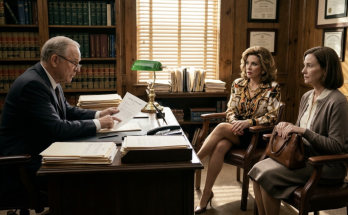
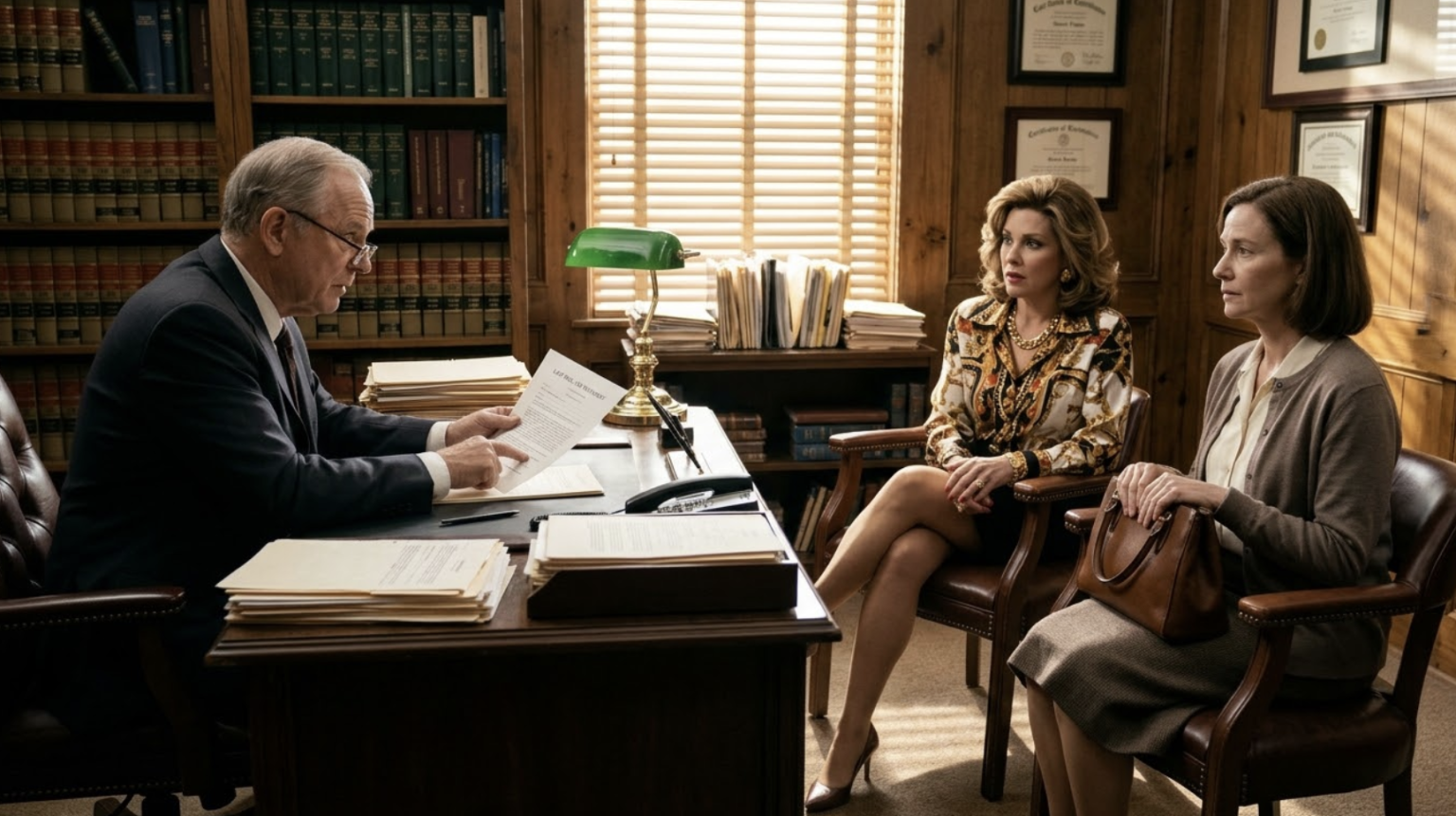
The meeting took place in a conference room at the same law office where the will had first been read.
This time, Tammy didn’t sit at the head of the table.
She sat across from me.
Rebecca was beside me.
Daniel and both attorneys were present.
Mr. Haskins placed the investigation report in front of Tammy.
“Mrs. Dobbs, these findings raise serious questions about several transactions.”
Tammy glanced at the pages.
“My attorneys will review everything.”
“Of course.”
She looked at me.
“You happy now?”
I didn’t respond.
She turned toward Rebecca.
“You have no idea what happened in that house.”
Rebecca’s voice was quiet.
“Then tell me.”
Tammy looked away.
“I was trying to protect your father.”
“From me?”
“From people who wanted his money.”
Rebecca stared at her.
“I was his daughter.”
Tammy shook her head.
“You were always asking for something.”
Rebecca’s eyes filled.
“I asked him to call me.”
Tammy didn’t answer.
“I asked him to come to my graduation.”
Silence.
“I asked him to tell me he still loved me.”
Tammy looked down.
“And you told him I only wanted his money.”
The room became completely still.
Finally, Tammy spoke.
“He was my husband.”
Rebecca shook her head.
“He was my father.”
I watched my sister.
For years, I had imagined what I would say if I ever had the chance to confront her about what she had done.
But now that the moment had arrived, I didn’t feel victorious.
I felt sad.
Because Tammy had spent so much time trying to become the most important person in Clay’s life that she had helped destroy his relationship with his own daughter.
And she had done it for money that could never love her back.
The legal proceedings continued for several months.
Tammy’s challenge to the will eventually failed.
The court accepted the validity of Clay’s final testament after reviewing the evidence.
The trust remained separate from the estate.
The twelve million dollars designated for me was distributed according to the will.
The house on 82nd Street remained mine, just as it had been since the divorce.
Tammy received the personal residence, vehicles, furnishings, jewelry, and the two million dollars specified in the will.
However, the questionable transfers were handled separately.
The investigation continued, and the parties involved were required to account for the funds.
I never attended another church service with Tammy.
I heard through Mrs. Peabody that people had started asking questions.
Some said Tammy was unlucky.
Others said she had made her own trouble.
I didn’t join those conversations.
I had no interest in turning my sister’s life into a public spectacle.
I had enough to deal with.
One afternoon, Rebecca came to my house.
She brought a small box.
“I found something in Dad’s storage unit,” she said.
She placed it on my kitchen table.
Inside were old photographs, a few baseball cards, a child’s drawing, and a small wooden bicycle.
I picked it up.
“What’s this?”
Rebecca smiled through her tears.
“He made it for me when I was little. I thought it was lost.”
I turned it over.
On the bottom, in Clay’s handwriting, were the words:
For my little girl. Love, Dad.
Rebecca sat down.
“I want to ask you something.”
“Anything.”
“Would you help me with the foundation?”
I looked at her.
“What foundation?”
She explained that she wanted to use part of the money Clay had left her to establish a scholarship program for students from working families in Scurry County.
She wanted to help children whose parents worked in oil fields, farms, feed stores, and other jobs that rarely made headlines.
Children whose families couldn’t afford college.
Children like her mother had once hoped she would become.
I smiled.
“I think your father would have liked that.”
She nodded.
“I also want to help people who need medical assistance. Especially families dealing with strokes and long-term rehabilitation.”
I thought about Clay lying in that hunting blind.
I thought about the friends who had been with him.
I thought about how quickly a person’s life could change.
“Then let’s do it,” I said.
And we did.
We called it the Clayton Dobbs Education and Family Assistance Fund.
Not because Clay had been perfect.
He hadn’t.
But because he had spent his final years trying to repair some of the damage he had caused.
The foundation began with five scholarships and a small medical assistance program.
Within a year, it was helping families across three West Texas counties.
I volunteered to review the financial records.
Rebecca handled the scholarship applications.
We worked together every Thursday afternoon.
Sometimes she brought lunch.
Sometimes I brought pie.
And slowly, without either of us planning it, she became part of my life.
Not as a replacement for anything.
Not as a reminder of Clay.
Just as Rebecca.
A young woman who had lost her father and was trying to make something good out of what remained.
PART 6
Almost a year after the will reading, Tammy called me.
I almost didn’t answer.
But something made me pick up.
“Hello?”
“It’s me.”
“I know.”
She was quiet.
Then she said, “Can I come over?”
I looked out the kitchen window.
“Why?”
“I need to talk to you.”
I thought about saying no.
Instead, I told her she could come Saturday afternoon.
When she arrived, she looked different.
Her hair was pulled back.
She wore jeans and a simple blouse.
There were no sunglasses, no expensive jewelry, and no familiar smile.
She sat at my kitchen table.
For a while, she just stared at her hands.
Then she spoke.
“I lost the house.”
I didn’t know what to say.
She explained that the financial investigation and legal expenses had changed her circumstances.
The property was sold as part of a financial settlement, and she was no longer living the life she had expected.
I listened.
Then she said something I never thought I would hear.
“I thought Clay would make me happy.”
I looked at her.
“Did he?”
She shook her head.
“Not really.”
“Tammy…”
“I know what you’re going to say. Money doesn’t buy happiness.”
I didn’t say anything.
She continued.
“When he was alive, I was always worried about something. Who was calling him. What he was signing. Whether he was talking to Rebecca. Whether he was going to change the will.”
She looked up.
“I was so afraid of losing what I had that I never enjoyed any of it.”
I folded my hands.
“Why did you tell Rebecca those things?”
Her eyes filled.
“I was jealous.”
The word hung between us.
“I was jealous of you first. Then I was jealous of Rebecca. Clay talked about her all the time before we married. He had her picture in his office. He kept her birthday on his calendar.”
She wiped her cheek.
“I thought if I could get her out of his life, he would finally belong to me.”
I looked at my little sister.
“People aren’t possessions, Tammy.”
“I know that now.”
She started crying.
“I don’t expect you to forgive me.”
I waited.
“But I wanted to tell you I’m sorry.”
I looked down at the table.
There were so many things I could have said.
I could have reminded her about the church.
The ring photograph.
The four million dollars.
The years of insults.
But I realized that none of those things would change what had happened.
“Tammy, I can’t pretend none of it happened.”
She nodded.
“I understand.”
“And I can’t promise things will ever be the same.”
“I know.”
“But you’re my sister.”
She looked up.
For the first time in years, she looked like the little girl who used to sit on my bedroom floor and ask to borrow my crayons.
I reached across the table.
“I don’t want to spend the rest of my life hating you.”
She began to cry harder.
I didn’t hug her immediately.
Forgiveness wasn’t a switch I could turn on because someone had finally apologized.
It was something that would take time.
But I allowed her to sit there.
And for that afternoon, that was enough.
Two years passed.
The scholarship program grew.
We helped twenty-three students attend college or technical school.
One young man from Snyder became an engineer.
A girl whose father worked on drilling rigs received a nursing scholarship.
Another student used the assistance fund to help his mother pay for rehabilitation after a serious stroke.
Every time I reviewed the financial reports, I thought about Clay.
I wondered what he would have said if he could see what his daughter had built.
I imagined him sitting at the kitchen table, drinking coffee and complaining that we were spending too much money on office supplies.
Some things never change, even in memory.
One afternoon, Rebecca and I drove out to Scurry County.
We visited the first piece of land where Clay had struck oil in 1994.
The old equipment was gone.
The road was rough.
But the land was still there.
Rebecca stood beside me and looked across the property.
“Is this where everything started?”
I nodded.
“This is where your father went from a man with one good pair of boots to a man who could afford just about anything.”
She smiled.
“What was he like back then?”
I thought about it.
“He was stubborn. Hardworking. Terrible at saving money. He thought every problem could be solved with a bigger truck.”
Rebecca laughed.
I continued.
“But he was also generous. He helped people without telling anyone. He worked hard because he wanted to build something.”
“Do you miss him?”
I looked across the land.
“Sometimes.”
“Do you miss being married to him?”
I considered the question.
Then I shook my head.
“No, sweetheart. I miss the good parts. I don’t miss the hurt.”
Rebecca nodded.
We stood there for a few minutes.
Then she reached into her bag and pulled out a small envelope.
“I found this in Dad’s office. Mr. Haskins said I could give it to you.”
My name was written across the front.
Marlene.
I opened it.
Inside was one final note.
Dear Marlene,
If you ever stand on this land again, I hope you remember the woman who sat at a kitchen table with a calculator and helped me believe that something could come from nothing.
I spent too many years chasing the next well, the next deal, and the next dollar.
I thought becoming rich would make me a better man.
It didn’t.
The best things I ever had were never for sale.
You were there when I had nothing. You knew the man before the money. And even though I ruined what we had, I never forgot what you did for me.
Please look after Rebecca if you can.
Not because I expect you to.
But because I know your heart.
And Marlene, don’t spend the rest of your life keeping accounts for other people’s mistakes.
You’ve earned the right to live your own life.
Clay.
I folded the letter.
For a moment, I couldn’t speak.
Rebecca put her arm around me.
“Are you okay?”
I nodded.
“Yes.”
And I meant it.
The Ending – The Things Money Cannot Buy
Last Sunday, I went back to First Baptist.
It was the same church where Tammy had once stood in the fellowship hall with a plate of lemon bars and announced that she had married the rich version of my ex-husband.
The same church where people had watched me set down my coffee cup and walk away.
I sat in my usual place near the back.
Mrs. Peabody spotted me before the service started.
She walked over and squeezed my hand.
“Honey, it’s good to see you.”
“It’s good to see you too.”
She leaned closer.
“I heard about that scholarship program. My neighbor’s grandson got one of those awards.”
I smiled.
“He’s a good boy. He deserved it.”
Mrs. Peabody nodded.
Then she said something that made me laugh.
“You know, I always said that girl was going to get exactly what she earned.”
I looked at her.
“Mrs. Peabody, let’s just pray she learns something from it.”
She smiled.
“You’re a better woman than I am.”
I wasn’t sure about that.
I had simply learned that carrying bitterness was another way of letting someone else control your life.
After church, I drove to the little office where Rebecca worked.
She was waiting outside with two cups of coffee.
“One for you,” she said.
“Thank you.”
We sat on a bench beneath a large oak tree.
She told me about the next group of scholarship applications.
I told her about a bookkeeping client who had somehow managed to enter the same invoice three times.
We laughed.
For a moment, everything felt ordinary.
And ordinary had become something I treasured.
I was seventy years old.
I had a paid-off house.
A modest car.
A good pension.
A bank account that was more than comfortable.
And a young woman who called me when she needed advice, not because she needed money, but because she wanted to talk.
I had once thought my greatest achievement was helping a roughneck become an oil millionaire.
I was wrong.
My greatest achievement was learning that my worth had never depended on what a man owned, what a husband left behind, or what a younger sister wanted to take.
Clay left me twelve million dollars.
He left Rebecca a future.
He left a foundation that would help children whose families needed a chance.
But the most important thing he left was the opportunity for two women who had been hurt by the same man to find a reason to move forward.
As for Tammy, we were slowly rebuilding a relationship.
It wasn’t the relationship we had as children.
Some things cannot be restored exactly as they were.
But we spoke occasionally.
We had coffee once.
And I learned to forgive her without giving her the power to hurt me again.
I still keep books for a few small businesses.
I still check every invoice.
I still don’t trust a balance sheet until the numbers make sense.
And I still have that old casserole dish Tammy borrowed decades ago.
She brought it back last Christmas.
It was chipped on one side.
I told her it was fine.
Because after all those years, I finally understood something.
Money can buy houses, cars, land, and comfort.
It can buy a beautiful wedding ring and a seat at the head of an expensive table.
But it cannot buy loyalty.
It cannot buy a father’s love.
It cannot buy back lost years.
And it certainly cannot buy peace.
My sister married my ex-husband because she thought his fortune would make her life complete.
But when the money came, she discovered that being rich and being loved were two very different things.
I was invited to Clay’s attorney’s office because he wanted me to receive part of his estate.
I left that office with something much more valuable.
The truth.
And after thirty-eight years of keeping books for other people, I finally stopped measuring my own life by what anyone else had taken from me.
Because the richest person in the room isn’t always the one with the most money. Sometimes, it’s the person who can walk away with their dignity still intact.