
AI in the Courtroom: The First Deepfake Fraud Trial Backfires
The Rise of Digital Deception
As artificial intelligence and deepfake video generation technology advance, criminal defense strategies are beginning to face unprecedented challenges. While some defendants attempt to use fabricated digital media as fake alibis, the judicial system has rapidly adopted forensic detection tools to preserve the integrity of evidence.
A Perfect Fake Alibi
The high-stakes trial involved a young tech entrepreneur accused of orchestrating a major cyber-heist. To prove his innocence, the defense submitted a pristine video recording showing the defendant at a restaurant in another state at the exact time the crime occurred. For weeks, the video appeared to be his solid alibi.
The Forensic Breakthrough
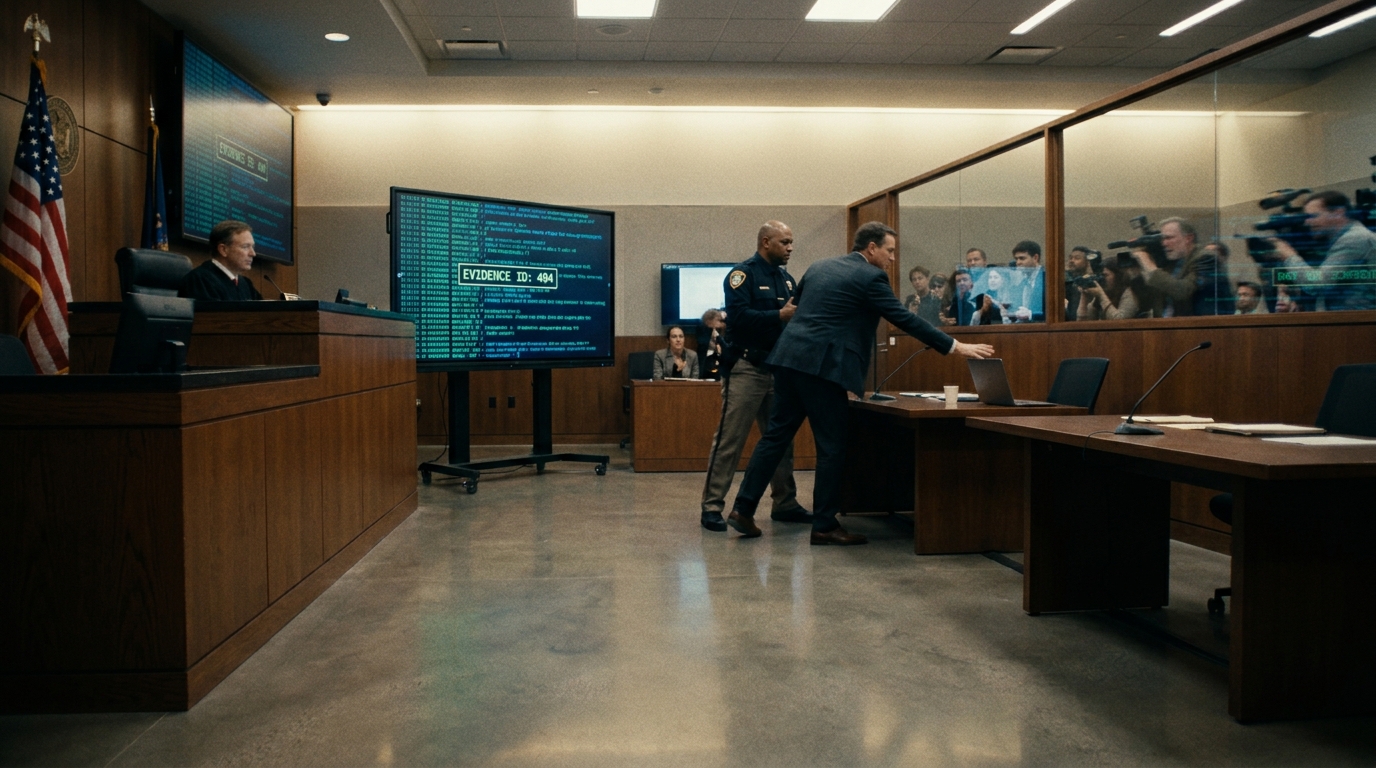
However, state prosecutors called a specialized digital forensics expert to the witness stand. Live in front of the courtroom, the expert ran the video file through advanced forensic detection software. The system highlighted microscopic facial glitches, unnatural lighting inconsistencies, and digital artifact signatures—proving the video was an ultra-realistic AI deepfake created to deceive the court.
Panicked Reaction at the Bench
Realizing his high-tech deception had failed, the defendant panicked. He slammed his laptop shut and frantically tried to wipe his smartphone to destroy the original AI generation files. The presiding judge reacted instantly, ordering bailiffs to seize all digital devices as physical evidence.
Doubled Penalties and Conviction
The judge held the defendant in contempt, adding severe new federal charges for forgery of evidence, perjury, and obstruction of justice. The jury returned a unanimous guilty verdict on all counts, leading to a decades-long sentence in federal prison.
A Landmark Precedent for Digital Justice
This dramatic case marks a significant moment in modern legal history. It sends a clear message that technology cannot be used to manipulate justice, as forensic science continues to stay one step ahead of digital fraud.