
Details of the Primary Crime and Statutory Violations
The 26-year-old defendant was originally on trial for executing a massive ransomware operation against public infrastructure and healthcare systems. Under Title 18, United States Code, Section 1030 (Computer Fraud and Abuse Act – CFAA), he was charged with intentional access to protected computers, extortion, and damaging critical federal systems. Over a two-year period, his cyber-attacks crippled municipal networks, resulting in over $12 million in financial damages and compromising sensitive patient records.
A Desperate Attempt at Digital Destruction
During the evidentiary presentation, prosecutors displayed digital evidence extracted from the defendant’s encrypted servers. Realizing that the computer forensic logs held indisputable proof of his guilt, the defendant devised a reckless plan. Concealing a high-speed malicious USB drive (containing a self-executing data-wiping script) inside his palm, he waited for a brief moment when the court clerk turned away.
Interception at the Clerk’s Station
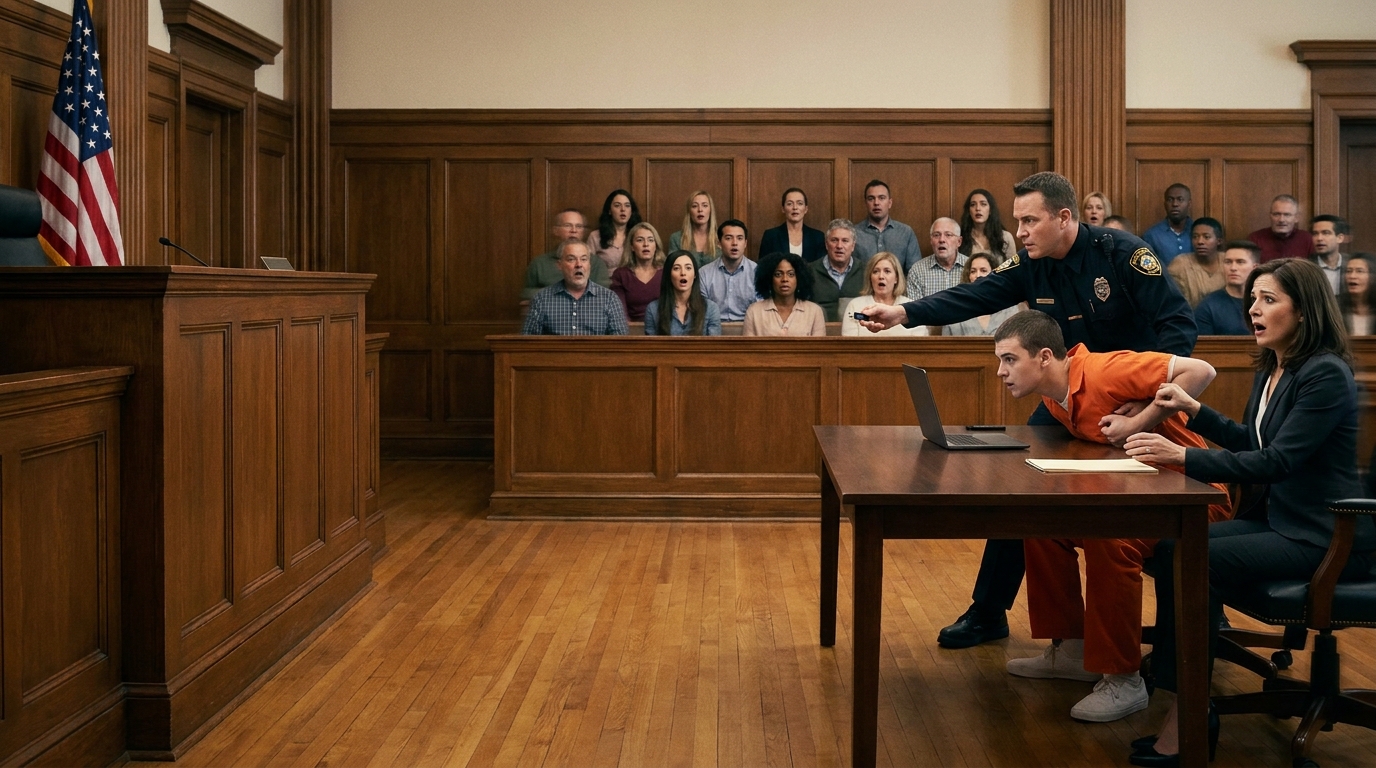
As the clerk adjusted the prosecution’s display monitor, the defendant reached across the counsel partition, attempting to insert the malicious flash drive directly into the court’s official evidence terminal to wipe the digital case files. However, court security was monitoring his every move. Before the drive could connect to the port, an alert bailiff seized his wrist, wrested the USB drive from his fingers, and pinned him forcefully onto the defense table.
Severe New Federal Charges Under Penal Code
The presiding judge immediately halted the trial and ordered a complete lockdown of all courtroom terminals. State and Federal prosecutors swiftly filed additional felony charges under 18 U.S.C. § 1519 (Obstruction of Justice by Destruction of Evidence) and 18 U.S.C. § 1367 (Interference with Government Computers). These additional offenses carry mandatory consecutive prison terms that cannot be served concurrently.
Final Verdict and Uncompromising Sentence
Finding zero mitigating factors and citing the defendant’s brazen attempt to sabotage the judicial system live in court, the judge sentenced him to the maximum statutory limit of 35 years in a federal maximum-security facility, followed by lifetime supervised probation and full financial restitution.