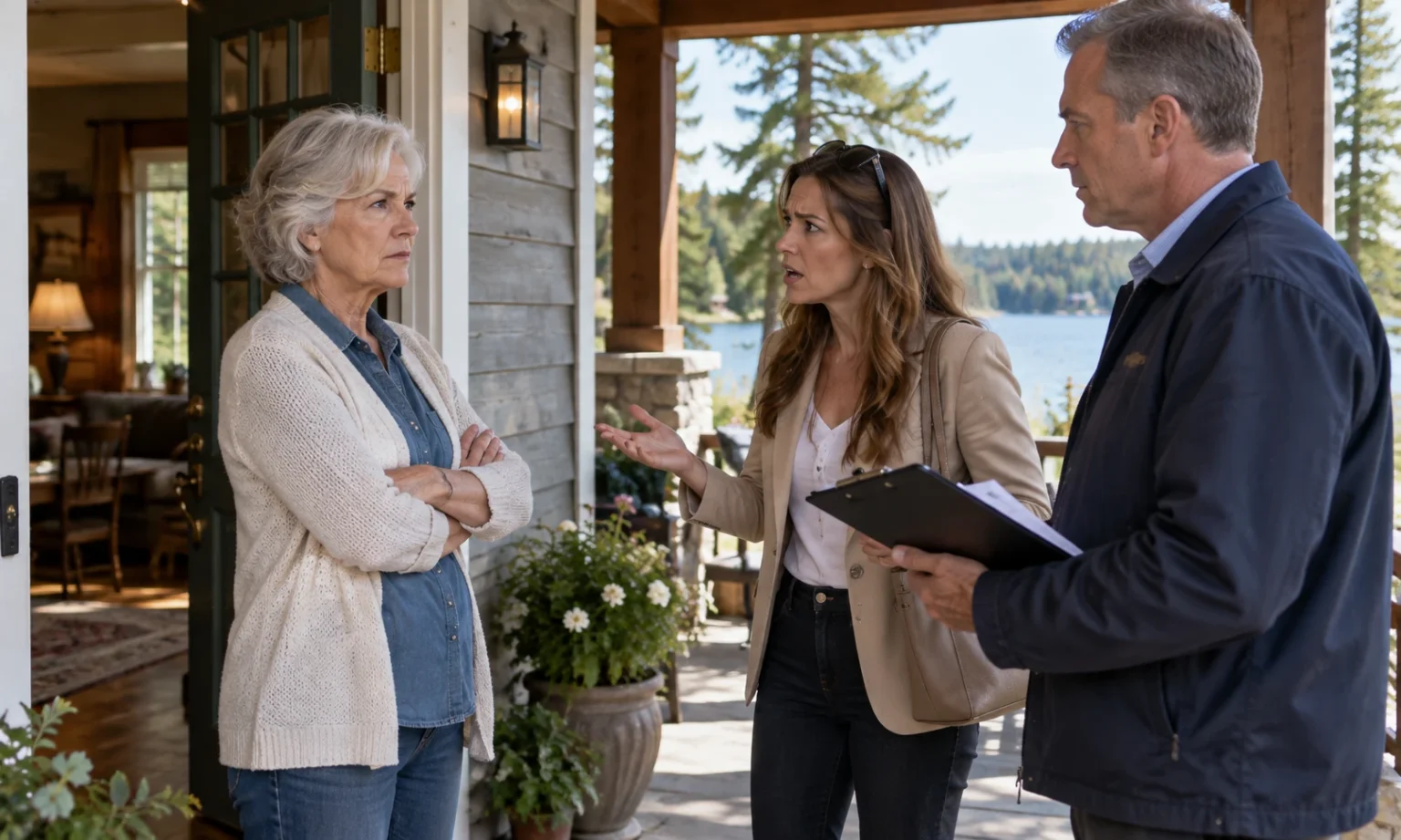
I didn’t answer.
She got into the SUV.
They drove away.
Emma waited until the sound of the engines disappeared.
Then she looked at me.
“You okay?”
I sat back down.
“I think so.”
She sat beside me.
“You’ve been carrying this for a long time.”
I looked across the yard.
“I didn’t know how much until today.”
She took my hand.
“I have something else to tell you.”
I looked at her.
“What?”
“Sarah didn’t just ask someone to assess the cottage.”
My stomach tightened.
“What else?”
Emma pulled out her phone.
“She contacted an attorney.”
I stared at her.
“Why?”
“She asked about what happens to the property if you become incapacitated.”
For a moment, I couldn’t speak.
Then something clicked.
The questions Sarah had asked.
The sudden interest in the deed.
The assessor.
The talk about security.
The stories about David funding the cottage.
It wasn’t simply curiosity.
They were preparing for something.
But Emma wasn’t finished.
“She also asked whether your city house was still in your name.”
I stood.
“I never told her that.”
“I know.”
“How did she find out?”
Emma hesitated.
“She didn’t have to.”
I looked at her.
“What does that mean?”
“She has been asking relatives questions for weeks. Apparently, she’s been trying to figure out how much you’re worth.”
I walked inside.
My hands were trembling.
Not because I was afraid.
Because I was angry with myself.
For years I had believed my family simply misunderstood me.
Maybe they hadn’t.
Maybe they understood me perfectly.
Maybe they simply believed I would never defend myself.
I went to my office and opened the bottom drawer.
I removed the manila folder I had placed there three days earlier.
Emma followed.
“What is that?”
I put it on the desk.
“Everything.”
She opened the folder.
Inside were copies of the cottage deed.
My city house deed.
Investment account statements.
Insurance documents.
A list of every loan I had made to David and Sarah.
Receipts.
Bank transfers.
Canceled checks.
Dates.
Amounts.
Notes.
Emma’s eyes widened.
“You kept all this?”
“I didn’t keep it for them.”
“Then why?”
I sat down.
“Because your father taught me something.”
“What?”
“He used to say that good relationships don’t require accounting.”
Emma smiled sadly.
“That sounds like Dad.”
“But after he died, I realized there was a difference between not keeping score and not keeping records.”
Emma looked through the pages.
Some of the transfers were small.
Groceries.
School clothes.
Medical copays for the twins.
Then she reached a larger number.
Her expression changed.
“Mom.”
“What?”
“This is a lot.”
I looked at the page.
It was a loan I had given David and Sarah three years earlier when their business was struggling.
They had promised to repay it within six months.
They had never repaid a cent.
“I forgot about that,” Emma whispered.
“I didn’t.”
She looked at me.
“Why didn’t you ever ask them for it?”
“Because I thought they were struggling.”
“And now?”
I closed the folder.
“Now I think they were counting on me never asking.”
The next morning, I called an attorney.
Not the family attorney.
Not someone recommended by David.
A completely independent estate attorney named Margaret Collins.
I brought every document.
She spent nearly two hours reviewing everything.
At the end, she leaned back in her chair.
“Mrs. Hale, may I ask you a question?”
“Yes.”
“Do you want to protect your children?”
“Yes.”
“Both of them?”
“Yes.”
She nodded.
“Then we need to separate protecting your children from rewarding their behavior.”
I stared at her.
She continued.
“Your son may be entitled to whatever you choose to leave him. But that does not mean he is entitled to control your assets while you’re alive.”
“I know.”
“No,” she said gently.
“I don’t think you did before this week.”
I smiled.
“You’re right.”
She looked through the documents again.
“You have enough assets to support yourself comfortably for the rest of your life. You don’t need to sell the cottage. You don’t need to add anyone to the deed. You don’t need to explain your finances to your daughter-in-law.”
“I know.”
“And I strongly recommend you change several things.”
“Such as?”
“Your estate plan.”
I nodded.
“And your financial powers of attorney.”
Another nod.
“And your medical directives.”
I looked at her.
“Why?”
“Because you need to decide who speaks for you if you’re ever unable to speak for yourself.”
That sentence stayed with me.
I suddenly remembered Sarah asking me three months earlier where I kept my important documents.
At the time, I had thought she was simply being helpful.
Now I wondered.
Margaret continued.
“And one more thing.”