1. Factual Background
The defendant, Lukas Sterling, aged 38, founder and chief executive officer of a high-profile green technology enterprise, was formally prosecuted by federal authorities for executing a massive $75 million clean energy fraud scheme. According to joint investigative findings conducted by the Department of Energy Office of Inspector General (DOE-OIG), the Environmental Protection Agency (EPA), and the Federal Bureau of Investigation (FBI), the defendant secured tens of millions in federal clean-tech innovation grants and corporate green bonds by presenting completely fabricated performance data for a non-existent solar panel efficiency breakthrough. In addition, the defendant sold millions of dollars in fraudulent carbon offset credits based on zero actual energy production. During trial proceedings, the defendant introduced altered laboratory test certifications, claiming the revolutionary technology was fully operational.
2. Legal Framework & Statutory Charges
Based on independent scientific audits, federal wire transfer logs, and grand jury indictments, federal prosecutors formally charged the defendant under three primary statutory provisions:
-
Major Fraud Against the United States: Pursuant to Title 18, United States Code, Section 1031 (18 U.S.C. § 1031).
-
Wire Fraud and Financial Institution Fraud: Pursuant to Title 18, United States Code, Section 1343 (18 U.S.C. § 1343).
-
Falsification of Official Statements to Federal Agencies: Pursuant to 18 U.S.C. § 1001.
3. Judicial Analysis by the Panel of Judges
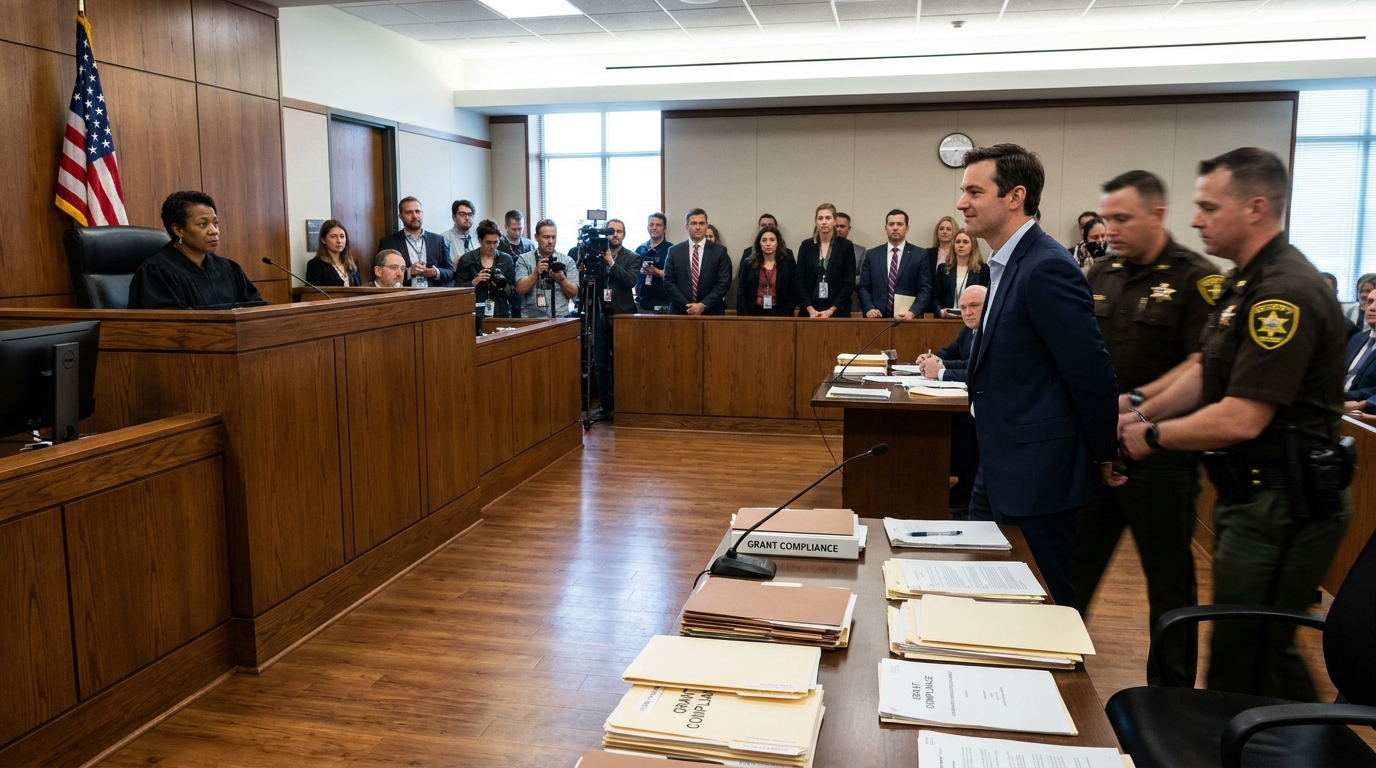
During trial proceedings, the presiding judge introduced into the official court record a comprehensive scientific audit conducted by national laboratory engineers. The judicial panel conducted a detailed analysis of the evidence, establishing that the defendant’s pilot facility was a dummy warehouse fitted with retail consumer solar hardware, and that official efficiency logs were manually inflated using automated software scripts. The court emphasized that exploiting public initiative grants designed to advance environmental technology to enrich oneself constitutes an intolerable breach of public trust, federal stewardship, and economic security.
4. Conclusion & Final Sentence
Following a thorough evaluation of the factual record and applicable federal statutes, the presiding judge ruled as follows:
-
Formal Conviction: Sentenced the defendant, Lukas Sterling, to 21 years in a federal penitentiary without the possibility of early parole.
-
Supplementary Sanctions: Ordered full financial restitution of $75 million to the United States Department of Energy and affected green bond investors, complete forfeiture of all personal luxury property and bank accounts, and a permanent ban from managing green-energy ventures or receiving federal grants.
-
Immediate Enforcement: Directed courtroom bailiffs to immediately secure the defendant in heavy wrist restraints at the defense table and transfer him directly into federal custody.