PART4
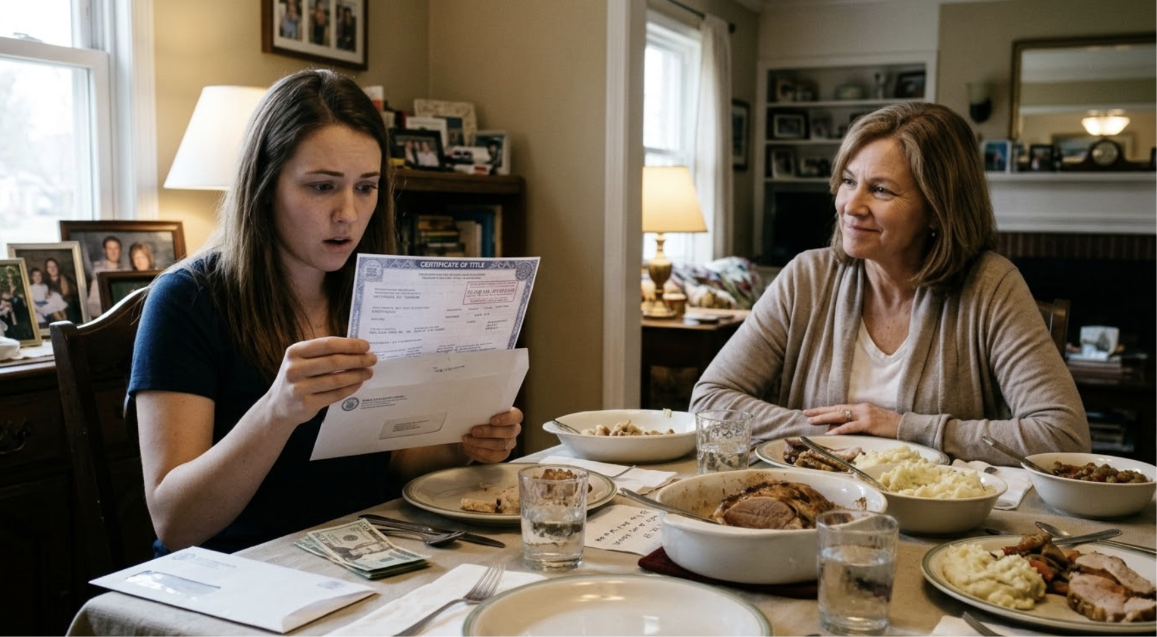
I asked her to print my account records for the past year.
Then I sat there and went through them with my magnifier.
There were small withdrawals I didn’t recognize immediately.
A $78 charge from a home improvement store.
A $46 online purchase.
A $112 charge at a department store.
I rubbed my eyes.
“Denise, what are these?”
She leaned closer.
“These are debit card transactions.”
I remembered giving Jillian my card once.
It was the winter before last. I had been sick, and she’d offered to pick up groceries. I gave her my card and told her to buy whatever I needed.
I’d never thought about it again.
But when I looked at the dates, I recognized some of them.
The home improvement store was the day Jillian had told me she’d picked up a new shower curtain for my bathroom.
The department store was the week before Mitchell’s birthday.
I didn’t know whether every charge was wrong. Some might have been mine. I wasn’t going to accuse anyone based on a few numbers I couldn’t fully recognize.
But I knew I needed to ask.
“Can I get a new card?” I said.
“Of course.”
“And can we make sure nobody else has permission to access my accounts?”
Denise nodded.
We went through everything.
By the time I left, I had a new debit card, new passwords, and a printed statement tucked into my folder.
Mitchell was waiting in the truck.
“How’d it go, Grandma?”
“Good.”
“Did you do what you needed to do?”
“I did.”
He smiled.
“Then let’s get you a cinnamon roll.”
We stopped at the bakery.
I bought two.
One for him.
One for me.
For the first time in weeks, I felt like I was doing something for myself without having to justify it to anybody.
The Phone Calls Started That Afternoon
By three o’clock, my phone had rung six times.
Jillian.
Aunt Lisa.
My brother David.
Then Jillian again.
I didn’t answer.
At four, a text came through.
Mama, what are you telling people?
I stared at it for a moment.
I hadn’t told anybody anything.
Then another message.
Lisa says you went to the bank and changed everything. Are you serious?
I put the phone down.
Five minutes later, it rang.
This time I answered.
“Hello.”
“Mama, what did you do?”
“Hello to you too, Jillian.”
“Did you remove me from your accounts?”
“I reviewed my accounts.”
“Why?”
“Because I wanted to.”
She let out a sharp breath.
“You’re making me sound like some kind of thief.”
“I haven’t called you anything.”
“Then why are you changing passwords?”
“Because I have the right to.”
There was silence.
Then she said something that made my hands tighten around the phone.
“You know I was only helping you.”
“Helping me with what?”
“Your bills! Your appointments! Everything!”
I looked at the calendar on my refrigerator.
There were seventeen appointments marked in blue.
Every one of them was a retina injection.
“Jillian, I appreciate the rides you’ve given me.”
“Then why are you acting like I did something wrong?”
“Because you handed me a bill.”
“It’s not unreasonable to ask for gas money!”
“No. It isn’t.”
She seemed surprised by that.
I continued.
“If you had told me you needed help with gas, we could have talked about it. If you’d said you couldn’t drive me anymore, I could have found another way. But you wrote down seventeen trips and handed me a bill like I was a stranger who’d hired you.”
“Mama, you’re twisting everything!”
“No, honey. I’m telling you how it felt.”
Her voice rose.
“Do you know how much time I spend taking you places?”
“I do.”
“Do you know how inconvenient it is?”
I closed my eyes.
There it was.
The word she’d never said before.
Inconvenient.
I was inconvenient.
My appointments were inconvenient.
My failing eyesight was inconvenient.
My need for help was inconvenient.
“Jillian,” I said quietly, “I won’t ask you to drive me anymore.”
She stopped.
“What?”
“I’ll find another arrangement.”
“You can’t just do that!”
“I can.”
“You’re going to make Mitchell do everything?”
“No. I won’t make anybody do anything.”
She started crying, but the tears sounded angry.
“You’re punishing me.”
“No, sweetheart. I’m making a decision.”
Then she hung up.
I sat there for a long time.
I wanted to cry.
Not because I was losing the rides.
Because I was losing the feeling that my daughter would be there when I needed her.
I thought about the little girl who used to run into my kitchen with scraped knees.
I thought about her first day of school.
Her wedding dress.
Her divorce.
The way she’d held my hand at the hospital when my husband died.
I had spent my life believing that love could survive anything.
And I still believed it.
But I was learning that love sometimes needed a boundary to survive.
The Sunday Dinner That Never Happened
The following Sunday, I made no pot roast.
I didn’t set the table for four.
I made myself a bowl of soup and sat near the window.
At 12:30, Mitchell arrived.
He brought a loaf of bread and a small bouquet of yellow flowers.
“Grandma, I figured you might not want to cook.”
I smiled.
“You know me too well.”
He set the flowers in a glass jar.
Then he sat down.
“Mom’s telling everybody you kicked her out of your life.”
I sighed.
“Did she?”
“She says you’re refusing to let her drive the car, that you canceled her access to your money, and that you won’t let her help you anymore.”
I stirred my soup.
“That’s not what happened.”
“I know.”
He looked at me carefully.
“Grandma, I don’t think she understands how much you did for her.”
I looked at him.
“Maybe I never made her understand.”
“You shouldn’t have to.”
I reached across the table and took his hand.
“Sweetheart, there’s something I want you to remember. You don’t owe me rides. You don’t owe me groceries. You don’t owe me money. I love you because you’re my grandson, not because you help me.”
He smiled, but his eyes were a little wet.
“I know, Grandma.”
“And if you ever have to say no to me, I won’t stop loving you.”
He squeezed my hand.
“I know that, too.”
We ate our soup.
Then he helped me put the dishes away.
Before he left, he asked if he could look at my SUV.
“Grandma, the tires are getting worn. I can check them.”
“All right.”
He crouched beside the front tire and inspected it.
“These need replacing soon.”
I laughed.
“Well, that’s another expense I didn’t plan on.”
He stood up.
“Don’t worry. I’ll help you get some quotes.”
I shook my head.
“You can help me look. I will pay for them.”
He gave me a funny look.
“Grandma, I wasn’t asking you for money.”
“I know. But I’m paying because it’s my car, and I want to.”
He smiled.
“Fair enough.”
That was the difference.
He offered help without making me feel like a burden.
And I accepted without feeling like I had to buy his love.
The Letter From Jillian
Three days later, I found a letter in my mailbox.
It wasn’t an envelope from the credit union.
It was from Jillian.
Her handwriting was all over the front, pressed so hard into the paper that I could feel the grooves beneath my fingertips.
I sat at the kitchen table and opened it.
Mama,
I don’t understand why you are doing this to me. I have always been there for you. I took you to your doctor when nobody else would. I drove you seventeen times, and I never complained to your face.
I stopped reading.
I took a breath.
Then I continued.
You have no idea how much it costs me to take time off work. I have a family, bills, and responsibilities. I thought you understood that.
Now you’re making me feel like I did something terrible. I never stole from you. I never tried to hurt you. I was just asking for a little help.
I don’t know why you suddenly think I’m a bad daughter.
You made me feel like I was helping you, and now you’re making me feel like I owe you something.
I read that sentence twice.
Then I put the letter down.
I wasn’t angry.
I was sad.
Because Jillian was still trying to turn the whole thing around.
She wasn’t asking why I’d felt hurt.
She was asking why I wouldn’t make her feel better about it.
I folded the letter and put it in the drawer beside my sewing machine.
I didn’t respond.
That evening, I called a transportation service the doctor had recommended.
They offered rides for older patients who needed help getting to medical appointments.
The woman on the phone was kind.
She explained the costs, the scheduling, and how far in advance I needed to book.
I wrote everything down.
My eyesight made the numbers difficult, but I took my time.
For the first time, I arranged my own ride.
It cost me money.
But I didn’t feel guilty.
I didn’t have to wonder whether the driver was sighing at every red light.
I didn’t have to feel like I was taking up too much of somebody’s day.
I could simply be a patient going to her appointment.
And that was enough.
The Envelope She Never Expected
The following Tuesday, I had my retina appointment.
The transportation service sent a woman named Carol. She was about sixty, with silver hair, a cheerful voice, and a little clipboard she carried everywhere.
“Mrs. Edith? I’m Carol. I’ll be taking you to your appointment today.”
She helped me into the vehicle and made sure my seat belt was comfortable.
“Have you been coming to this clinic long?”
“About two years.”
“That’s a lot of visits.”
“It is.”
She didn’t sigh.
She didn’t check her phone every thirty seconds.
She didn’t make me feel like I was costing her something.
When we arrived, she walked me to the entrance and waited until I was safely inside.
“Just call me when you’re done, and I’ll be right here.”
I almost cried.
Not because she’d done anything extraordinary.
Because she hadn’t made me feel like I was a problem.
After my appointment, I sat in the waiting room and thought about how strange it was that I’d spent so much of my life believing I had to earn kindness by being useful.
I’d been a mother.
A wife.
A grandmother.
A school bus driver.
A neighbor who brought casseroles when somebody was sick.
A woman who watched other people’s children when their parents worked late.
I had always been proud of being dependable.
But I hadn’t realized how often I’d allowed people to confuse my willingness to help with an obligation to keep helping.
I was still learning.
And at seventy-two years old, I was learning that it was perfectly acceptable to say no.
Jillian Came to My House Without Calling
On Thursday afternoon, somebody knocked on my front door.
I was sitting in my living room sewing a pillowcase. The light was good, and I’d finally gotten the thread through the needle without using my magnifier.
I heard three sharp knocks.
Then another three.
“Mama! Open the door!”
I recognized Jillian immediately.
I set the sewing down and walked carefully to the door.
When I opened it, she was standing on my porch with her arms crossed.


One Comment on “PART4: My Daughter Charged Me $340 for Doctor Rides—Then I Revealed Who Really Owned Her SUV”
Comments are closed.