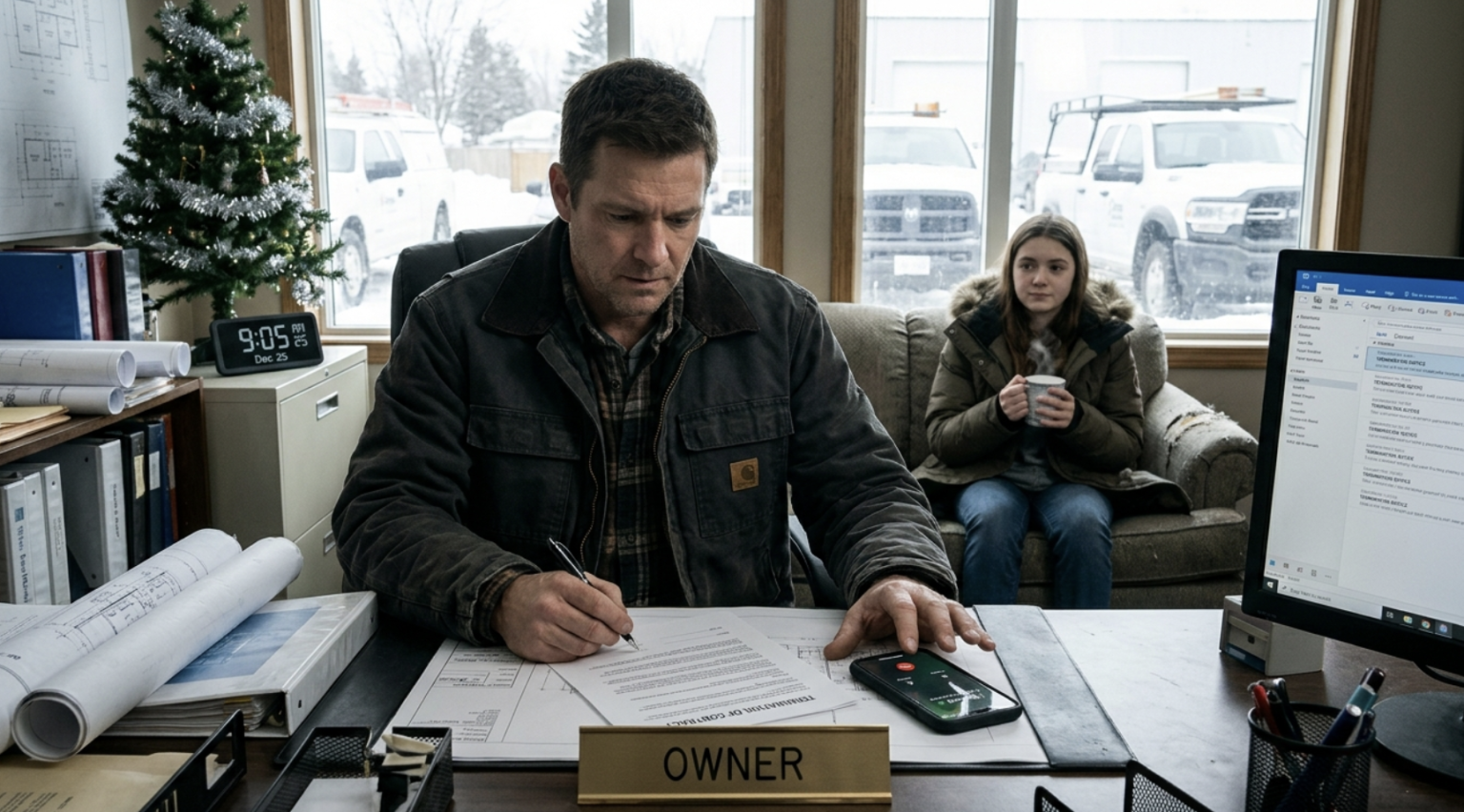
PART4
I put down my coffee.
“No.”
“What about the company?”
“No.”
“What about the truck?”
I smiled slightly.
“Especially not the truck.”
She gave a small laugh.
Then her expression changed.
“Grandpa said you were basically a servant who fixed things for people.”
I looked at her.
“Did he?”
“He said Mom could have married someone important. Someone who actually had a future.”
I took a slow breath.
“Sophie, listen to me. There is nothing shameful about fixing things. There is nothing shameful about working with your hands. And there is certainly nothing shameful about starting with almost nothing and building something yourself.”
She nodded.
“But you don’t have to prove anything to them,” I continued. “Not your grades. Not your future. Not your worth.”
She looked at me.
“I know.”
Then she asked quietly:
“Are we getting divorced?”
I didn’t want to give her false hope.
“The papers have been filed. We’ll let the lawyers handle everything. But whatever happens between your mother and me, you are my daughter. That doesn’t change.”
She reached across the table and held my hand.
“I don’t want to go back there.”
“Then you don’t have to go there today.”
For the first time that morning, she smiled.
At 2:15 p.m., Robert sent me a message.
The preliminary compliance team had finished reviewing the fourteen flagged cases.
The numbers were worse than I had expected.
David’s $34,200 in fuel-card discrepancies included transactions at gas stations hundreds of miles away from his assigned region.
Marcus’s $61,400 in duplicate invoice activity involved three vendors.
Two of those vendors had business addresses connected to people in his extended family.
A company vehicle assigned to another Collins relative had accumulated mileage inconsistent with its documented work schedule.
There were also suspicious expense reimbursements, missing approvals, and repeated exceptions to procurement procedures.
But the most concerning discovery involved someone who hadn’t been on my original list of fourteen.
Clare.
I read Robert’s message twice.
Robert: We found a series of payments approved through an executive expense account. The records indicate that several payments may have been authorized using your name. We need to investigate whether your credentials were used without authorization.
I immediately called him.
“What kind of payments?”
“Consulting expenses.”
“How much?”
“Approximately $186,000 over eighteen months.”
I stood up.
“Paid to whom?”
“A company called Collins Strategic Advisory.”
I didn’t speak.
Robert continued.
“Daniel, the company appears to have been registered to a relative of Martin Collins. We don’t yet know who received the money or whether the services were legitimate.”
“Who approved the invoices?”
“That’s what we’re tracing.”
I looked at the laptop.
For eight years, Clare had told me her family was financially comfortable.
Martin owned a successful commercial real estate business. Her brother David had always talked about investments. Her mother enjoyed expensive holidays and designer clothes.
I had assumed they were simply people who liked spending money.
Now I wondered how much of their lifestyle had been supported by the company I had built.
“Robert,” I said, “I want a complete investigation.”
“We’ll handle it.”
“Every payment. Every authorization. Every vendor.”
“Understood.”
“And don’t contact Clare directly about this until we know what happened.”
“Agreed.”
I ended the call.
For several minutes, I sat without moving.
Then I heard Sophie laughing at something on television.
I looked toward the bedroom.
Whatever was happening with the company, whatever the investigation uncovered, I had one priority.
Protecting my daughter.
The following morning, I drove Sophie to my sister’s house.
My sister, Emily, lived about twenty minutes outside the city. She had been a teacher for fifteen years and had always treated Sophie like her own child.
When I explained what happened, she didn’t ask whether I had exaggerated.
She simply hugged Sophie.
“You’re staying here as long as you need,” she said.
Sophie looked relieved.
I thanked Emily and promised to call later.
Then I drove to Whitaker Home Solutions.
The headquarters occupied a renovated commercial building with two floors of offices, a large warehouse, and a maintenance facility behind it.
I had bought the property six years earlier.
It wasn’t impressive by corporate standards.
But it was ours.
I walked through the front entrance at 8:40 a.m.
The receptionist looked up.
“Good morning, Mr. Whitaker.”
“Morning, Lisa.”
She hesitated.
“There’s been a lot of phone calls.”
“I imagine.”
“Mr. Collins called three times.”
“Which one?”
“Martin.”
I smiled without humor.
“Of course.”
She handed me a message.
He wanted an immediate meeting.
I gave it back.
“Tell him all business inquiries go through legal counsel.”
“Yes, sir.”
I walked upstairs.
My operations director, Nathan Brooks, was waiting outside my office.
Nathan had been with me for eleven years.
He was one of the few people who knew exactly how much the company had grown and how hard it had been to get there.
He followed me inside.
“Daniel, we need to talk.”
“What’s going on?”
He placed a folder on my desk.
“Some of the Collins employees are calling other managers. They’re saying the company is conducting a family purge.”
I opened the folder.
“That’s not what we’re doing.”
“I know. But they’re spreading it.”
“Then send the investigation policy to every department. Make it clear that nobody is being disciplined because of their last name.”
Nathan nodded.
Then he hesitated.
“There’s something else.”
“What?”
“Someone accessed your executive expense account last night.”
I looked up.
“When?”
“11:38 p.m.”
“From where?”
“An external device.”
My stomach tightened.
“Was it successful?”
Nathan nodded.
“Someone downloaded several financial reports.”
“Which reports?”
“Vendor payment histories, executive reimbursements, and the company ownership structure.”
I slowly closed the folder.
“Who accessed it?”
Nathan turned his laptop toward me.
A login record appeared on the screen.
I recognized the device.
It belonged to a laptop registered to Clare.
For several seconds, I couldn’t move.
“Are you certain?”
“IT has confirmed the device fingerprint. We’re preserving the access logs.”
I leaned back.
“Change every executive password. Suspend the device’s access. Preserve all evidence.”
Nathan nodded.
Then he looked at me carefully.
“Daniel, is there something about your marriage we need to know?”
I looked through the glass wall at the employees moving between offices.
“Unfortunately, yes.”
At 11:17 a.m., my phone rang again.
This time, it was Clare.
I answered.
“What?”
Her voice was different.
Not angry.
Not demanding.
Almost frightened.
“Daniel, we need to meet.”
“Why?”
“Please. Just listen.”
“I’m listening.”
“I know about the audit.”
I said nothing.
“I know you’ve been reviewing the Collins accounts.”
“How do you know that?”
“That doesn’t matter.”
“It matters to me.”
She took a breath.
“Martin is going to make this worse if you don’t stop.”
I stared at the computer screen.
“Make what worse?”
“He’s talking to people. He says you’re trying to destroy his family.”
“Your father can say whatever he wants.”
“Daniel, you don’t understand. He has documents.”
“What documents?”
She paused.
Then she said something that made my blood run cold.
“Documents showing that you transferred company money into your personal accounts.”
I slowly stood up.
“That’s impossible.”
“I saw them.”
“Where?”
“At my father’s house.”
I gripped the edge of my desk.
“Clare, listen carefully. If your father has company financial documents, I want to know how he obtained them.”
“He says you signed everything.”
“I didn’t.”
“He says he can prove it.”
“Then let him prove it.”
Her voice cracked.
“Daniel, please. You have to stop this before he sends everything to the authorities.”
I looked toward Nathan’s office.
Then back at my phone.
Something about her words didn’t fit.
If Martin had evidence of financial misconduct, why hadn’t he contacted the authorities already?
Why was he trying to negotiate?
And why had Clare suddenly become so desperate to meet?
I lowered my voice.
“Clare, I need to ask you one question.”
“What?”



One Comment on “PART4: My Wife’s Family Left Our 16-Year-Old Daughter Outside in 22-Degree Weather and Served Me Divorce Papers—They Called Me a Poor Handyman”
Comments are closed.