PART5
“She admitted the signature isn’t yours,” he said.
“To you?”
“Yes.”
“Will she put that in writing?”
“She says she never admitted that.”
I shut my eyes.
“Where are you?”
“In the truck.”
“Are you safe?”
“Yes. I packed a bag. I’m getting a hotel.”
The question rose before I could stop it. Why would he pay for a room when I had a couch?
Then I looked at the folder.
“All right,” I said.
He was quiet.
“I’m not asking to stay with you.”
“I know.”
“I’ll send you the statements tonight.”
“Thank you.”
Before he hung up, he said, “I found the money you gave us for Christmas.”
“The five hundred?”
“She used it to pay a card.”
I remembered choosing an envelope with a little red house on it.
I asked him to get some sleep.
Monday morning, Carol drove me to the attorney’s office.
I wore a blue sweater Paul had liked and carried the folder against my chest. In the waiting room, I caught myself smoothing its corners.
The attorney, Ellen Brooks, let me finish without interrupting.
Then she asked, “Did you ever agree to sell them the property?”
“No.”
“Did you authorize anyone to sign for you?”
“Never.”
She made a note.
“We’ll handle possession through the proper process. Don’t change locks or shut off utilities. Save every message, including anything unpleasant.”
“What about the money?”
“Your son needs his own legal advice about that. You can care about what happened to him without taking responsibility for fixing it.”
I glanced at Carol.
She was studying the carpet very carefully.
Ellen turned another page.
Then she stopped.
“Have you read this paragraph?”
She moved the agreement across her desk and pointed.
Halfway down the second page, beneath a section about repairs, was a purchase option.
It gave Nathan and Lauren the right to buy the house for ninety thousand dollars, minus the monthly payments.
My mouth went dry.
“That house is worth much more than that.”
“I understand,” Ellen said. “You’re saying none of this was authorized?”
“None.”
She turned to the signature page.
There was Nathan’s name, above Lauren’s.
I took out my phone.
He answered immediately.
“Nathan, did you sign that housing agreement?”
For several seconds, I heard only road noise.
“Yes.”
“When?”
Another pause.
“Saturday night. After you left.”
I gripped the phone.
“Was my signature already on it?”
“Mom—”
“Was it?”
“Yes.”
Ellen set down her pen.
I looked at the tiny loop someone had drawn beneath my name.
“And you knew I hadn’t signed it?”
Nathan’s breathing caught.
“She said if I signed, we could keep the house.”
“That isn’t what I asked.”
“I know.”
I waited, holding the phone so tightly my hand hurt.
Finally, my son whispered, “Yes.”
I put the phone on Ellen’s desk.
“Tell her what you told me yesterday,” I said. “About being sorry.”
“Mom, I am sorry.”
“Were you sorry before you signed, or only after you thought you might lose something?”
Carol reached for my hand. I let her hold it.
Nathan said, “I thought if it was on paper, we could work everything else out.”
“You mean the money.”
“And somewhere to live.”
“So you decided where I would live. What I would sell for. What my name was worth.”
“No. I wasn’t thinking—”
“You were thinking about keeping the house.”
He didn’t answer.
Ellen leaned toward the phone.
“Nathan, this is Ellen Brooks. I represent your mother. You need your own attorney. Please preserve the original document and all related messages.”
“Is she going to call the police?”
I looked at Carol’s hand around mine.
Yesterday, that question might have stopped me.
“Yes,” I said. “I’m going to tell them what happened.”
“Mom, please.”
“I won’t add anything. And I won’t leave anything out.”
After the call, I asked Ellen if she could open a window.
It didn’t open. She brought me a cold glass of water instead.
“I believed him,” I said.
“You learned more today.”
“He let me comfort him.”
My voice broke on that.
Carol moved her chair closer. For a while, nobody asked me to do anything.
Then Ellen slid a blank sheet across the desk.
“Let’s write down what you remember while it’s fresh.”
I picked up the pen.
My signature looked shaky when I signed the statement later that week. But it was mine.
The officer who took my report didn’t promise an arrest.
He asked careful questions, took copies, and gave me a case number.
I put it in the folder.
Nathan called eleven times over the next three days.
I sent one message.
Please put anything about the property in writing. I’m not ready for anything else.
Then I turned off the sound.
There were people who thought I was being cruel.
My cousin called to say young couples did foolish things under pressure.
“Did he tell you what he signed?” I asked.
She went quiet.
“He said there was confusion.”
“There wasn’t.”
I didn’t call her names. I didn’t ask her to choose sides. I told her she could ask Nathan for the rest.
That evening, he sent a message to the family group.
Mom did not charge us rent. She did not sign that agreement. I knew that when I signed it.
She has done nothing wrong.
I read it twice.
Then I put the phone down and finished my soup.
It mattered that he had said it.
It didn’t make the soup taste like anything.
Their attorney contacted Ellen the following week. I wasn’t part of those conversations, which was worth every dollar I paid her.
There were papers rejecting any claim to ownership, a move-out date, and arrangements for collecting their things. Ellen explained each page before I signed.
The investigation was separate. Nobody could promise what would happen with that, and I didn’t ask Ellen to make it disappear.
Lauren sent one last message.
I hope this house keeps you warm.
I forwarded it to Ellen.
Then I called the heating company and scheduled the furnace service I had been putting off.
Carol laughed when I told her.
Not because any of it was funny.
We were both tired, and for once there was a problem I could solve with a phone call.
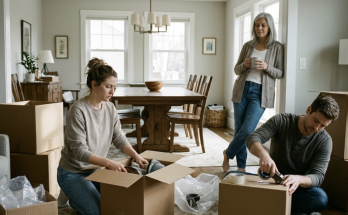
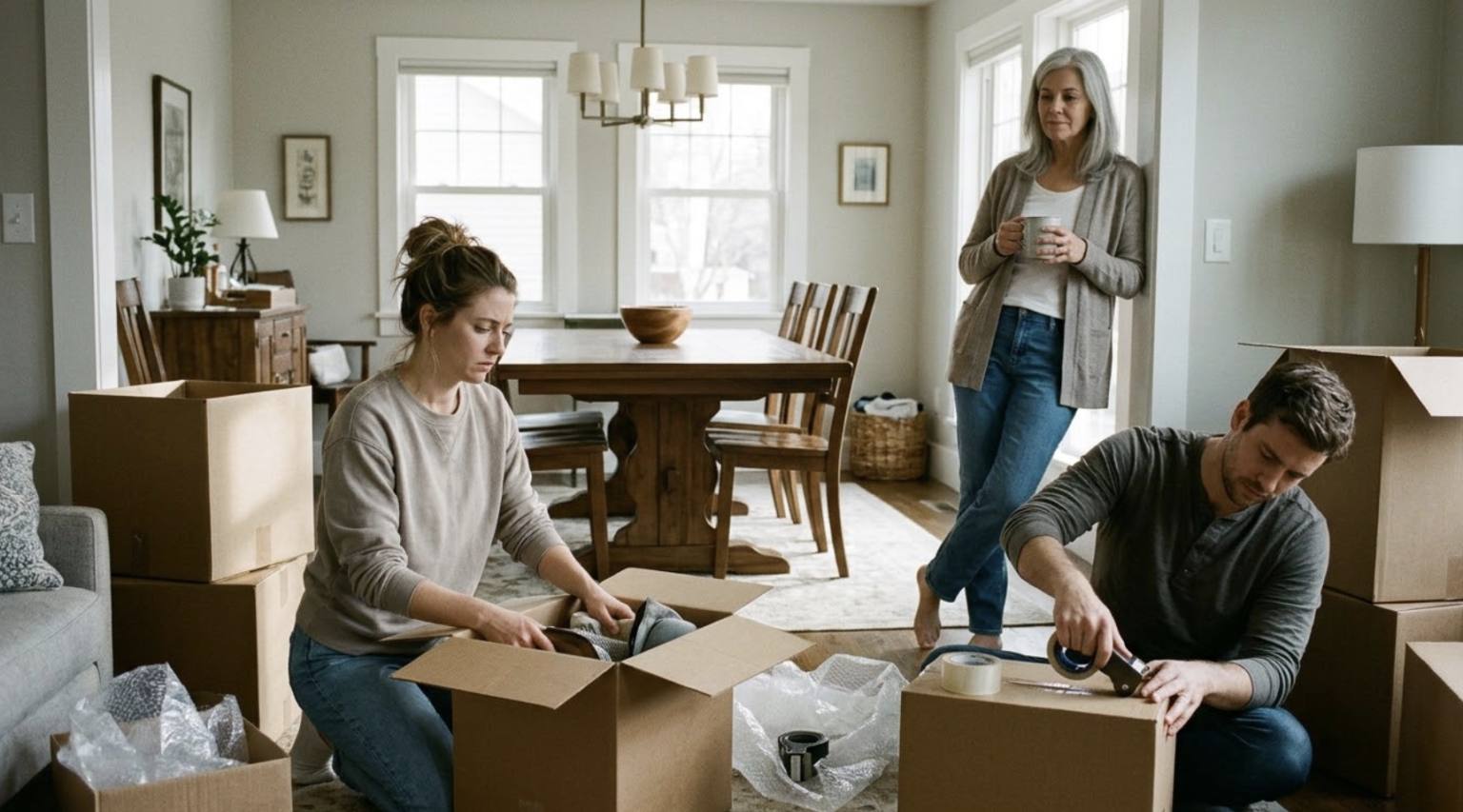
They moved out on a wet Thursday in April.
Carol stayed with me while a moving crew carried boxes down the hall. I remained in the kitchen, sorting a drawer that did not need sorting.
Lauren didn’t speak to me.
Nathan came to the doorway carrying a small cardboard box.
“These were Dad’s,” he said.
Inside were Paul’s tape measure, his old work gloves, and the little radio he used when he fixed things.
“I thought you might want them.”
“They were never yours to give back.”
He lowered the box.
“I know.”
I pointed to the counter. He set it there carefully.
Then he placed two keys beside it.
“I’m renting a room near work,” he said. “Lauren’s staying with her sister.”
I nodded.
“My lawyer told me not to discuss the agreement with you.”
“Then don’t.”
He rubbed his thumb across the empty place on his key ring.
“Is there anything I can do today?”
“Yes. Leave the keys.”
For a moment, he looked like the boy who used to wait in the kitchen after breaking something.
But he wasn’t a boy. I had to stop reaching for that boy every time the man hurt me.
He left.
After the truck pulled away, Carol walked through the rooms with me.
There were dents in the carpet where their furniture had stood. A pale rectangle marked the wall where their wedding picture had hung.
I stood in that room a long time.
“What do you want in here?” Carol asked.
“I don’t know.”
“That’s all right.”
It surprised me how much comfort there was in not having to decide.
Over the summer, I learned the quiet sounds of my home again.
I took my medicine with breakfast. I kept my doctor’s appointments. When the dizziness came, I sat down without apologizing to anyone.
I bought a secondhand sewing table for the empty room.
Paul had wanted me to have one years ago. There had always seemed to be something else to pay for.
Nathan wrote every few weeks.
At first, his letters explained things. Fear. Debt. How much he had wanted his marriage to work.
I put those in a drawer.
Later, the letters changed.
He told me he had given the investigator his messages, including the ones that made him look bad. He was seeing a counselor. He wasn’t asking to come home.
In August, he wrote one sentence I carried around for three days.
I knew you would never agree, so I helped take away your choice.
There was no “but” after it.
I called him that Sunday.
We spoke for eight minutes.
In September, we met for coffee at a diner. We paid separately.
He asked about my health. Then he listened to the answer without looking at his phone.
It wasn’t forgiveness all at once. It was coffee.
Before we left, he said, “You don’t owe me the house. Or anything in your will.”
“I know.”
He nodded, looking down at his cup.
This time, I believed he was beginning to know it too.
A week later, Ellen called to say my updated estate papers were ready.
I drove myself.
Afterward, I stopped at Carol’s with an envelope.
She stared at it.
“What’s this?”
“Open it.”
Inside were two train tickets west. We had talked for years about seeing the mountains, always ending the conversation with someday.
Carol looked up.
“Can you afford this?”
“Yes.”
“Are you sure?”
I thought of the sewing table by the window.
My bills, paid. The savings I had been afraid to touch while waiting for somebody else to need them.
“I checked.”
She started crying, which made me cry, and then we argued about who would take the window seat.
At home, I filled out the travel form at my kitchen table.
There was a line asking for my signature.
I signed slowly, making the small loop beneath the last letter.
Then I set the departure date on my calendar and called my sister to tell her we were really going.