PART5
I wasn’t prepared for that.
“For what?”
“For yesterday. For the café. For bringing my parents to your house without making sure you had actually agreed. I knew you hadn’t confirmed anything, and I should have stopped Emily from making those arrangements.”
His voice sounded exhausted.
“Robert, why didn’t you?”
“Because I thought you would eventually give in. Emily said you always did.”
The words landed harder than he could have imagined.
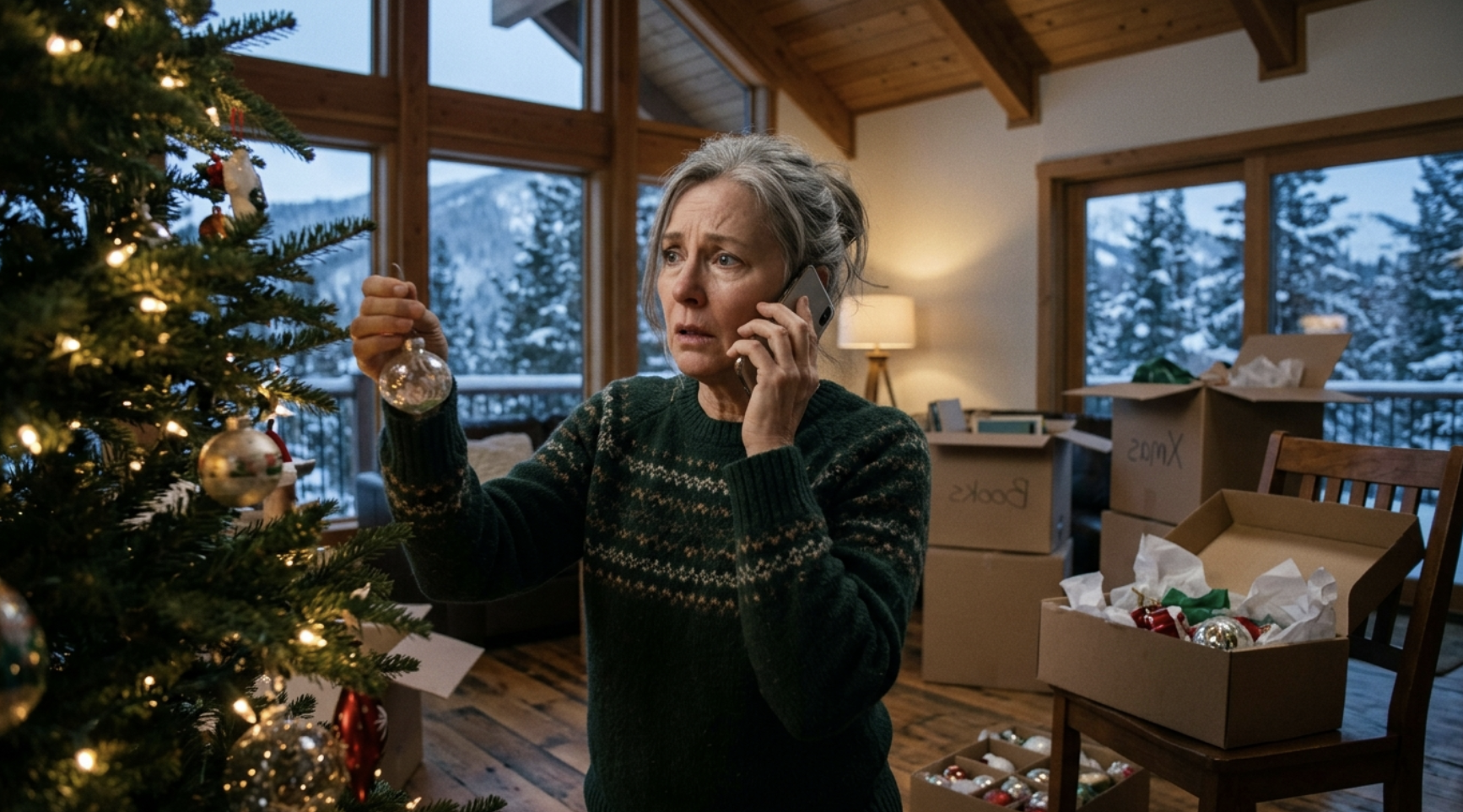
I looked toward the Christmas tree in the living room.
He was right.
For years, I had given in.
I had agreed to inconvenient visits, changed holiday plans, paid unexpected expenses, and swallowed my disappointment because I thought keeping peace was part of being a good mother.
Emily had learned that if she pushed long enough, I would eventually surrender.
I had taught her that lesson without ever intending to.
“Robert,” I said quietly, “why are you calling me now?”
He hesitated.
“Because something happened last night.”
“What happened?”
“My parents went back to their temporary apartment. Emily came over afterward, and they had a huge argument.”
“About the house?”
“Not just the house.”
I waited.
Robert lowered his voice.
“My mother asked Emily why she had told them you were financially struggling.”
I stopped breathing for a moment.
“What?”
“Emily told my parents that you had been having trouble managing the new house. She said the mortgage was becoming difficult and that having them stay with you would help you financially because they could contribute to the bills.”
I gripped the edge of the table.
My mortgage was affordable. My income was stable. I had bought the house after reviewing every expense with my financial adviser.
I had never told Emily that I was struggling.
“Why would she say that?”
“I don’t know,” Robert replied. “My mother says Emily told her you had asked for help, but you were too proud to admit it. She said moving in would allow them to support you while also saving money themselves.”
I closed my eyes.
There it was.
Emily hadn’t merely told her in-laws that they could stay.
She had invented an entirely different reason for the arrangement, one that made it seem as though I needed them more than they needed me.
And if Patricia and James believed I was financially vulnerable, their presence in my house might have seemed like a generous act rather than an imposition.
“Robert, did Emily tell you the same thing?”
“She said you were worried about expenses, yes. But I knew you had a good job. I didn’t question it because I thought she was exaggerating.”
“Did she tell your parents I had asked for help?”
“Apparently.”
I stood and walked to the window.
Outside, the snow had stopped falling. A small bird hopped across the wooden railing of the deck, searching for food beneath the thin white layer.
I watched it for several seconds before speaking.
“Thank you for telling me.”
“There’s something else.”
I turned back toward the phone.
“What?”
“My mother found an email on Emily’s phone last night. It was an email Emily sent her about the move.”
“What did it say?”
Robert hesitated so long that I thought the call had dropped.
Then he said, “She wrote that once they were settled in your house, it would be easier to persuade you to make the arrangement permanent.”
For a moment, I couldn’t find my voice.
Permanent.
Not a few weeks.
Not until their new house was ready.
Permanent.
“Did she explain what she meant?”
“She told my mother that you were alone, that you didn’t need three bedrooms, and that you would eventually realize it made more sense for everyone to live together.”
I lowered myself into the nearest chair.
My daughter had looked at the home I had worked for, saved for, and dreamed about, and she had seen a solution to someone else’s housing problem.
Worse, she had imagined that if she could get them through the front door, I would eventually stop resisting.
I thought about the white envelope.
The written notice.
The attorney standing beside the garage.
I had wondered whether I had overreacted by preparing everything in writing.
Now I understood why the documentation mattered.
My daughter hadn’t simply misunderstood my answer.
She had planned around the possibility that I would refuse.
“Robert,” I asked, “does Emily know you found out about that email?”
“No. My mother told me about it this morning. Emily thinks we’re all upset because you embarrassed us. She doesn’t realize we know what she was planning.”
I sat quietly.
Part of me wanted to call Emily immediately.
I wanted to demand an explanation. I wanted to ask how she could look me in the eye and tell me that she loved me while planning to pressure me into sharing the home I had bought for myself.
But I knew what would happen.
She would deny it, explain it away, or accuse me of misunderstanding her intentions.
And I was tired of conversations in which the facts became secondary to her feelings about being confronted.
So I asked Robert one more question.
“What are you going to do now?”
“I’m going to tell my parents the truth. Then I’m going to talk to Emily.”
“Don’t do it for me,” I said. “Do it because you need to decide what kind of husband you want to be.”
He was silent.
“I’ve spent years hoping someone would stand up for me,” I continued. “But I can’t build my life around waiting for someone else to do the right thing.”
“I understand.”
“I hope you do.”
We ended the call.
I remained at the kitchen table for a long time.
There was a strange mixture of grief and relief inside me.
Grief because I had finally seen how far Emily was willing to go.
Relief because I no longer needed to wonder whether I had been unreasonable.
I hadn’t.
I had simply said no.
And the people who respected me were beginning to understand that.
That afternoon, I drove into town to buy groceries.
The roads were slick, and the mountains beyond Evergreen looked almost blue beneath the winter sky. I stopped at a small bakery near the grocery store and bought a cinnamon roll, something I used to do occasionally when Emily was younger and we would spend Saturday mornings together.
I sat by the window with my coffee.
For the first time in days, I wasn’t checking my phone every few minutes.
Then I heard someone say my name.
“Margaret?”
I turned.
Patricia stood beside the table, holding a paper bag from the bakery.
For a second, neither of us knew what to say.
Then she asked, “May I sit down?”
I gestured toward the empty chair.
She placed her bag on the table and sat.
“I wanted to apologize properly,” she said. “Not in a family chat. Not through a message. In person.”
I studied her face.
She looked tired. Her usual carefully arranged hair was pulled back, and there were dark circles beneath her eyes.
“I appreciate that.”
She folded her hands.
“James and I sold our old house because we believed we had found the right new one. The closing was delayed because of a problem with the buyer’s financing, and we were told we’d need somewhere to stay for a short time.”
I nodded.
“Emily offered your house. She made it sound as though you had already discussed it with her and that you were happy to help.”
“She never discussed it with me.”
“I understand that now.”
Patricia looked down at her hands.
“At first, I was angry with you. I thought you had changed your mind at the last minute. I thought perhaps you didn’t want us there because you disliked us.”


One Comment on “PART5: My Daughter Promised My Mountain Home to Her In-Laws Without Asking Me—Then They Arrived to Find an Envelope at My Door”
Comments are closed.