PART7
“I need you to understand something,” I said. “I can accept that you were frightened. I can even understand that you made mistakes. But I will not keep pretending your choices didn’t hurt me.”
She wiped her cheeks.
“What do you want me to do?”
“Tell the truth. Don’t contact me on his behalf. Don’t give him information about me. And stop asking me to protect him from the consequences of what he did.”
She stared at me.
“Are you saying you don’t want me in your life anymore?”
I took a slow breath.
“I’m saying that I can’t have a relationship with you that requires me to sacrifice my safety.”
She shook her head.
“I never wanted any of this.”
“I believe you.”
For the first time, she looked up.
“But not wanting something to happen isn’t the same as protecting someone from it,” I continued. “You had choices, Mom. I was a child. You were the adult.”
She covered her mouth.
I felt tears gathering in my own eyes, but I didn’t take back the words.
“I loved you so much that I spent years thinking if I could just become successful enough, you’d finally stand up for me.”
Her face crumpled.
“I am sorry, Ava.”
I believed that she was sorry in that moment.
But an apology could not return my childhood. It could not erase the fear I had carried into adulthood. And it could not immediately rebuild the trust she had spent years allowing Richard to destroy.
“I hope you mean that,” I said. “But I need time. And I need you to understand that time doesn’t come with a promise that everything will go back to how it was.”
She nodded through her tears.
When we stood to leave, she reached toward me, then stopped before touching my injured arm.
I wanted to hug her.
God, I wanted to hug her.
But wanting to comfort someone did not mean I was ready to trust them.
So I said goodbye and walked away.
It was one of the hardest things I had ever done.
It was also the first time I had chosen my own well-being without asking my mother’s permission.
The case against Richard moved forward over the following months.
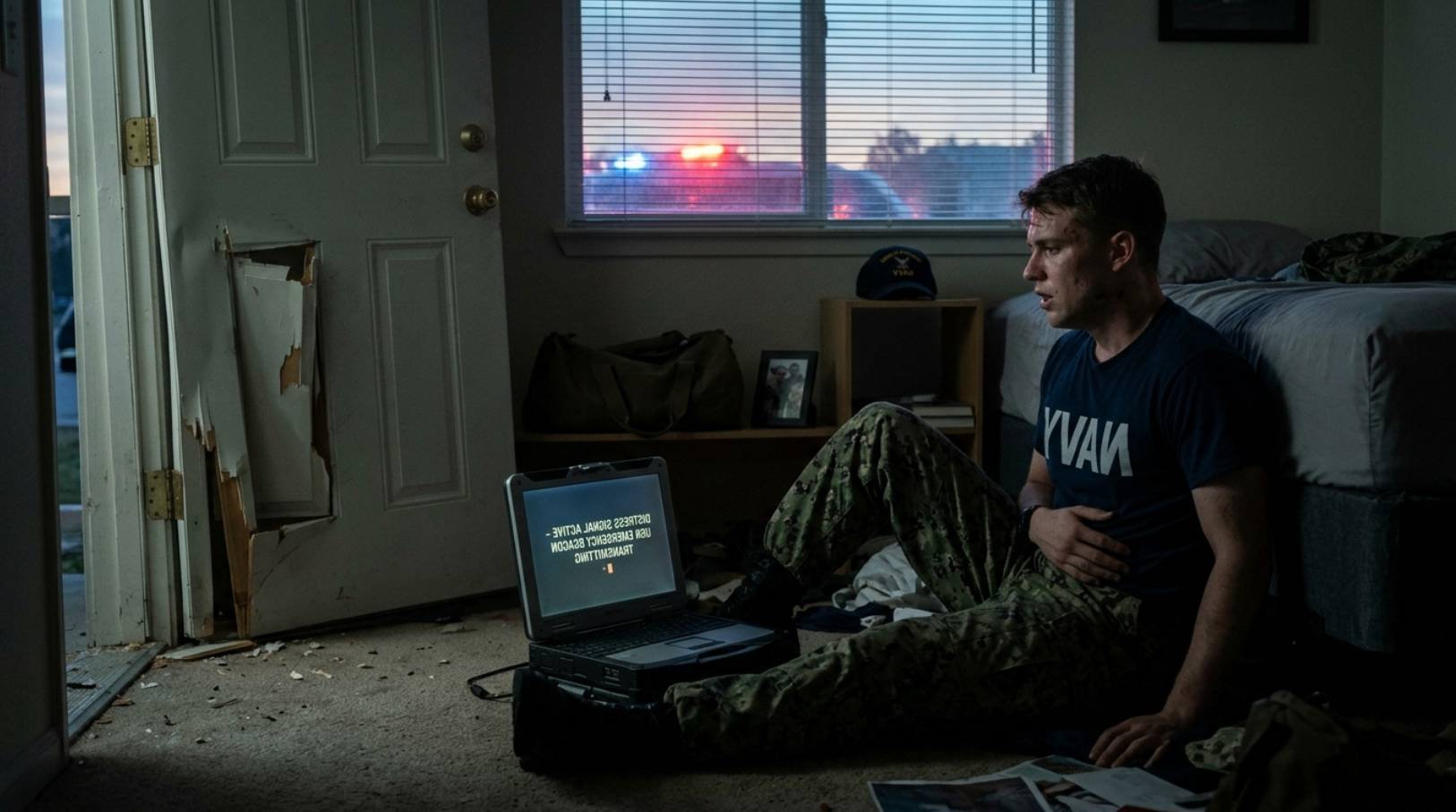
The evidence included photographs of my injuries, the damaged doorway, the emergency signal records, my statement, and the messages investigators had obtained during their inquiries.
Richard denied the allegations.
His representatives challenged parts of the evidence and presented his version of events.
But the facts did not disappear simply because he disputed them.
I cooperated with the investigation and attended the necessary legal proceedings when my health allowed. The process was slower and more exhausting than I had imagined.
There were days when I wanted to abandon everything.
Days when I wondered whether the emotional cost of continuing was worth it.
Whenever those thoughts came, I reminded myself that I was not responsible for making the process easy. I was responsible only for telling the truth as accurately as I could.
Eventually, Richard faced the legal consequences established through the proceedings.
The outcome was determined by the evidence and the applicable law, not by the rumors spreading online or by the anger of people who had never met either of us.
I did not celebrate his suffering.
I celebrated the fact that he could no longer demand that I remain silent.
By then, the story had spread far beyond my apartment complex.
A local news report described a Navy officer who had used an emergency distress system after an alleged assault in her home. As details became public through the appropriate channels, people began sharing messages of support.
Some called me brave.
Others said they could never have survived what I had experienced.
I appreciated their kindness, but the word brave sometimes made me uncomfortable.
I hadn’t felt brave when I crawled toward my phone.
I had felt terrified.
I hadn’t felt powerful when I gave my statement.
I had felt exhausted.
And I certainly hadn’t felt courageous when I cried in front of Maya because I couldn’t understand why I still wanted my mother to love me.
I had simply kept going.
Perhaps that was what courage looked like when nobody was watching.
Not fearlessness.
Not perfect strength.
Just the decision to take one more step, even when every part of you wanted to stop.
Six months after the attack, I returned to limited duty.
My injuries had improved, and I was continuing to recover emotionally. I still had difficult days, but I had learned to recognize them without treating them as failures.
Captain Morgan welcomed me back with a short conversation in her office.
“I’m glad you’re here, Lieutenant.”
“Thank you, ma’am.”
She studied me for a moment.
“How are you really doing?”
I considered giving her the familiar answer.
I’m fine.
Instead, I told the truth.
“Better than I was. Not completely there yet.”
She nodded.
“That’s a reasonable answer.”
Then she handed me my updated work schedule.
There were no dramatic speeches. No ceremony. No declaration that I had returned as an entirely different person.
I was simply allowed to recover at a pace that made sense.
That meant more to me than I could explain.
As the months passed, I began volunteering with a support program that connected service members experiencing domestic abuse or family violence with appropriate resources.
I did not tell strangers every detail of my story. I did not believe I had to turn my trauma into a public performance to make it useful.
Instead, I listened.
I helped people understand where they could seek assistance and encouraged them to document concerns, contact qualified professionals, and develop safety plans appropriate to their circumstances.
Sometimes someone would sit across from me and whisper, “I don’t know if what happened to me was bad enough to ask for help.”


One Comment on “PART7: My Stepfather Beat Me at 2 A.M., But One Navy Distress Signal Exposed His Darkest Secrets by Sunrise”
Comments are closed.