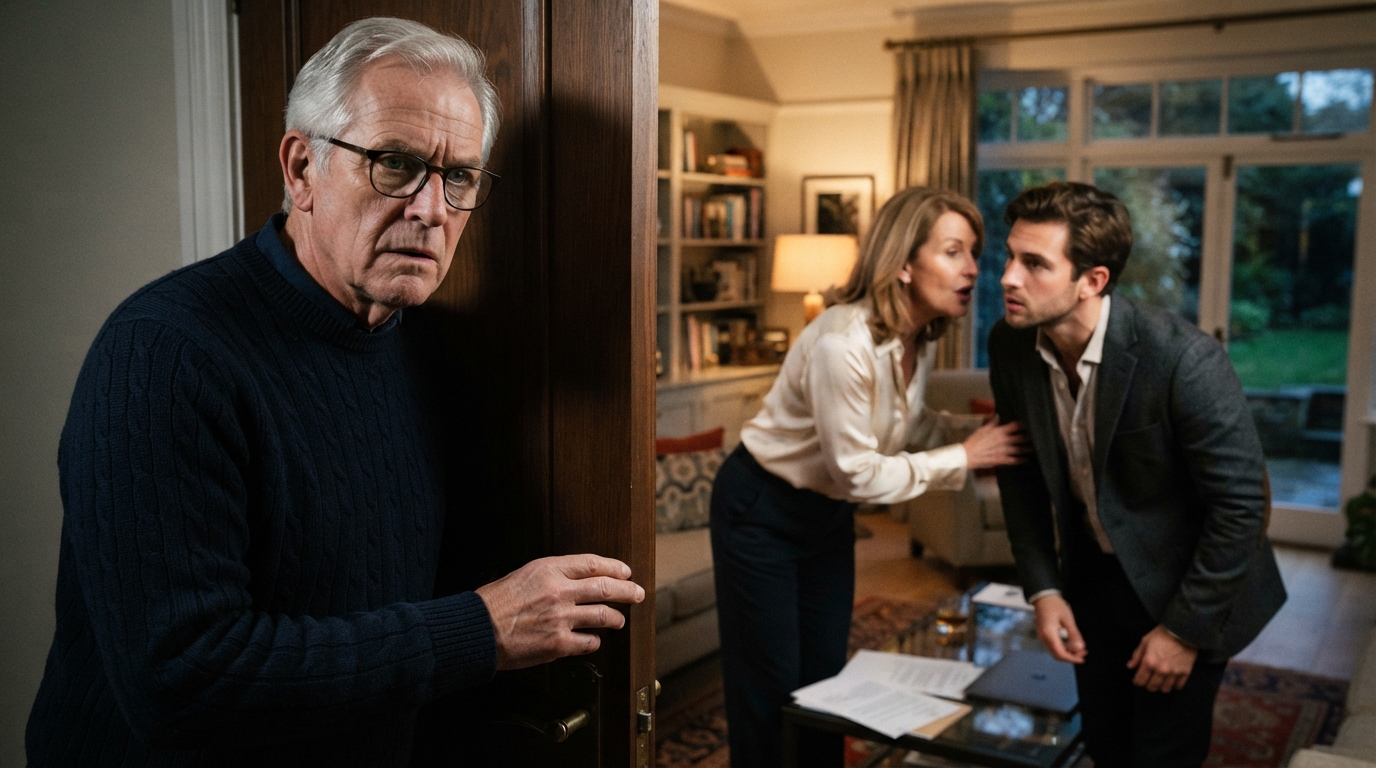
PART9
He glanced at me.
“I want to make things right.”
“Then start with the records,” I said.
He opened the leather folder.
Inside were bank statements, a list of his debts, and a handwritten plan for repayment.
I studied the pages.
He had gathered more information than he had the night before. There were balances for the three cards, details of the rejected loan application, and a list of his current expenses.
He had also written down the amount he believed he owed Pam.
“Where did you get this?” I asked.
“I spent the day going through everything. I called the banks. I talked to my accountant.”
“You have an accountant?”
“Someone who does my taxes.”
“All right.”
I examined the list.
Some of the numbers were incomplete. A few transactions needed supporting documents. But it was a start.
“I know I can’t undo what I did,” Jordan said. “But I want to pay Mom back. I’ll sell my car. I’ll move into a cheaper apartment. I’ll get a full-time job, even if it’s not in sales. I’ll stop gambling.”
I looked at him.
“Have you spoken to anyone about your gambling?”
“No.”
“Then how do you intend to stop?”
He hesitated.
“I’ll just stop.”
“That isn’t a plan.”
His face tightened.
“I knew you would say that.”
“Because it is true. If gambling has become a problem you can’t control, you need more than a promise made at a kitchen table. You need professional support and a plan that doesn’t depend on you winning money.”
He stared at me.
For a moment, I thought he would argue.
Instead, he looked down.
“Maybe you’re right.”
Pam moved closer to him.
“Jordan, I want you to get help. I want you to have a good life. But I can’t keep paying for the consequences of your choices.”
He nodded.
“I understand.”
I placed the papers on the table.
“Here’s what I am willing to do. I’ll have Robert review the information. We’ll establish the actual balances and the accounts involved. You will cooperate with the investigations and provide every document requested. You will not open any more accounts in my name, and you will not use your mother’s retirement to cover your debts.”
He nodded.
“And the money?” he asked.
“What money?”
“The money from the sale.”
There it was.
The question he’d been waiting to ask.
I folded my hands.
“What about it?”
He looked at me, and I could see him trying to choose the right words.
“You’re sitting on a fortune, Gary. You could clear these debts in one afternoon. You could replace Mom’s retirement. You could help me start over. It wouldn’t even make a dent.”
Pam’s face fell.
Jordan continued.
“I’m not asking you to give me millions. Just enough to settle everything. Maybe a hundred thousand. That would cover the cards, the gambling debt, and some money to get my life back together.”
I stared at him.
“Yesterday, you told me I couldn’t afford a lawyer. Today, you want me to give you a hundred thousand dollars.”
“I know how it sounds.”
“Do you?”
He leaned forward.
“Gary, I’m your family.”
I looked at Pam.
She was watching him with a sadness that seemed deeper than anything I’d seen before.
Then I turned back to Jordan.
“Being family is the reason I gave you chances when you treated me like I was beneath you. It’s the reason I helped you when you lost jobs. It’s the reason I never responded when you made jokes about my truck or my work.”
He looked uncomfortable.
“But family doesn’t mean I owe you money,” I continued. “And it certainly doesn’t mean I should reward you for using my identity.”
“I’m not asking for a reward.”
“Then what are you asking for?”
“Help.”
“Help is not the same as money.”
He looked away.
I took a breath.
“I will support you in getting professional help for your gambling. I will cooperate with a reasonable repayment arrangement for money you owe your mother, once the actual amount is established. I will consider helping with necessary treatment or financial counseling, with clear limits and direct payments to the provider where appropriate.”
He looked up.
“But I will not pay your gambling debts simply because I can afford to. I will not buy your silence. And I will not promise to make the consequences disappear.”
Jordan’s jaw tightened.
“So that’s it?”
“No. That’s the beginning.”
He stood up.
“I should have known.”
“Known what?”
“That you’d use your money to control everybody.”
I felt Pam stiffen beside me.
“Sit down, Jordan.”
“No.”
He grabbed his leather folder.
“You wanted to see what kind of person I was when I thought you had nothing. Well, now you know. Congratulations.”
He walked toward the door.
I didn’t follow him.
At the threshold, he turned.
“You think you’re better than me because you built a business and saved your money. But money isn’t everything, Gary.”
I nodded.
“For once, we agree.”
He left.
Pam began to cry, but this time she didn’t run after him.
She sat beside me with her hands clasped tightly in her lap.
After a long silence, she whispered, “I think I finally understand.”
“What?”
“That every time I rescued him, I told him he didn’t have to change.”
I didn’t answer.
She looked at the door.
“I thought I was being a good mother. I thought love meant helping him no matter what.”
“Love can mean helping someone face what they’ve done.”
She nodded slowly.
“And sometimes it means saying no.”
“Yes.”
That night, Pam and I talked for hours.
We talked about the years we’d spent together, about the things we’d done well, and about the things we’d avoided. We talked about money, trust, and the difference between privacy and secrecy.
I told her I had no intention of hiding our financial situation from her going forward. We would review our plans together, with appropriate professional advice. But I also told her that trust would take time.
She didn’t ask me to forgive her immediately.
For that, I was grateful.
Over the following weeks, we began to untangle the financial mess Jordan had created.
Robert helped me work through the identity-theft process. The card companies opened investigations, and I supplied the documents they requested. I placed additional protections on my credit files and reviewed my financial accounts carefully.
Pam worked with an independent financial adviser to understand the withdrawals from her retirement account and determine what could realistically be recovered.
Jordan, after several difficult conversations, agreed to seek professional help for his gambling. He also began looking for steady work and provided additional records relating to the accounts.
Progress was slow.
Some days he cooperated. Other days he became defensive and insisted that the family should simply forgive him.
I refused to argue.
Whenever he tried to turn the conversation into a debate about whether I was being generous enough, I brought it back to the facts.
What had he done?
What needed to be corrected?
What steps was he taking to prevent it from happening again?
Those were the questions that mattered.
A month after the first confrontation, I received an update from Robert.
The investigation had confirmed enough inconsistencies in the account applications to support the fraud disputes. The companies were still reviewing individual transactions, and the final outcome wasn’t yet settled.
But one thing was becoming clear.
The situation was larger than the three cards we’d first discovered.
The rejected loan application had not been the only additional attempt to use my identity.
There were other applications and inquiries that needed to be investigated.
I sat in Robert’s office, looking at the list.
“How many?” I asked.
“We’re still verifying the full scope,” he said. “I don’t want to give you a number that may change. But you were right to investigate beyond the first three accounts.”
I felt a chill.
For years, I’d believed that my financial life was simple.
I earned money, paid bills, saved what I could, and kept records.
Now I had to examine every corner of it because someone in my own family had decided my identity was an opportunity.
When I returned home, I found Pam in the garden.
She was trimming the rose bushes along the fence. She had planted them the year after we married, and they had grown tall enough to lean over the path.
She looked up when I approached.
“How did it go?”
“There’s more to investigate.”
She set down the shears.
“More accounts?”
“Potentially. We’re verifying them.”
She closed her eyes.
“I’m so sorry, Gary.”
I stood beside her.
“I know.”
“I keep thinking about all the times I sat here and worried about you. I thought you were hiding something terrible from me. All the while, Jordan was the one hiding the truth.”
She looked at me.
“How did you live with not telling me about the business?”
I thought about that.
“I told myself I was protecting something important. But I was also avoiding a difficult conversation. I wanted to know whether people would treat me differently if they thought I had nothing, and I used silence to find out.”
“Do you regret it?”
“Parts of it.”
She nodded.
“I think we both have things to learn.”
For the first time in weeks, I felt that we were speaking honestly.
Not comfortably.
Honestly.
And sometimes that was the beginning of rebuilding something worth keeping.
Two months after I sold the storage lots, Jordan asked to meet us at a café.
He arrived early and waited at a table near the window.
He looked thinner. His clothes were plain, and he no longer wore the expensive watch he’d bought during the period when he’d been using the cards.
When we sat down, he didn’t begin by asking about the money.
He began by apologizing.
“I know I’ve said I’m sorry before,” he told us. “But I don’t think I understood what I was apologizing for.”
Pam reached across the table.
“What do you understand now?”
He looked at her.



One Comment on “PART9: At 69, I Sold My Storage Lots for $19.8 Million—Then Overheard My Wife and Stepson Planning to Steal My Money”
Comments are closed.