PART4
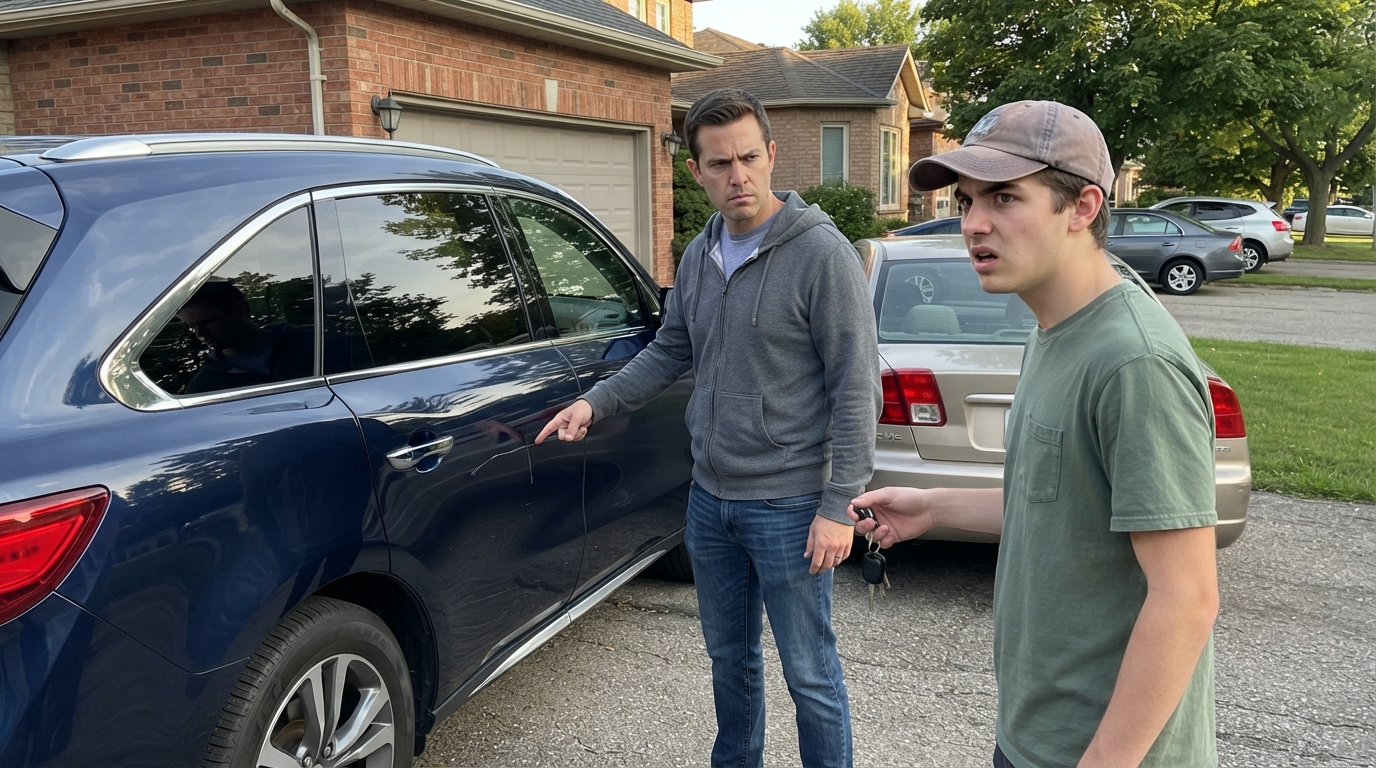
I looked at the three people standing in front of me.
My father, who had excused the destruction of my property.
My mother, who had asked me to accommodate the person responsible.
And my brother, who had mistaken years of assistance for permanent ownership of my life.
“I have to go,” I said.
Dad laughed bitterly.
“Of course you do. You always walk away when things get difficult.”
I stopped.
For years, that accusation would have followed me into my car. I would have replayed it all day, wondering whether I had been selfish, whether I should have explained myself better, whether I could have done something differently.
Not anymore.
I turned back.
“No, Dad. I’ve stayed through plenty of difficult things. I stayed when Mitch needed a vehicle. I stayed when you needed help with bills. I stayed when Mom needed someone to handle appointments and paperwork. I stayed when every emergency somehow became my responsibility.”
I took a breath.
“But I’m not staying for another conversation where you explain why the person who hurt me deserves more sympathy than I do.”
Then I walked to my SUV.
The long scratch caught the sunlight.
I opened the driver’s door carefully, sat behind the wheel, and started the engine.
Before I pulled away, my phone rang.
It was Attorney Ramsay.
I answered through the car’s speaker.
“Good morning, Cassandra. I’ve reviewed the information you sent last night. I have a few questions about the vehicle and the insurance claim.”
“All right.”
“First, I want to confirm that you have the original purchase documents and current ownership records for your brother’s sedan.”
“I do.”
“And the security footage is saved in its original form?”
“Yes. I have the original file and two backup copies.”
“Good. Keep everything. Don’t edit the video, and don’t delete any messages related to the incident.”
“I won’t.”
He paused.
“One more thing. You mentioned that you have been paying for the insurance and maintenance. Do you have records of those expenses?”
“Every payment.”
“Excellent. We’ll discuss the available options when we meet. For now, let the police and your insurer handle their respective investigations. Don’t get drawn into arguments with your family.”
I looked at my father’s house in the rearview mirror.
“That last part might be the hardest.”
He chuckled gently.
“Then make it simple. You don’t have to convince anyone that your boundaries are reasonable before you’re allowed to have them.”
After we hung up, I sat in silence for a moment.
Then I drove home.
For the first time in years, I wasn’t thinking about how to fix my brother’s life.
I was thinking about how to rebuild my own.
By nine o’clock that morning, my phone had received seventeen messages.
The first came from Mitch.
Mitch: You need to tell the towing company to bring my car back.
I didn’t respond.
Five minutes later:
Mitch: I am serious, Cass. I have work.
Still nothing.
Then came a call from Dad.
I let it go to voicemail.
His message lasted forty-three seconds.
He began by telling me that I had embarrassed the family. He moved on to explaining that Mitch couldn’t afford another vehicle. By the end, he was accusing me of putting my own pride ahead of everyone else’s needs.
I saved the message.
Not because I wanted to punish him.
Because I had finally learned that remembering what people said was sometimes more important than remembering how they made me feel.
Then Mom called.
I answered.
“Cassie?”
“Hi, Mom.”
“Your father is very upset.”
“I can imagine.”
“Mitch says he might lose his job.”
“Then he should speak to his employer.”
“You sound so cold.”
I closed my eyes.
I had been awake since before dawn. My car was damaged. My insurance deductible would likely be substantial. I had spent the previous evening documenting evidence and contacting an attorney.
Yet my mother had called to discuss Mitch’s inconvenience.
Not once had she asked whether I was all right.
“Mom, did you watch the video?”
A pause.
“Your father showed me.”
“And?”
“I think he was angry.”
“Did you see him damage my car?”
“Yes.”
“Do you think that was acceptable?”
Another pause.
“I don’t think it was right, Cassie.”
For a brief moment, I felt hope.
Then she continued.
“But you know your brother. He’s always been impulsive. Maybe if you had helped him, none of this would have happened.”
There it was.
The apology that wasn’t an apology.
The admission that came with a condition.
The blame that somehow found its way back to me.
“Mom, I said no to a fifteen-thousand-dollar loan. That was my decision. Mitch’s decision was to damage my vehicle. Those are two different things.”
“I understand that.”
“Do you?”
She didn’t answer.
I spoke gently, because I wasn’t interested in hurting her.
“I love you, Mom. But I’m not going to accept responsibility for something Mitch chose to do.”
“Nobody is asking you to accept responsibility.”
“You’re asking me to feel guilty for refusing to give him money.”
“I just want this family to be okay.”
“So do I.”
“Then help us fix it.”
I looked at the scratch on my SUV through the kitchen window.
“Fixing it doesn’t mean pretending it didn’t happen.”
She sighed.
“I don’t know what you want me to say.”
“Nothing. I just wanted you to hear me.”
We hung up shortly afterward.
I stood in my kitchen, holding my phone, feeling the familiar ache of wanting something from a person who might never be able to give it.
Then I did something that surprised me.
I put my phone on silent.
I made breakfast.
I took a shower.
And I went to work.
My first assignment that morning was at a hospital.
I was scheduled to interpret for a deaf patient who had come in for a consultation with a specialist. I had been doing this work for years, and I knew how important it was for patients to understand their doctors clearly.
The appointment lasted nearly two hours.
I focused on the patient, the physician, and the communication passing between them.
For those two hours, I couldn’t afford to let my family occupy my mind.
When the appointment ended, the patient smiled and signed a thank-you.
I smiled back.
You’re welcome.
The exchange was simple, but it reminded me of something I had forgotten.
My work mattered.
The savings I had built mattered.
The life I was creating mattered.
I wasn’t selfish for wanting to protect those things.
During my lunch break, I checked my email.


One Comment on “PART4: My Brother Scratched My $40,000 SUV After I Refused to Give Him $15,000—So I Took Back the Car He’d Been Driving for Two Years”
Comments are closed.