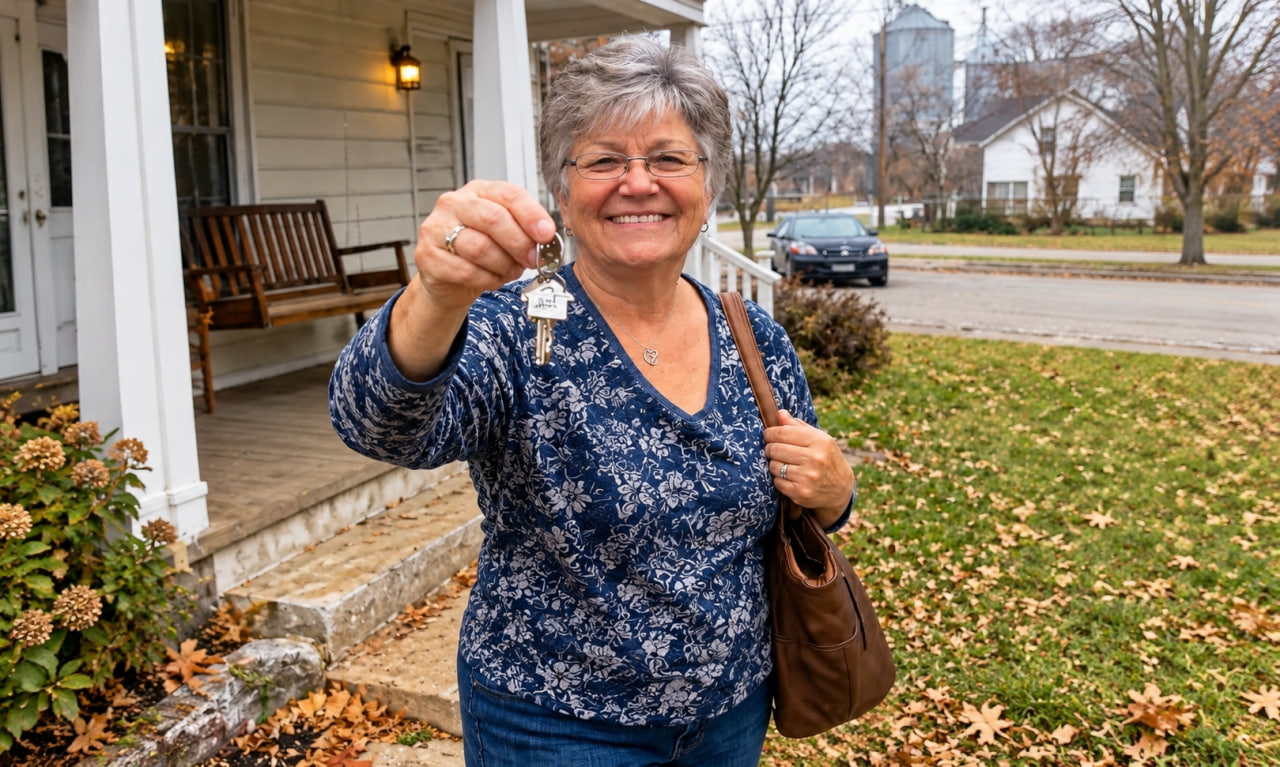
FINAL PART
She didn’t argue.
That was how I knew she had finally heard me.
The next six weeks were difficult.
Todd’s repair business closed.
He sold his equipment, paid what he could toward the debt, and took a full-time job at the plant. The sheriff’s investigation confirmed that both transfers had been made without my permission. Because Michelle admitted what she’d done and cooperated with the investigation, her attorney was able to negotiate a resolution that included restitution, supervised financial counseling, and a period of probation. Todd faced his own legal consequences for forging my signature.
They were not spared consequences because they were family.
But neither were they abandoned to face them alone.
I hired an attorney of my own.
The bank restored the money it could recover, and the remaining balance became part of a formal repayment agreement. Todd and Michelle agreed to make monthly payments from their wages. The attorney explained every document to me, and I signed nothing until I understood it.
For the first time since Dale’s death, I felt in control of my financial life.
I also learned the truth about the account.
The $47,860 had been built slowly over twelve years. Dale had saved from side jobs, equipment sales, and the money he’d put away when he was younger. He had intended it to give me choices after he was gone.
After the fraudulent transfers and legal expenses were accounted for, I still had enough to keep my little house, maintain an emergency fund, and live without depending on anyone else.
It wasn’t a fortune.
But it was mine.
And that made all the difference.
Michelle and Todd sold their house before the bank could begin foreclosure proceedings. They moved into a smaller rental closer to the plant and the clinic. The children adjusted more easily than the adults did.
Sadie missed her old bedroom, but she liked having a small patch of grass where she could plant flowers. Ben was delighted that the new rental had a cupboard low enough for him to reach the cereal.
Children are often better at accepting a changed life than grown people who have spent years insisting everything must stay the same.
Michelle picked up extra shifts at the clinic.
Todd stopped talking about becoming his own boss and concentrated on rebuilding his savings.
They were tired, embarrassed, and often frightened.
But they were finally living within the truth.
I visited once a week.
At first, Michelle treated every visit as though it were a test she might fail. She apologized for things that didn’t need apologizing for. She asked whether I was comfortable, whether I wanted tea, whether I needed anything from the store.
One afternoon, I took her hand.
“You don’t have to earn every minute I spend with you.”
She stared at me.
“I don’t?”
“No. But you do have to be honest with me.”
She nodded slowly.
“I can do that.”
“Then start there.”
Our relationship did not repair itself overnight.
Trust came back in small pieces: a phone call answered honestly, a bill discussed before it became a crisis, a promise kept when nobody was watching.
Sometimes I still remembered the $800 figure written in Todd’s careful handwriting.
Sometimes I remembered the basement room and the way Michelle had said I would be contributing something.
Those memories hurt.
But they no longer controlled every conversation we had.
I was learning that forgiveness was not the same as forgetting, and loving someone did not require me to hand them the keys to every part of my life.
In early December, the first snow came to our little town.
I was sweeping corn dust from the porch when I heard Sadie’s voice from the sidewalk.
“Grandma!”
She came running toward me in a red coat, her boots crunching through the thin snow. Michelle followed, carrying a paper bag. Todd walked behind them with Ben on his shoulders.
I opened the screen door.
“What are you all doing here?”
Sadie held up a folded sheet of paper.
“We made you something.”
Inside was a drawing of a little white house with a porch swing. There were four stick figures in front: Michelle, Todd, Sadie, and Ben.
A fifth figure stood on the porch.
Me.
Above the house, in Sadie’s uneven handwriting, were the words:
GRANDMA’S HOME.
I swallowed hard.
“It’s beautiful, sweetheart.”
She beamed.
“Mommy said we have to knock before we come inside now.”
I looked at Michelle.
She smiled faintly.
“We thought it was a good rule to teach the children.”
“It is.”
Todd cleared his throat.
“We brought supper. Nothing fancy. Michelle made chicken and dumplings.”
I looked at the paper bag.
Then at their faces.
There was no legal pad. No list of expenses. No request for childcare or rent.
Just a family standing on my porch, waiting to be invited inside.
“Come on in,” I said.
They gathered around my little kitchen table.
The house was cramped with five people, winter coats, and the smell of warm food. Ben knocked over his cup. Sadie insisted on sitting beside me. Todd apologized for tracking snow onto the floor.
Michelle laughed when I handed her a dish towel.
For a little while, we were simply a family having supper.
After the children had eaten, Michelle helped me clear the table.
She stood at the sink, washing dishes while I dried them.
“Mom?”
“Yes?”
“I’ve been thinking about Dad’s letter.”
I waited.
“He wanted you to have a home where you could make your own choices. I think he understood something I didn’t.”
“What was that?”
She turned off the tap.
“That being family doesn’t mean you belong to us. It means we have to respect the fact that you belong to yourself.”
I felt my eyes sting.
“Your father would have liked that.”
She nodded.
“I wish I’d understood it sooner.”
“So do I.”
We stood quietly for a moment.
Then she picked up another plate.
“I don’t expect you to forget what I did.”
“Good.”
She smiled sadly.
“But I hope someday you can trust me again.”
I looked at her, at the daughter I’d raised, at the woman who had made terrible decisions and was finally trying to become someone better.
“Trust isn’t something I can give you all at once,” I said. “You’ll have to show me.”
“I will.”
I believed she meant it.
That was enough for that evening.
The following March marked two years since Dale’s death.
I went to the cemetery alone that morning.
The ground was still hard from winter, and the grass around his headstone had only begun to turn green. I brought a small bunch of daffodils from the grocery store and placed them beside his name.
For a while, I simply stood there.
Then I told him about the house.
About the porch swing, the grain trucks, and the way the morning light fell across the kitchen floor.
I told him that Michelle and Todd were working hard to make things right.
I told him that I still missed him.
And finally, I told him that I was angry with him for keeping the savings account secret.
The words came more easily than I expected.
“You meant well, Dale,” I said. “But you should have trusted me with the truth. I could have handled it.”
The wind moved gently through the bare branches above me.
I touched the edge of his headstone.
“I hope you know I’m all right.”
I stayed until the cold began to settle through my coat.
When I returned home, an envelope was waiting in my mailbox.
It was from the attorney handling the repayment agreement. Inside was a statement showing the latest payment from Todd and Michelle.
They had paid on time.
It was a small amount compared with what they owed, but it was the fourth consecutive payment they had made without being reminded.
I put the statement in my desk drawer beside Dale’s letters.
Then I made myself a cup of tea and sat on the porch swing.
A grain truck rumbled toward the elevator.
The driver lifted a hand in greeting.
I waved back.
For months, I had thought independence meant having nobody to rely on. I had confused being strong with never needing comfort, and being safe with keeping everyone at a distance.
I understood better now.
My little house did not protect me from loneliness, disappointment, or grief. It did not make my family perfect. It did not undo the harm that had been done.
But it gave me a place where the decisions were mine.
And from that place, I could choose to love my daughter without surrendering my dignity.
I could welcome my grandchildren without becoming their unpaid caretaker.
I could forgive without pretending nothing had happened.
And I could remember my husband without allowing his good intentions to excuse his mistakes.
The next Sunday, Michelle came alone.
She brought a pot of soup and a small envelope.
“What is that?” I asked.
She set it beside my teacup.
“Something I wanted to give you.”
Inside was a photograph of Dale holding Sadie when she was a baby. He was sitting on the old farmhouse porch, his weathered hand spread protectively across her tiny back. He was smiling at whoever had taken the picture.
On the back, Michelle had written:
I’m sorry I forgot that you were someone’s little girl before you became my mother.
I pressed the photograph against my chest.
For the first time in a long while, I cried without feeling angry.
Michelle sat beside me on the porch swing.
Neither of us spoke for several minutes.
Then she leaned her head against my shoulder.
“I love you, Mom.”
I kissed the top of her head.
“I love you too.”
The grain trucks rolled past in the distance. Somewhere down the street, a dog barked. The afternoon sun warmed the porch boards beneath our feet.
And for the first time since Dale died, I felt no need to wonder whether choosing my own life had cost me my family.
It hadn’t.
It had forced us to learn what family was supposed to mean.
Not a bill.
Not a debt.
Not a basement room with a tiny window.
A place where love could be offered freely, where the truth could be spoken, and where every person was allowed to stand on their own feet.
I had chosen my little two-room house for $550 a month because it had its own door.
I hadn’t known then how much that door would teach me.
It was not a door to loneliness.
It was a door I could open when love arrived honestly.
And close when it asked me to disappear.


One Comment on “FINAL PART: My daughter offered to let me stay in her basement.”