PART 21 — (END) THE WOMAN WHO BORROWED A DEAD BABY’S NAME…………
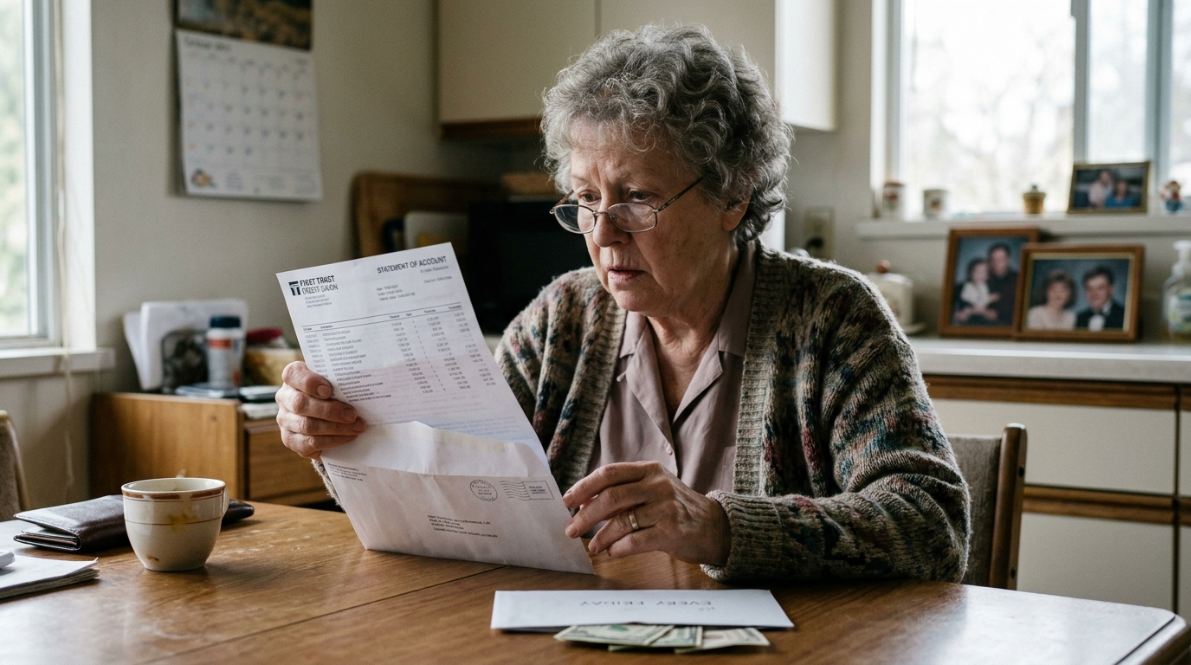
I opened my own bank statement yesterday for the first time I stared at Dottie. For fifty years, I had known her as Dorothy Wallace.
I knew her birthday. Her favorite pie. The scar on her left thumb from opening a soup can in 1979.
I knew she hated thunderstorms and loved old detective shows. And now she was sitting in Rebecca’s living room telling me Dorothy Wallace had died as a baby. “Explain.”
Dottie wiped her face. “My adoptive parents were given a birth certificate.” “With Dorothy Wallace’s name?”
“Yes.” “Did they know?” “No.
They believed it was mine.” “Then when did you find out?” “When I was eighteen.”
She looked down at her hands. “I needed my birth certificate for work. There was a problem with the county record, so I started asking questions.”
“What problem?” “The original file listed Dorothy Wallace as deceased.” Rebecca sat forward.
“So someone reused the identity of a dead infant.” Dottie nodded. My stomach turned.
“Who?” “I eventually traced it to St. Agnes.”
“And that’s why you worked there.” “Yes.” “To find out who you were.”
“Yes.” “What did you find?” “Almost nothing.”
I waited. Dottie looked at me. “Except your mother.”
Of course. “My mother knew your real identity?” “I think so.”
“You think?” “She would never tell me outright.” “What did she say?”
Dottie swallowed. “That some names were safer buried.” I felt anger rise.
“And you still helped her?” “I was nineteen, Maggie. I thought if I did what she asked, she would finally tell me who my mother was.”
Rebecca’s voice sharpened. “So you helped falsify other women’s records to get your own.” Dottie flinched.
“Yes.” There was no defense in her answer. Just shame.
I respected that more than another excuse. “Did she ever tell you?” “No.”
“Then how did you decide Evelyn Marsh was your mother?” “Thomas.” Rebecca looked up.
“My father?” “He found an old intake ledger years later.” “What did it say?”
Dottie’s voice shook. “A woman named Evelyn Marsh gave birth to a daughter.” “And that daughter was you?”
“I believed so.” “Believed?” Dottie looked frightened.
“There was no complete record.” I suddenly understood. Thomas had told us Dottie was Evelyn’s daughter.
But Thomas had been reconstructing a system built on altered names. Even he could have been wrong. “We need proof,” I said.
Rebecca nodded. “DNA.” Dottie looked terrified.
“I’m seventy-two.” “And?” “What if everything I believe is wrong?”
I looked at her. “Then you’ll finally know.” She laughed sadly.
“That sounds easy when you say it.” “No.” I thought of Rebecca.
Of Scott. Of Daniel. “It doesn’t.”
My phone rang. Caroline. I answered.
“Margaret, plans changed.” “What happened?” “Evelyn Marsh won’t go to St.
Agnes.” “Why?” “She heard someone was inside the building tonight.”
My stomach tightened. “Who?” “We don’t know.”
“Police?” “Already called.” “Where is Evelyn?”
“With me.” “Put her on.” A pause.
Then a woman’s voice came through. Old. Soft.
“Margaret?” My heart stopped. This was the woman who had given birth to the boy I raised.
“Evelyn?” “Yes.” For several seconds, neither of us knew what to say.
Then she whispered: “Did you love him?” My eyes filled. “Yes.”
“Was he happy?” The question broke something inside me. “Sometimes.”
She laughed through tears. “That sounds like Scott.” I closed my eyes.
“You’ve seen him?” “From a distance.” “When?”
“Over the years.” I thought of the letter. The woman across the street watching me hold a baby.
“You should have been able to know him.” “So should you have known Rebecca.” Neither of us spoke.
Two mothers robbed differently by the same people. “Evelyn, we need the burial register.” “I know.”
“Where is it?” “Inside St. Agnes.”
“Exactly where?” “The old chapel.” Rebecca grabbed a pen.
“Behind the altar there’s a narrow cabinet built into the wall.” “Locked?” “Yes.”
I looked at the key found in the Friday envelope. “Would a small brass key open it?” Evelyn went silent.
“Where did you get that?” “My house.” “Who left it?”
“I don’t know.” “That’s the key.” My skin prickled.
Someone had broken into my house to give me access to evidence. Why? “Who else knew about the key?”
“Thomas.” “Raymond?” “No.”
“Dottie?” Evelyn hesitated. “Yes.”
Everyone turned toward Dottie. She shook her head. “I didn’t leave it.”
“Scott?” “No.” “Melissa?”
“No.” “Caroline?” “Yes.”
I looked at the phone. Caroline immediately said, “It wasn’t me.” Three possibilities became two.
Thomas was in hospice. Dottie was sitting in front of me. Unless someone else knew.
I asked Evelyn, “What’s in the missing seven pages?” Her breathing changed. “Names.”
“Whose?” “Infants.” “Why did Dottie say her name is there?”
Silence. Then Evelyn asked: “Dottie is with you?” “Yes.”
“Put me on speaker.” I did. Dottie looked terrified.
Evelyn said, “Dorothy.” Dottie began crying. “Hello, Evelyn.”
“Why did you take those pages?” “I needed to know.” “Know what?”
“Whether I was your daughter.” Silence. Evelyn’s voice softened.
“Oh, sweetheart.” Dottie covered her mouth. Rebecca looked at me.
Something was wrong. Evelyn continued. “You aren’t my daughter.”
Dottie stopped breathing. “What?” “I’m sorry.”
“No.” “I had a daughter before Scott, yes.” “You named her Dorothy.”
“No.” Dottie stared at the phone. “What was her name?”
“Rose.” Dottie’s face collapsed. “Then who am I?”
“I don’t know.” Fifty years of searching, and she was back at the beginning. Then Evelyn said: “But I know who might.”
“Who?” “Judith Harper.” Melissa’s mother.
I frowned. “Judith is dead.” “Yes.”
“Then how does that help?” “Because Judith kept a private notebook.” Melissa.
I immediately looked at Scott. He was already calling his wife. She answered.
“Scott?” “Did your mother leave notebooks?” A pause.
“Why?” “Just answer.” “Yes.”
“How many?” “I don’t know. Several.”
“Where?” “In storage.” Scott looked at me.
“Which storage?” Melissa gave an address. Not Fairview Storage.
A small self-storage facility near her childhood home. Scott asked, “Do you have the key?” “Yes.”
“Bring it.” Evelyn Shaw had already warned us against moving evidence carelessly, so we called her. She arranged for Detective Marquez to meet us there.
By midnight, seven of us stood beneath fluorescent lights outside another storage unit. Me. Rebecca.
Laura. Scott. Melissa.
Dottie. Detective Marquez. The detective opened the unit after Melissa provided authorization.
Boxes. Furniture. Old clothes.
Family photographs. Melissa found the notebooks in a plastic tub labeled MOM — PERSONAL. There were nine.
The first six contained ordinary things. Recipes. Appointments.
Church notes. The seventh changed everything. Names.
Dates. Payments. St.
Agnes. Detective Marquez immediately told us to stop touching the materials. He photographed the pages himself.
Then he found an entry dated forty-eight years earlier. D.W. identity assigned. Child originally received from Franklin.
Porter insists no trace to birth family. Dottie began shaking. “That’s me.”
The next line read: Biological mother requests return. Denied. Dottie made a sound I will never forget.
Somewhere, a woman had wanted her back. “Does it name the mother?” I asked.
The detective examined the next page. “Yes.” Dottie grabbed my hand.
For all my anger, I held hers. “Who?” she whispered.
Detective Marquez read: Mother: Helen Marie Cole. Richard Cole. I stared at him in my memory.
Gray suit. Silver hair. The lawyer who had walked into the credit union carrying Daniel’s real will.
“Cole?” The detective nodded. Dottie whispered, “Who is Helen Cole?”
Evelyn Shaw, who had joined us by phone, answered. “Henry Cole had a daughter named Helen.” Richard’s father.
Which meant— Dottie stared at me. “Richard?” “Could be your uncle,” Evelyn said.
“But we verify before assuming anything.” For once, somebody said exactly what needed saying. Then Detective Marquez turned the page.
His expression changed. “What?” “There’s another entry about Helen.”
Dottie squeezed my hand. “What does it say?” The detective read carefully.
Helen returned to St. Agnes demanding infant. Franklin refused.
H.C. intervened. H.C. Henry Cole.
Her own father. Dottie’s grandfather may have helped keep her from her mother. Then came another entry.
Helen threatened police. Porter arranged removal. My skin went cold.
“Removal?” Rebecca whispered. “What does that mean?”
The detective kept reading. Then stopped. “There’s a date.”
“What date?” “Three days later.” “And?”
He looked at us. “Judith wrote that Helen Cole died.” Dottie’s knees weakened.
I caught her. “How?” she whispered.
The detective did not answer immediately. “Car accident.” Dottie closed her eyes.
Then I remembered Richard. His accident. Run off the road after searching for the trust amendment.
History repeating itself. “Was Helen’s accident really an accident?” The detective looked at me.
“We cannot conclude anything from a notebook.” Fair. But then he turned one more page.
And his expression hardened. “What?” “There’s a sentence under the entry.”
He read it aloud. Porter says problem solved. Nobody spoke.
My mother. Again. But Detective Marquez wasn’t finished.
“There’s an initial beside it.” “What initial?” He showed us.
E.P. Not my mother. Her initials were Margaret Porter before marriage, later Margaret’s mother had another first name.
But E.P. belonged to someone else. Eleanor Porter. My grandmother.
I stared at the page. My grandmother had supposedly died when I was ten. Years before Helen Cole’s death.
“That’s impossible.” Detective Marquez looked at me. “Why?”
“Eleanor Porter was dead by then.” Rebecca went still. Then whispered: “Unless she wasn’t.”
I remembered my grandmother’s funeral. Closed casket. My mother telling me not to ask questions.
I had been ten. I had believed her. Just like I believed Rebecca died.
Just like Dottie believed Dorothy Wallace was her name. I felt suddenly sick. “How do we verify when Eleanor Porter actually died?”
Detective Marquez said he would check. He stepped outside to make calls. Ten minutes later, he returned.
His face told me before he spoke. “There is no state death certificate for Eleanor Porter in the year your family says she died.” My heart began pounding.
“What about burial records?” “I’m checking.” Then his phone buzzed.
He read the message. Looked up. “There is a death certificate.”
I exhaled. “But it was issued twenty-six years later.” Nobody moved.
“What?” “Eleanor Porter died at eighty-one.” My grandmother had not died when I was ten.
She had lived another twenty-six years. My mother had lied about her own mother’s death. “Where?”
The detective looked at the record. “Under another surname.” “What surname?”
He turned the phone toward me. Eleanor Mercer. Rebecca gasped.
Scott whispered, “Mercer?” I thought of the woman whose name had started all of this. The woman receiving money every third of the month.
Caroline Mercer. I grabbed my phone. Caroline answered immediately.
“Margaret?” My voice shook. “Who was Eleanor Mercer to you?”
Silence. Not confusion. Not surprise.
Silence. “Caroline.” She finally answered.
“My mother.” I couldn’t breathe. Which meant Caroline Mercer—the mysterious woman Scott had been paying from my account, the woman helping Thomas preserve the truth—was the daughter of the grandmother I had been told was dead.
I whispered: “What does that make you to me?” Caroline began crying. Then she said: “Your aunt.”
And suddenly the stranger whose name appeared on my bank statement wasn’t a stranger at all.
PART 22 — MY AUNT HAD BEEN HIDING IN MY BANK STATEMENTS
“My aunt?” Caroline said nothing for several seconds.
Then, quietly: “Yes.” I sat down on one of Judith Harper’s old storage boxes. Around me, everyone had gone silent.
Scott. Laura. Rebecca.
Melissa. Dottie. Even Detective Marquez stopped writing.
“My grandmother was your mother?” “Yes.” “Eleanor Porter?”
“Yes.” “The woman I was told died when I was ten?” “Yes.”
My throat tightened. “Why did she change her name?” “To survive.”
I almost laughed. That answer had been used to excuse nearly everything in my family. “Survive what?”
“Your mother.” That stopped me. “My mother was her daughter.”
“I know.” “Why would she need to hide from her own daughter?” Caroline took a slow breath.
“Because Eleanor wanted to expose St. Agnes.” Rebecca stepped closer to the phone.
“When?” “After Helen Cole died.” Dottie covered her mouth.
Caroline continued. “Eleanor believed Helen’s accident wasn’t accidental.” Detective Marquez raised one finger, silently reminding us not to jump to conclusions.
I understood. There were records. There were suspicions.
There was not yet proof of murder. “What did Eleanor do?” “She collected documents.”
“The burial register?” “Part of it.” “The placement records?”
“Yes.” “Then why didn’t she go to police?” “She tried.”
I closed my eyes. Of course there was another layer. “What happened?”
“Someone warned your mother.” “Who?” “Henry Cole.”
Dottie flinched. Her possible grandfather. Caroline continued.
“Henry had helped St. Agnes prepare documents. But after Helen died, he wanted out.”
“So he warned my mother?” “Yes.” “And my mother did what?”
“She had Eleanor declared mentally unstable.” The room seemed to tilt. I thought about Scott.
His comments about my confusion. His suggestions that I couldn’t manage money. His plan to make me dependent.
Suddenly I understood where that weapon came from. It had been passed down. Not money.
Not land. A method. When a woman became inconvenient, call her confused.
“She had her own mother declared incompetent?” “Yes.” “What happened to Eleanor?”
“She was placed in a private facility.” My stomach turned. “For how long?”
“Almost six years.” Laura whispered, “Oh my God.” “How did she get out?”
“She escaped.” I stared at the phone. “Escaped?”
“With help.” “From who?” “Thomas.”
Rebecca froze. “My dad?” “Yes.”
Thomas again. The man everyone had painted as a villain had apparently spent half his life carrying other people’s truths. “How did Thomas know Eleanor?”
“He found her while investigating the Fairview land.” “And then?” “He helped her establish a new identity.”
“Eleanor Mercer.” “Yes.” “Where did you come from?”
Caroline laughed softly through tears. “That is a longer story.” “I have time.”
She paused. “Eleanor met my father after she disappeared.” “So you’re my mother’s half-sister.”
“Yes.” “How much younger?” “Twenty-three years.”
I tried to picture it. My grandmother starting another life. Another daughter.
While I believed she was underground. “Did she ever ask about me?” “Every day.”
My eyes filled. “Then why didn’t she come back?” “Because she believed your mother would find her.”
“My mother died nineteen years ago.” “I know.” “So why not then?”
Caroline was silent. “Caroline.” “She did.”
My heart stopped. “What?” “She came back after your mother’s funeral.”
I stood. “I was there.” “I know.”
“Where was she?” “In the cemetery.” I remembered.
Rain. Black umbrellas. People I barely noticed.
There had been an elderly woman standing far from the grave. I had assumed she belonged to another funeral. “No.”
“She watched from the hill.” “Why didn’t she come to me?” “Daniel saw her.”
My anger returned instantly. “What did he do?” “He told her you knew everything.”
I closed my eyes. Everything. That word.
The most dangerous word in my family. “What did he tell her I knew?” “St.
Agnes. Rebecca. The land.”
“And?” “That you had chosen him anyway.” My knees weakened.
“He told my grandmother I knew Rebecca was alive?” “Yes.” “And that I didn’t want her?”
“Yes.” Rebecca turned away. I could not tell which of us that hurt more.
“So Eleanor left.” “Yes.” “She believed I had chosen Daniel.”
“Yes.” Just as Thomas had. Just as Rebecca had.
Daniel hadn’t only hidden the truth from me. He had spent decades telling everyone else that I already knew it. That way nobody came to tell me.
It was almost elegant. Monstrous. But elegant.
“When did Eleanor die?” “Eight years ago.” I closed my eyes.
So while my grandmother was alive, I had been living my ordinary life. Cooking dinner. Calling Scott.
Visiting Laura. Believing Eleanor Porter had been dead for decades. “Did she leave anything for me?”
“Yes.” “What?” “That’s why Daniel paid me.”
I frowned. “The monthly payments?” “No.”
“Then what?” “Daniel discovered Eleanor had created an archive.” “What archive?”
“Everything she had gathered about St. Agnes.” My heart pounded.
“Where?” Caroline hesitated. “Not Fairview.”
“Then where?” “She gave it to me.” “You have it?”
“Yes.” Detective Marquez immediately stepped closer. “Ms.
Mercer, please do not move or alter those materials.” “I haven’t.” “How extensive?”
“Boxes.” “How many?” “Fourteen.”
Rebecca whispered, “Fourteen?” “Records, photographs, correspondence, maps.” “Maps of Fairview?”
I asked. “Yes.” The millions disappeared from my mind again.
“Do the maps show graves?” Caroline’s voice softened. “Yes.”
Nobody spoke. Detective Marquez asked for her location and began arranging for investigators to secure the archive. Then I remembered something.
“Caroline.” “Yes?” “The $1,850 every month.”
She went quiet. “You said Daniel used to pay you from his own account.” “Yes.”
“For preserving records?” “Partly.” “What else?”
“To care for Eleanor.” “But she died eight years ago.” “Yes.”
“And Daniel died four years ago.” “Yes.” “Why did the payments continue?”
Silence. Scott stared at the floor. I looked at him.
“Did you know?” He shook his head. “No.”
Caroline answered. “Because after Eleanor died, I used the money for someone else.” “Who?”
She hesitated. “A woman named Catherine.” Melissa suddenly grabbed Scott’s arm.
“Catherine Harper?” Caroline went silent. Melissa stepped toward the phone.
“My biological mother?” “Yes.” Melissa began crying.
“She’s alive?” “Yes.” Scott caught her before her knees gave way.
“Where is she?” “She lives in assisted housing.” “Does she know about me?”
“Yes.” Melissa covered her mouth. “How?”
“Eleanor found her years ago.” “Why didn’t she contact me?” “She tried.”
“When?” “Several times.” Melissa stared at Scott.
He shook his head. “I didn’t know.” Caroline continued.
“Judith stopped her.” Melissa’s face changed. “My mother?”
“The woman who raised you, yes.” “She knew Catherine was alive?” “Yes.”
Melissa sank onto a box. The symmetry was cruel. I had been kept from Rebecca.
Evelyn had been kept from Scott. Catherine had been kept from Melissa. Everyone claiming they were protecting somebody.
Everybody protecting themselves. “Why were you paying Catherine?” I asked.
“She needed care.” “With my money.” “Yes.”
“Did Scott know?” “No.” “Then who moved the payments to my account after Daniel died?”
Caroline hesitated. “Richard.” I stared at the phone.
“Richard Cole?” “Yes.” “But Scott said he moved them.”
“He authorized the account access generally. Richard specifically instructed the recurring transfer.” Another lie.
Or half-lie. Scott looked genuinely stunned. “Why would Richard do that?”
Caroline answered: “Because Daniel’s final instructions said Margaret should pay for what her family had done.” My anger rose. “Without telling Margaret?”
“Yes.” “No.” I stood.
“No more.” Everyone looked at me. “I will decide what I owe.”
I looked at Melissa. “If Catherine needs help, I may choose to help her.” Then Dottie.
“If you need help finding your identity, I may choose that too.” Then Rebecca. “If half the land belongs to you, I will fight beside you to make sure you receive it.”
Finally Scott. “And if my son owes me money, he will repay it.” Scott nodded.
“But nobody takes one more dollar from me because a dead man decided what I should feel guilty about.” For the first time, Caroline sounded relieved. “You sound like Eleanor.”
That hurt and comforted me at once. Detective Marquez’s phone rang. He stepped aside.
We waited. His expression changed as he listened. Then he returned.
“The old St. Agnes building has been cleared.” “Was someone inside?”
Rebecca asked. “Yes.” “Who?”
“A man.” My heart tightened. “Raymond?”
“No.” “Richard?” “No.”
“Then who?” “They found him in the old chapel.” “Doing what?”
“Trying to open the wall cabinet.” The burial register. “Who is he?”
The detective checked his notes. “His identification says Michael Keller.” Rebecca went pale.
“Keller?” Anne Keller. The woman who had supposedly given birth to Raymond’s twins.
“Age?” Rebecca asked. “Seventy.”
Dottie whispered, “The surviving twin.” Detective Marquez nodded cautiously. “Possibly.
We don’t know that yet.” “What did he say?” “He claims the burial register contains his brother’s name.”
My chest tightened. “So he was looking for proof.” “That’s what he says.”
“Did he damage anything?” “No.” “Did he find the register?”
The detective shook his head. “The cabinet was empty.” My heart dropped.
“What?” Evelyn had said it was there. Dottie had taken seven pages, not the whole register.
“Then who took it?” Detective Marquez looked at me. “We don’t know.”
My phone buzzed. A text. Unknown number.
One photograph. I opened it. An old leather book lay on someone’s kitchen table.
Across the cover: ST. AGNES — BURIALS 1951–1984 My blood went cold. Underneath the photograph was one sentence.
If you want the truth about the babies, come alone. Then another message arrived. An address.
Scott looked over my shoulder. His face changed. “No.”
I looked at him. “You recognize it?” “Yes.”
“Whose house?” He swallowed. “Raymond’s.”
Rebecca stared at the screen. Her biological father. Possibly Scott’s biological father.
The man who had helped create the loan threatening the Fairview land. And now apparently the man holding the burial register. Then a third message arrived.
This one contained only six words: Ask Rebecca why she already knew. I slowly looked at my daughter. Rebecca’s face went white.
And for the first time since she entered my life, she looked afraid of me. “Rebecca?” She said nothing.
I held up the phone. “What does Raymond mean?” Her eyes filled.
“Margaret…” “What did you know?” She looked toward the floor. Then whispered: “I knew there were graves before I ever came to the credit union.”
The room went silent. And suddenly I realized Rebecca had arrived carrying more than Thomas’s ledger. She had arrived carrying a secret of her own.