PART 4
For a long time after Marcus was sentenced, I thought freedom would feel different.
I imagined that the moment the judge pronounced his sentence, something inside me would suddenly become whole again.
It didn’t.
Healing was quieter than that.
There were mornings when I woke up safe in my own bedroom and still expected to hear footsteps on the stairs.
There were nights when the sound of a key turning in a lock made my entire body freeze.
Sometimes I couldn’t eat apples.
Sometimes I couldn’t stand the smell of roasted meat.
And sometimes, when the house became too quiet, I could hear the basement again.
Not the real basement.
The one inside my memory.
The scrape of metal.
The sound of Marcus’s boots.
The click of the lock.
His mother’s voice.
The laughter from upstairs.
For months, I hated myself for still being afraid.
Then my therapist told me something I would never forget.
“Surviving something doesn’t mean your body immediately understands that it’s over.”
So I stopped expecting myself to heal on someone else’s schedule.
I learned to sleep with the bedroom door open.
I learned to drink water without feeling guilty.
I learned to eat when I was hungry.
I learned to say no without explaining myself.
And most importantly, I learned that surviving wasn’t the same thing as living.
I wanted to live.
For Hope.
And for myself.
Six months after the trial, I received a letter from the district attorney.
Marcus had appealed his sentence.
The letter explained that his attorneys were claiming the recordings had been illegally obtained.
My hands began shaking.
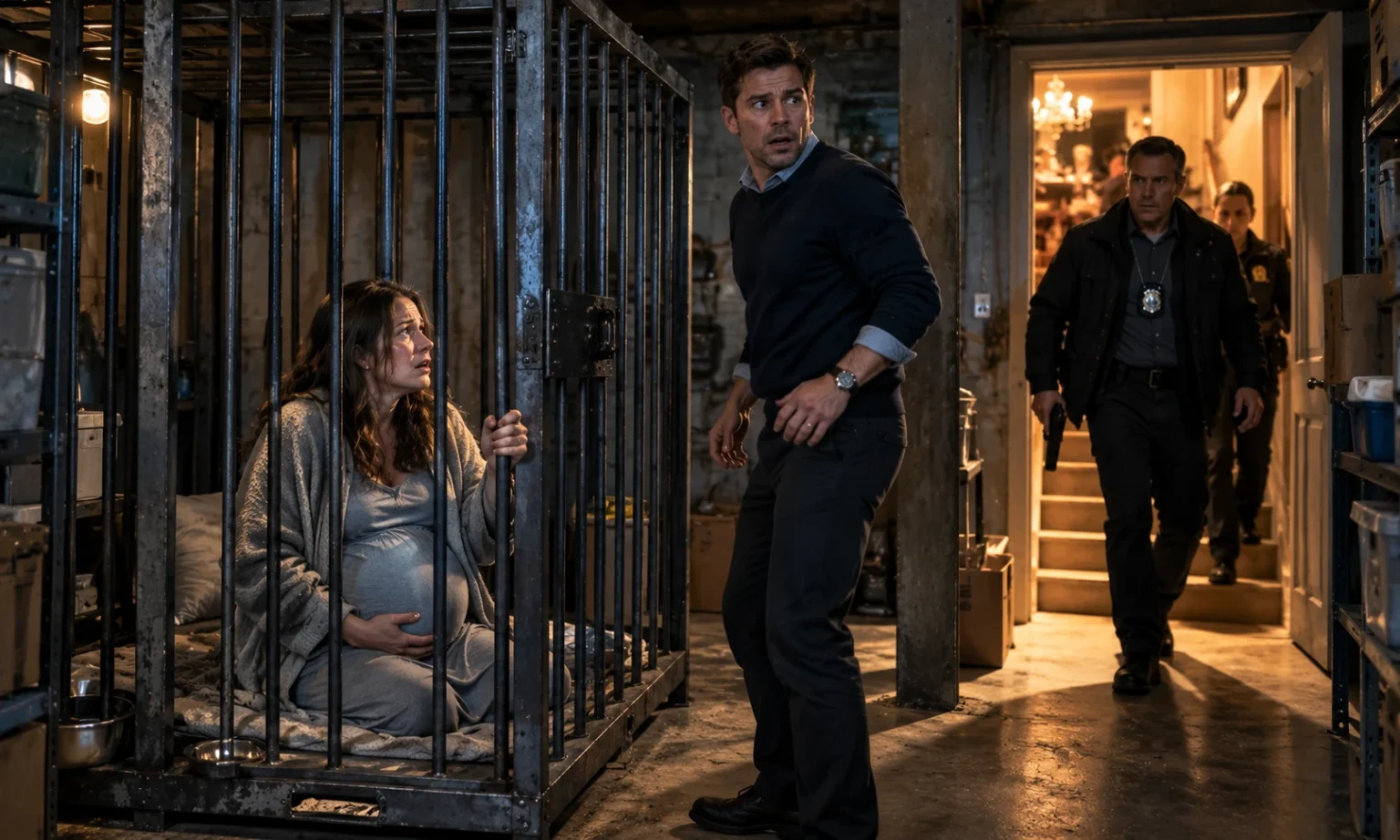
For a moment, I was back in that basement.
The cage.
The phone.
One percent battery.
The loose floor panel.
Everything.
I called Lena.
“He’s appealing.”
She was silent for a few seconds.
Then she said, “We’re ready.”
I almost laughed.
“We?”
“Yes,” she said. “We.”
That word meant more to me than she knew.
I had spent so long believing I was alone.
Marcus had built his entire system around that belief.
He isolated me.
He took my phone.
He controlled my money.
He lied to everyone.
He told people I was visiting family.
He made sure nobody heard me.
But I wasn’t alone.
I had Lena.
I had the detective.
I had the paramedics.
I had the investigators.
I had people who believed me.
And I had my own voice.
The appeal was denied.
Marcus remained in prison.
His mother received her own sentence for her involvement in the financial crimes and for assisting Marcus in concealing what happened to me.
Victor sold the old house.
I never asked what happened to the property.
I didn’t care.
That place no longer belonged to me.
Neither did Marcus.
My daughter did.
My future did.
And my life did.
Two years after everything happened, I bought a small house on a quiet street.
It wasn’t expensive.
It wasn’t impressive.
There was no enormous dining room.
No polished staircase.
No basement.
That last part was intentional.
When the real estate agent showed me a beautiful house with a finished basement, I immediately said no.
She looked confused.
I simply told her, “I don’t want one.”
She didn’t ask why.
I was grateful.
The house I eventually chose had a small garden in the back.
There was a lemon tree near the fence.
A porch where Hope could draw with sidewalk chalk.
And a kitchen with huge windows that let sunlight pour across the floor every morning.
The first night we slept there, I left every interior door open.
Hope was four years old.
She came into my room holding her stuffed rabbit.
“Mommy?”
“Yes?”
“Can I sleep here?”
I smiled.
“Of course.”
She climbed into bed.
After a few minutes, she whispered:
“Is Daddy coming?”
My heart tightened.