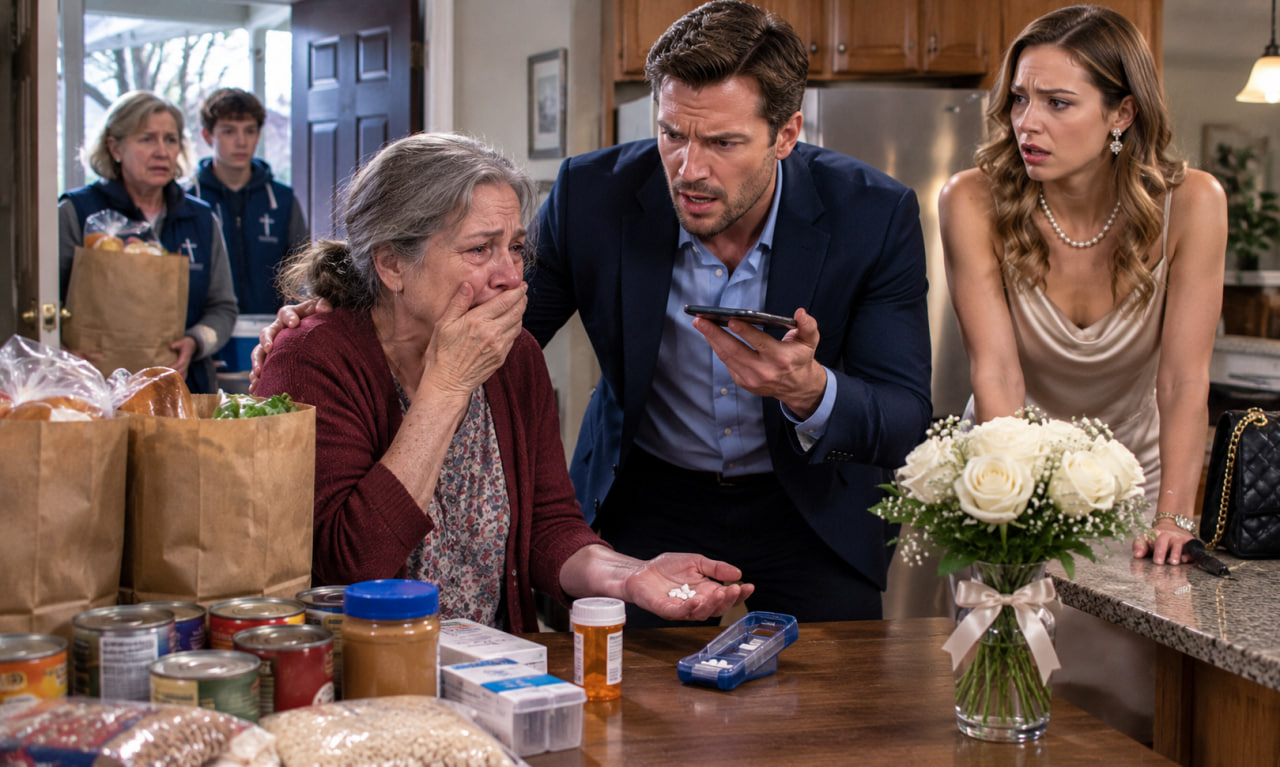
I looked out the kitchen window.
“I debated the dial color for an hour while you were surviving on three eggs.”
“Harrison, please—”
“No. Don’t shield me. Let me feel how disgusting this is.”
He wiped his eyes with the back of his hand.
“I am so incredibly sorry.”
“You couldn’t have known.”
“I should have made it my business to know.”
“I actively helped you not know.”
“Why?”
“Because I convinced myself that my silence was protecting your happiness.”
He reached out and held my hand tight.
“It only protected her lies.”
That same afternoon, Harrison drove me to the local pharmacy and paid cash for a three-month supply of every single prescription I needed.
Next, he drove us to the supermarket.
I instinctively reached for the cheapest bulk oatmeal and generic canned soup.
He took them out of my hands and put them back on the shelf.
“What do you actually want to eat?”
“I just need basic food.”
“That’s not the question I asked.”
For eight agonizing months, I had strictly purchased whatever was on clearance. The very concept of wanting something had started to feel like a sin.
Slowly, hesitantly, I picked up a plastic clamshell of fresh strawberries.
Harrison offered a sad, broken smile.
“You used to buy a carton of these every Sunday morning.”
“They got too expensive.”
He grabbed four cartons and placed them gently in the cart.
We walked down every aisle. We bought fresh bakery bread, organic chicken, vibrant vegetables, premium coffee, thick yogurt, and the frosted lemon cookies I used to bake for him when he was a little boy.
When the cashier started scanning the mountain of food at the register, I broke down crying.
The teenage cashier looked panicked.
Harrison wrapped a strong arm around my shoulders and pulled me close.
“I’m sorry,” I sobbed into his coat. “I just forgot what a full grocery cart looked like.”
Over the next week, the full scope of the deception unraveled.
Vanessa had rerouted the direct deposit while Harrison was out of town on a business trip. She had created a fake Gmail address using my middle initial and sent him periodic updates thanking him for the financial support while insisting I was too busy with “book club” to host visitors.
She had intercepted and deleted two voicemails I left him, temporarily blocking my contact in his phone just long enough to cause a missed connection.
Every individual lie was a small cut.
But together, they had bled eight months of our lives away.
Harrison’s divorce attorneys aggressively clawed back the stolen forty thousand dollars by liquidating Vanessa’s personal savings, her luxury SUV, and the jewelry she had hoarded. He filed for a legal separation immediately.
I asked him to drop the push for criminal embezzlement charges, provided she returned every dime.
He was furious and couldn’t understand why.
“She knew exactly what she was doing, Mom.”
“I know.”
“She could have triggered a fatal heart attack.”
“I know.”
“Then why on earth are you protecting her?”
“I’m not protecting her, Harrison. I’m protecting what is left of my own peace.”
Three months later, a handwritten letter arrived in my mailbox from Vanessa.
It contained no flimsy excuses.
She wrote that she had entered intensive therapy. She confessed that from the day they met, she felt deeply threatened by the unconditional way Harrison loved me. She operated under the toxic belief that love was a finite resource, and every ounce of devotion he showed me meant there was less available for her.
Rerouting the first payment felt like a small victory, like claiming territory. The second month felt dangerously easy. By the third month, she had mentally convinced herself the money was rightfully hers.
Near the bottom of the page, she wrote one sentence that stung worse than the rest:
I knew deep down you might be starving, but I was too terrified to ask, because I already knew the answer.
I slowly folded the letter and put it in a drawer.
I didn’t forgive her that day.
Forgiveness isn’t a heavy door you can just kick open all at once. Sometimes, it’s a painted-shut window that you have to pry open, an inch at a time.