PART4
I was young. I was scared. I was offered a job out of state, and I convinced myself that leaving was better than staying and making things worse.
I have regretted it every day.
If you ever decide that Arthur deserves to know who I am, I will be willing to meet him. I won’t ask him to forgive me. I won’t ask him to call me his father.
I only want him to know that he was never the mistake.
David.
I read the letter twice.
Then I put it down.
“Why didn’t my father tell me?”
Sarah examined the folder.
“Maybe he wanted to protect you. Maybe he was waiting for the right time. Maybe he didn’t know how to tell you without making you feel like he was losing you.”
I looked at the letters.
There were several.
David had written to my father over the years.
Some were short.
Some were long.
Some were never answered.
But the dates told me something important.
David had not disappeared completely.
He had been trying to contact my father.
And my father had kept the letters.
I opened the wooden trunk.
Inside was a sealed envelope, a small stack of photographs, and a handwritten note from my father.
Arthur,
David has been living in Oregon for the past several years. His address and phone number are in the envelope. I have not given him permission to contact you directly because I wanted you to have the choice.
If you want to meet him, you can.
If you don’t, you don’t owe him anything.
This decision belongs to you.
I closed my eyes.
That was the first time in my life I felt my father had given me something more important than money.
He had given me the right to choose.
The Phone Call
I waited until Sarah had finished documenting everything.
Then I took the envelope with David’s contact information and walked outside.
I stood beside my car for almost ten minutes before I dialed the number.
It rang four times.
Then a man’s voice answered.
“Hello?”
I almost hung up.
“Is this David Hartman?”
“Yes. Who’s calling?”
“My name is Arthur Ellington.”
There was a silence.
A long one.
Then I heard him take a breath.
“Arthur?”
“Yes.”
“Oh my God.”
His voice broke.
“I’ve been waiting for this call for a very long time.”
I didn’t know what to say.
I had imagined this moment countless times since I saw the photograph.
In some versions, I screamed at him.
In others, I demanded answers.
In others, I simply hung up.
But standing there, holding the phone, I felt nothing like the angry son I had imagined.
I felt like a man who had spent his entire life waiting for someone to explain why he had never been enough.
“Why did you leave?” I asked.
David didn’t answer immediately.
“I was twenty-seven. Your mother and I were together, and I was terrified. I had just lost my job. I was drowning in debt. I thought I could find work somewhere else, get my life together, and come back.”
“You didn’t come back.”
“No.”
“Why?”
“Because I was ashamed.”
I laughed bitterly.
“That’s a pretty convenient excuse.”
“I know.”
“You missed my childhood.”
“I know.”
“You missed my graduation.”
“I know.”
“You missed every birthday.”
“I know, Arthur.”
His voice was shaking.
“I don’t have an excuse. I don’t have a story that makes it right. I made a terrible decision, and then I spent years making it worse by being too afraid to face you.”
I looked at the storage facility.
At the locked door.
At the boxes my father had kept.
“Did you know William raised me?”
“Yes.”
“Did you know he loved me?”
David’s voice became softer.
“Your mother told me. William wrote to me once. He said he was raising you, and he was proud of the man you were becoming.”
I swallowed.
“Then why didn’t you leave me alone?”
“Because I wanted to know you. But I knew wanting something didn’t mean I deserved it.”
I didn’t answer.
David continued.
“I heard about your father’s death. I wanted to call you. I wanted to come to the funeral. But Eleanor told me you didn’t know about me, and she asked me not to disrupt your life.”
I closed my eyes.
My mother.
Of course.
“She told you not to contact me?”
“Yes.”
“Why?”
“I don’t know, Arthur. You would have to ask her.”
I stood there for another moment.
Then I said, “I don’t know if I want to meet you.”
“I understand.”
“I don’t know if I can forgive you.”
“You don’t have to.”
“And I don’t know what I’m supposed to call you.”
David began to cry.
“You can call me David. You can call me nothing. You can hang up and never speak to me again. I just want you to know that I’m sorry.”
I looked at the photograph in my hand.
My mother holding me.
David standing beside her.
A young man who had been too frightened to stay.
“I’ll think about it,” I said.
“Thank you.”
I ended the call.
And for the first time, the truth about my biological father didn’t feel like a weapon.
It felt like a wound I could finally see.
The $50,000 Investigation
Sarah and I returned to Austin two days later.
She had already arranged for an independent forensic accountant to review the transfer Julian had made from my father’s account.
The report arrived eleven days later.
It was worse than we expected.
The $50,000 hadn’t been a single transaction.
It had been divided into five transfers of $10,000 over three weeks.
All five were made while my father was hospitalized.
The money went into an LLC called J.E. Property Advisory.
Julian was the sole managing member.
The company had no employees.
No office.
No business website.
No invoices from clients.
The forensic accountant found that the money had been used to pay off Julian’s personal credit card, a lease payment on his Porsche, and a private vacation in Cabo.
Sarah stared at the report.
“That’s not a business expense.”
“No.”
“That’s not a loan.”
“No.”
“It’s a pattern of unauthorized transfers.”
She closed the file.
“We’re going to refer this to the appropriate authorities and let them investigate. The estate will also pursue repayment.”
I looked out my office window.
Julian had spent my entire life telling me I didn’t belong.
He had treated me like a stranger whenever he thought I was standing in his way.
And now he had taken money from the one man who had loved us both.
I didn’t feel happy.
I didn’t feel victorious.
I felt disappointed.
Because somewhere inside me, I still remembered the two of us as children.
We had once built a treehouse together behind the Denver house.
Julian was seven.
I was five.
He had held the hammer while I handed him nails.
He had told me the treehouse was our secret kingdom.
For a few hours, he had been my brother.
I wondered when that boy had disappeared.
Or whether he had ever really existed.
The Second Meeting
Three weeks later, Sarah received a call from Julian’s attorney.
Julian wanted to meet.
Not at the estate office.
Not at the family house.
He wanted to meet at a restaurant downtown.
Sarah advised me not to go.
“You don’t owe him a conversation.”
“I know.”
“Then why are you considering it?”
I thought about it for a long time.
“Because I want to hear him say what he did without hiding behind a lawyer.”
Sarah studied me.
“Fine. I’ll be there. We won’t discuss settlement terms, and we won’t sign anything.”
The restaurant was quiet.
Julian arrived fifteen minutes late.
He looked tired.
His expensive suit was wrinkled, and for once, he wasn’t carrying himself like a man who owned every room he entered.
He sat down.
“Arthur.”
“Julian.”
He stared at the menu.
“I didn’t know Dad had that letter.”
“I know.”
“I didn’t know he was going to put the company under independent oversight.”
“That’s not what we’re here to discuss.”
He sighed.
“Fine.”
A waiter brought water.
Julian didn’t touch it.
“I screwed up the money,” he said.
I waited.
“I thought Dad wasn’t going to notice. I was going to put it back. It wasn’t supposed to become a big thing.”
“You spent it on your personal bills.”
He looked down.
“Yes.”
“You took money from a dying man.”
“I know.”
“Why?”
Julian rubbed his face.
“Because I was scared.”
I almost laughed.
“Scared of what?”
“Of losing everything.”
I leaned back.
“You were never going to lose everything. You were the son Dad trusted to run the business. You had a salary. You had a house. You had a wife. You had everything.”
He shook his head.
“You don’t understand.”
“Then explain it.”
For the first time, Julian spoke without interrupting himself.
He told me that our father had been increasingly disappointed in him.
That he had made mistakes at work.
That he had taken on debts he couldn’t afford.
That he had spent years pretending he was more successful than he was.
He told me about a failed property deal that cost him nearly $180,000.
He told me he had been afraid Dad would find out.
He told me that when Dad got sick, he saw an opportunity to move the money and cover some of his debt before the company reviewed the books.
Then he looked at me.
“And when you got that DNA test, I thought you would just leave.”
I stared at him.
“You thought you could insult me enough that I’d give up my inheritance?”
He didn’t answer.
“You thought I’d spend my entire life being ashamed of something I didn’t even do?”
He finally nodded.
“Yes.”
The honesty was so ugly that I almost respected it.
Almost.
I looked at him.
“Do you know what the worst part was?”
He shook his head.
“You didn’t just insult me. You watched Mom sit there and say nothing. And you knew exactly what that would do to me.”
His eyes lowered.
“I know.”
“No, Julian. I don’t think you do.”
I stood up.
“Because I spent thirty-five years thinking maybe if I worked harder, maybe if I stayed quieter, maybe if I never asked for anything, I’d finally be treated like your brother.”
He looked up.
“And you know what Dad taught me?”
I paused.
“That being a son isn’t something you prove with blood. It’s something you prove with love.”
Julian began to cry.
I didn’t sit back down.
“I hope you fix your life. I really do. But I’m not going to keep paying for your mistakes.”
I walked out.
Sarah followed.
Neither of us spoke until we reached the car.
Then she said, “You did well.”
I shook my head.
“I don’t feel like I did anything.”
“Sometimes the most important thing you do is stop allowing someone to hurt you.”
That night, I slept better than I had in months.
Not because I had won.
Because I had finally stopped waiting for Julian to approve of my existence.
Six weeks after the meeting with Julian, my mother called me.
I almost didn’t answer.
Her name appeared on my screen, and I sat staring at it for several seconds. I had spent most of my adult life answering Eleanor Ellington’s calls no matter where I was, no matter what I was doing. If she needed something, I found a way. If she was upset, I listened. If Julian had made another mess, somehow I was expected to help clean it up.
But this time, I let the phone ring.
Then it rang again.
And again.
Finally, I answered.
“Arthur?”
Her voice was different.
Not the polished voice she used at charity dinners. Not the gentle voice she used when she wanted me to do something for her. It was tired.
“Yes, Mom.”
“I need to talk to you.”
“About what?”
She paused.
“About everything.”
I looked at the window of my apartment. Austin was bright that afternoon. People were walking along the sidewalk carrying coffee, talking about their weekends, living ordinary lives.
“Mom, I don’t think there’s anything left to say.”
“Please. Just let me explain.”
I should have hung up.
Instead, I said, “You have one chance to tell me the truth. No excuses. No blaming Julian. No telling me you were protecting me. Just the truth.”
She began crying.
“I know.”
“Then start.”
For several seconds, I heard nothing but her breathing.
Then she said, “David was the man I loved before I met your father.”
I already knew that.
“I was young. David and I were going to get married. We had plans. We talked about having a house, children, everything. But David was struggling financially, and he was afraid of becoming a father. When I told him I was pregnant, he panicked.”
“He left.”
“Yes.”
“And you never heard from him again?”
“Not at first.”
I closed my eyes.
“Then what happened?”
“William came into my life. He knew I was pregnant. He knew David had left. He didn’t ask me to explain everything. He just helped me.”
I remembered the letters.
“He knew who my father was.”
“Yes.”
“From the beginning?”
“From the beginning.”
I felt my jaw tighten.
“Then why did you lie to me?”
“Because I was afraid.”
“Afraid of what?”
“That you would want David. That you would look at William differently. That you would think William wasn’t your real father. That our family would fall apart.”
I laughed, but there was no humor in it.
“Mom, our family fell apart long before I found that photograph.”
She sobbed.
“I know.”
“No, you don’t.”
I stood up and walked to the kitchen.
“You watched Julian humiliate me for thirty-five years. You watched him make jokes about me, about my career, about my life. You watched him tell me I didn’t belong. And every time I asked you to stop him, you told me to be the bigger person.”
“Arthur, I—”
“You knew the truth about my father. You knew William loved me. You knew I was his son in every way that mattered. And you let Julian use that truth to hurt me.”
“I never wanted that.”
“But you allowed it.”
She had no answer.
Then she said something that made me stop walking.
“Your father left me a letter too.”
I went quiet.
“What letter?”
“I haven’t opened it.”
“Why?”
“Because I know what it says.”
My voice became colder.
“Then open it.”
“I can’t.”
“Why not?”
“Because I’m afraid of what he wrote.”
I leaned against the counter.
For years, Eleanor had been afraid of losing control of the family story.
She had kept secrets because she believed secrets could protect her.
But now the secrets had become the walls she was trapped behind.
“Mom,” I said quietly, “Dad knew the truth. He knew Julian was hurting me. He knew what happened to the money. He knew everything. And he still left you a letter.”
“Yes.”
“Maybe you should finally read it.”
She began crying harder.
“I don’t know if I deserve to.”
“That’s not my decision.”
I ended the call.
Not because I hated her.
But because I was tired of being the person who had to comfort everyone else after they hurt me.
The Letter Eleanor Couldn’t Open
Two days later, Sarah called.
“Arthur, your mother contacted Mr. Dalton. She wants to arrange a meeting.”
“About what?”
“She says she wants to open your father’s letter in front of you.”
I was quiet.
Sarah continued.
“She also wants to discuss the estate. She’s willing to cooperate with the investigation into Julian’s transfers.”
“Why now?”
“She says she finally understands that keeping quiet was not protecting the family.”
I wasn’t sure I believed her.
But I agreed to meet.
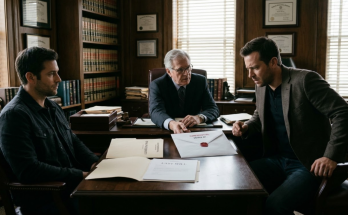
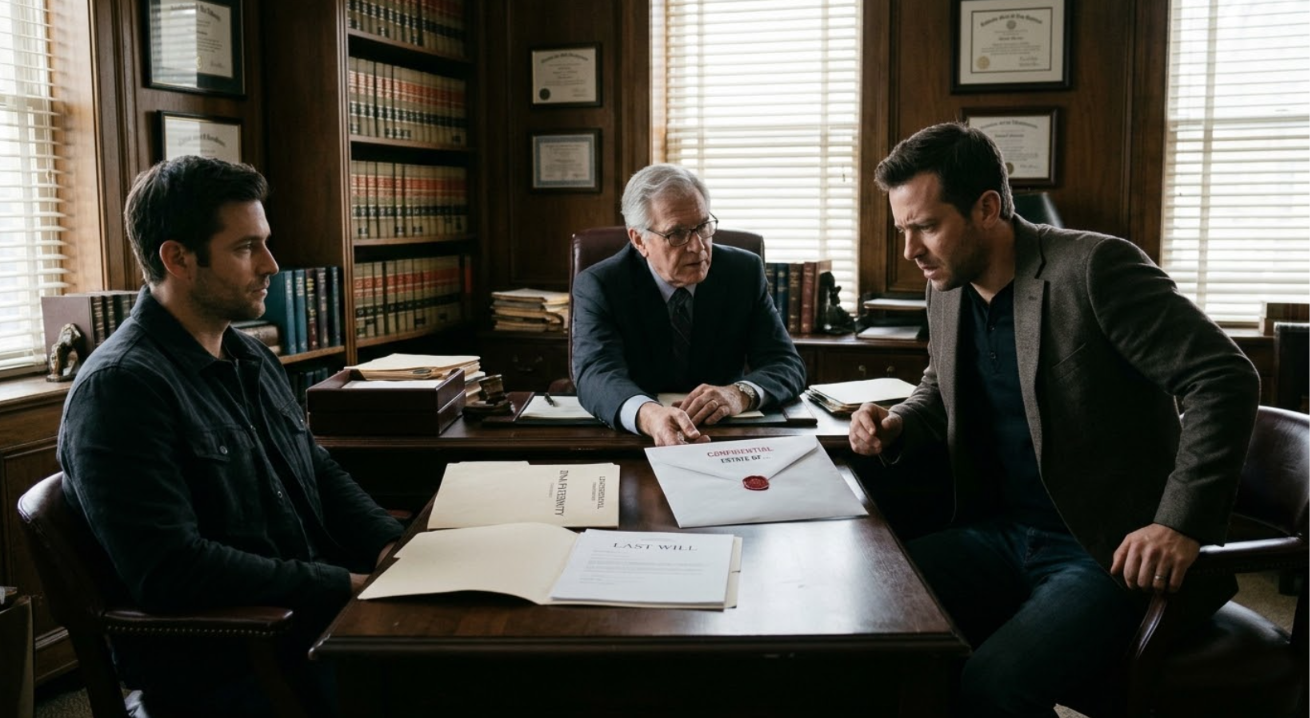
We gathered at Mr. Dalton’s office on a Friday afternoon. My mother arrived carrying a small envelope inside her handbag.
She looked older than I remembered.
Not physically.
Something in her had changed.
She sat down and placed the envelope on the table.
“This is the letter your father left me.”
Dalton confirmed that it was one of the personal letters William had instructed him to deliver after his death.
My mother opened it with trembling fingers.
The first line was written in my father’s handwriting.
Eleanor,
If you are reading this, I hope you have finally stopped trying to control the truth.
My mother began crying before she finished the sentence.
Dalton quietly handed her a tissue.
She continued.
I know you have spent years afraid that Arthur would discover David’s identity. I know you believed that if the truth remained hidden, our family would remain whole.
But a family cannot be held together by silence.
You were wrong to let Julian treat Arthur as though he were less than a son. You were wrong to teach Arthur that peace meant accepting humiliation. And you were wrong to believe that protecting Julian from consequences was the same as loving him.
My mother covered her mouth.
I stared at the paper.
My father had never spoken to her like that in front of me.
He had always been calm.
Always measured.
But in that letter, he was unmistakably disappointed.
Arthur never asked for special treatment. He never demanded anything from us. He worked for what he had. He came home when I needed him. He called me when he succeeded and when he failed. He gave me more of his life than I ever had the courage to ask for.
And yet you and Julian repeatedly made him feel like an outsider.
I cannot change what happened while I was alive. I can only hope you will stop making the same mistake now that I am gone.
My mother was shaking.
Then came the final paragraph.
You cannot ask Arthur to forgive you simply because you are his mother. You must earn the right to be part of his life again. And if he decides he needs distance, respect that. He has spent too many years being told that his feelings were inconvenient.