PART5
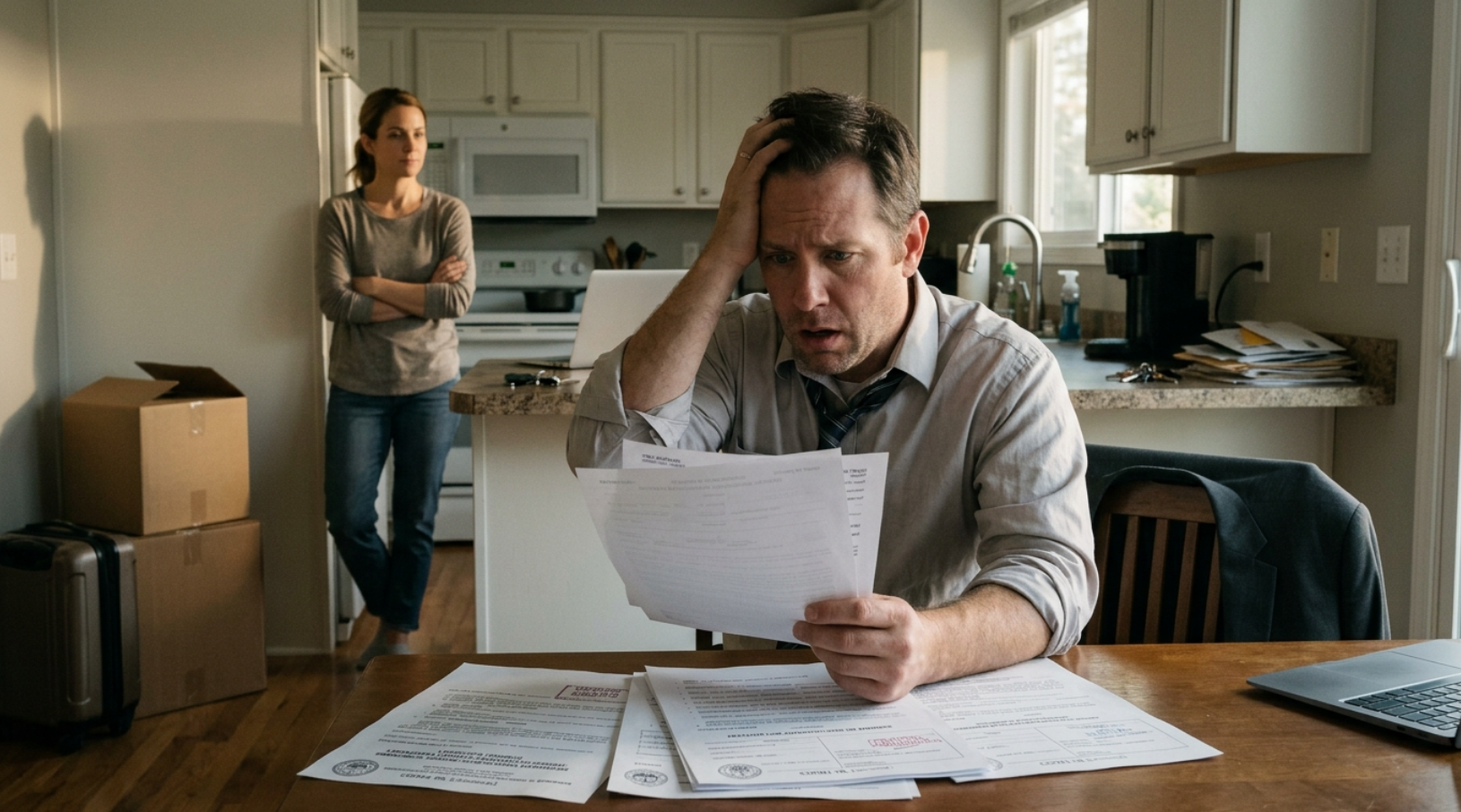
The payment record was attached.
So was a bank statement.
I recognized the account number.
It was our joint account—the same account Travis had closed.
I remembered that month.
Travis had told me the repair would cost more than expected. I had postponed replacing the washing machine so we could cover the expense.
He had also told me he had paid for the roof himself.
The documents showed that the payment had come from the joint account.
I continued searching.
There were receipts for fencing, plumbing, electrical work, and a replacement water heater.
Some expenses had been paid from the joint account. Others had been paid from my personal savings or from an insurance settlement connected to damage on the property.
I organized everything by date.
I didn’t know yet what the records would prove.
But I knew that the story Travis told about our money was not as simple as he wanted me to believe.
On the fifteenth page of a stack of statements, I found a transfer I didn’t recognize.
It was dated seven months earlier.
The amount was $24,800.
The destination account number was partially obscured, but the last four digits were visible.
I wrote them down.
Then I found another transfer.
$18,500.
And another.
$31,200.
All sent to the same account.
I added the figures on a notepad.
The total was $74,500.
I sat very still.
Travis had earned a good salary for years, but we had never lived as extravagantly as he sometimes claimed we could afford. He told me we needed to be careful because retirement was approaching and our expenses were rising.
Meanwhile, nearly seventy-five thousand dollars had been moved out of an account I had once shared with him.
I took photographs of the records and sent them securely to Ms. Landry.
Then I found something even more disturbing.
An email from Travis to the same financial adviser contained a reference to a document titled Property Contribution Agreement.
The email said:
Once June signs this, we’ll have everything settled.
I had never signed such an agreement.
At least, I didn’t remember doing so.
I searched the file cabinet, the desk, and the locked drawer where we kept old tax documents.
Nothing.
Then I remembered a day six months earlier when Travis had placed a stack of papers beside my breakfast plate.
He had been preparing documents for our insurance renewal, he said. He needed my signature on a few pages.
I had been tired after spending the previous afternoon repairing a section of fence.
I remembered signing two forms.
One had been an insurance authorization.
The other had been several pages long.
Travis had told me it was a routine financial update.
I had signed where he pointed.
I had not read every page.
A cold feeling spread through my chest.
I called Ms. Landry again.
This time, she told me to stop searching for documents that might be in Travis’s possession and let her handle the next steps.
“June,” she said, “I need you to understand that an unsigned draft is not the same thing as an executed agreement. And even a signed document may have legal issues depending on its wording and the circumstances. We need to obtain a copy before drawing conclusions.”
“What if I signed it?”
“Then we examine exactly what you signed, whether it was properly explained, and what legal effect it could have. Do not assume the worst. But do not sign anything else without independent advice.”
I promised her I wouldn’t.
That evening, Travis came into the kitchen carrying a white envelope.
He placed it on the table.
“There’s something we need to discuss.”
I looked at the envelope but didn’t touch it.
“What is it?”
“A way to settle everything.”
He pulled out a document and pushed it toward me.
At the top of the first page were the words:
PROPERTY AND FINANCIAL SETTLEMENT AGREEMENT
I glanced at the signature line.
My name had already been typed beneath it.
Travis uncapped a pen.
“Sign this, June. We can stop wasting money on lawyers and get back to normal.”
I looked at the document.
Then I looked at the man who had shared my bed for nine years.
He was smiling.
It was the same smile he had worn when he told me that he earned the money and decided who could touch it.
But this time, I recognized something I hadn’t understood before.
He wasn’t confident because he knew he was right.
He was confident because he still believed I would do whatever he told me.
I folded my hands in my lap.
“No.”
His smile disappeared.
“What did you say?”
“I said no.”
He leaned across the table.
“You haven’t even read it.”
“That’s exactly why I’m not signing it.”
His face hardened.
“June, I’m trying to make this easy for you.”
“Then send it to my attorney.”
For several seconds, neither of us moved.
Finally, Travis snatched the document off the table.
“You’re going to regret this.”
He walked out of the kitchen.
I listened to his footsteps disappear down the hall.
Then I called Ms. Landry and told her what had happened.
She asked me to write down exactly what Travis had said, including the date and time, while the details were fresh in my memory.
I did.
Afterward, I locked the filing cabinet, put my father’s note back in my purse, and sat on the porch until the sun went down.
For the first time, I wasn’t afraid of what Travis might say when he came home.
I was afraid of what he had already done.
And I knew that the next discovery could change everything.


One Comment on “PART5: My Husband Removed Me From Our Bank Accounts and Said He Controlled the Money—17 Days Later, He Discovered I Could Stand on My Own”