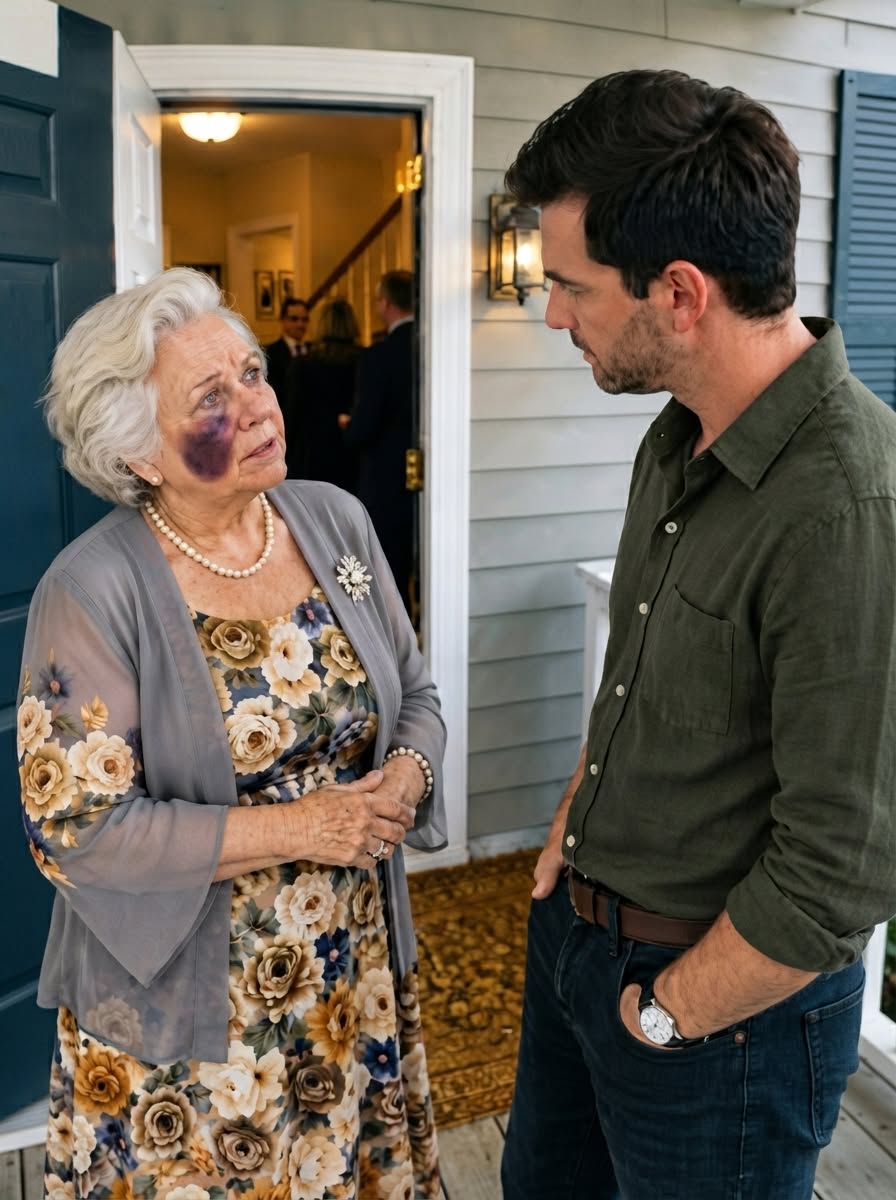
PART5
Frightened of losing control of the story he had told himself about who he was.
Marcus placed a hand lightly on the back of my chair.
“Loretta, there’s one more thing I need to ask.”
I nodded.
“Do you own any property or have any assets that someone else manages for you?”
I hesitated.
Then I remembered the little blue box I had kept in my old apartment.
Inside were papers I had not looked at in years.
A bank certificate.
A folder from an attorney.
And a letter from my late husband, Thomas, written before he died.
I had never been wealthy.
I had worked in a factory for most of my adult life, cleaned offices on weekends, and taken in neighbors’ children when their parents needed help. I learned to stretch a dollar because there were years when a single unexpected bill could change everything.
But Thomas had been careful.
He had insisted that we save something, however small, every month. After he died, I kept saving.
I also inherited a modest amount from my aunt, who had no children of her own.
I never told Daniel the full amount.
Not because I didn’t trust him.
Because I wanted him to grow up believing that his life was his responsibility, not something he could build on the expectation of an inheritance.
Over the years, those savings had grown.
And I had never stopped working long enough to realize how much they meant.
“I have savings,” I said. “And a few investments. They’re in my name.”
Marcus nodded.
“Good. Do you have independent access to them?”
“Yes.”
“Has anyone asked you to transfer them?”
I shook my head.
“No.”
“Has anyone pressured you to change your will?”
“No.”
He paused.
“Then I want you to keep everything exactly as it is until you’ve had independent advice. Don’t sign anything you don’t fully understand. Don’t transfer money because someone makes you feel guilty. And don’t let anyone convince you that you have no choices.”
I felt a strange sensation in my chest.
Not panic.
Not grief.
Relief.
For months, I had believed my life had narrowed to one bedroom, one uncomfortable chair, and the kindness of people who had stopped being kind.
Now I was beginning to see the edges of a much larger world.
But the biggest surprise had not yet arrived.
Marcus looked at the last page in the folder.
It was an old document I had almost forgotten.
A letter from a local community foundation, thanking me for years of volunteer work and asking whether I would consider serving as an adviser to a program that helped young people facing homelessness.
I had never replied.
I had been too busy raising Daniel.
Marcus read the letter twice.
Then he looked at me.
“Loretta, do you remember the young people you helped through that program?”
“Some of them.”
“Do you remember a girl named Elena?”
My breath caught.
“Elena Ruiz?”
He nodded.
“She became an investigative journalist. She has spent the last decade reporting on financial exploitation and abuse within families and care institutions.”
I covered my mouth.
Elena had been sixteen when I met her. Her mother was ill, and Elena was trying to finish school while working evenings at a grocery store. I watched her after school, made her dinner, and helped her apply for scholarships.
The last time I saw her, she was leaving for college with two suitcases and a smile so wide that I couldn’t stop crying.
I hadn’t heard her voice in years.
“She’s been looking for you,” Marcus said.
“Why?”
“Because she wants to tell your story.”
I frowned.
“My story?”
“Not this morning’s story,” he said gently. “The story of what you did for people when nobody was watching.”
I sat down slowly.
Marcus explained that Elena had been researching the quiet ways ordinary people supported vulnerable young adults long before they had money, influence, or professional titles.
She had spoken to former students, neighbors, and people who had once eaten at my kitchen table.
They remembered the woman who kept extra groceries for anyone who needed them.
The woman who lent bus fare without asking when it would be repaid.
The woman who never let a young person leave her house hungry.
I had thought those things were too small to matter.
I was wrong.
Marcus had not come only because I had called him.
He had been trying to arrange a visit for months.
My phone call had simply changed the reason for it.
Then he told me something that made the room seem to tilt.
“Elena knows about the community foundation’s old records,” he said. “She also knows that the foundation has been trying to contact you about an endowment established in your name.”
I stared at him.
“An endowment?”
“Your volunteer work was part of the reason a donor created a fund to support young adults who have nowhere safe to go. The foundation is reviewing its records and wants to speak with you about your involvement.”
I couldn’t understand.
I had never asked anyone to create a fund in my name.
I had never imagined my life would be remembered for anything beyond raising a son and working until my hands ached.
“How much money are we talking about?” I whispered.
Marcus shook his head.
“I don’t know the amount, and I don’t want you to assume anything before the foundation confirms the details. But there is something important you should understand.”
He leaned forward.
“You spent decades believing you were only helping people one meal, one ride, or one night at a time. Those people grew up. Some of them became lawyers, journalists, teachers, doctors, and community leaders. They have not forgotten you.”
I looked at the documents spread across the table.
The receipts.
The bank statements.
The old letters.
For months, I had been collecting evidence of how little I mattered in my son’s house.
Now I was beginning to understand that the truth might be the opposite.
Daniel had spent years measuring a person’s worth by what they could provide him.
I had spent my life measuring mine by what I could provide others.
And somewhere along the way, I had forgotten that I was allowed to receive help, too.
Then the front door slammed.
Daniel had gone outside to make a phone call.
Sloan stood by the kitchen island, her face pale with anger.
“You’ve made a terrible mistake,” she said to me.
I met her eyes.
“No, Sloan. I think my mistake was waiting this long.”
She looked toward Marcus.
“You don’t know what she’s like. She interferes in everything. She criticizes how I live. She acts as though we owe her something because she’s old.”
Marcus didn’t answer.
I did.
“I never asked you to owe me anything. I asked you not to fill the room where I sleep with smoke.”
Sloan opened her mouth, then closed it.
For once, there was no clever reply.


One Comment on “PART5: My son sturck me because I asked my daughter-in-law”
Comments are closed.