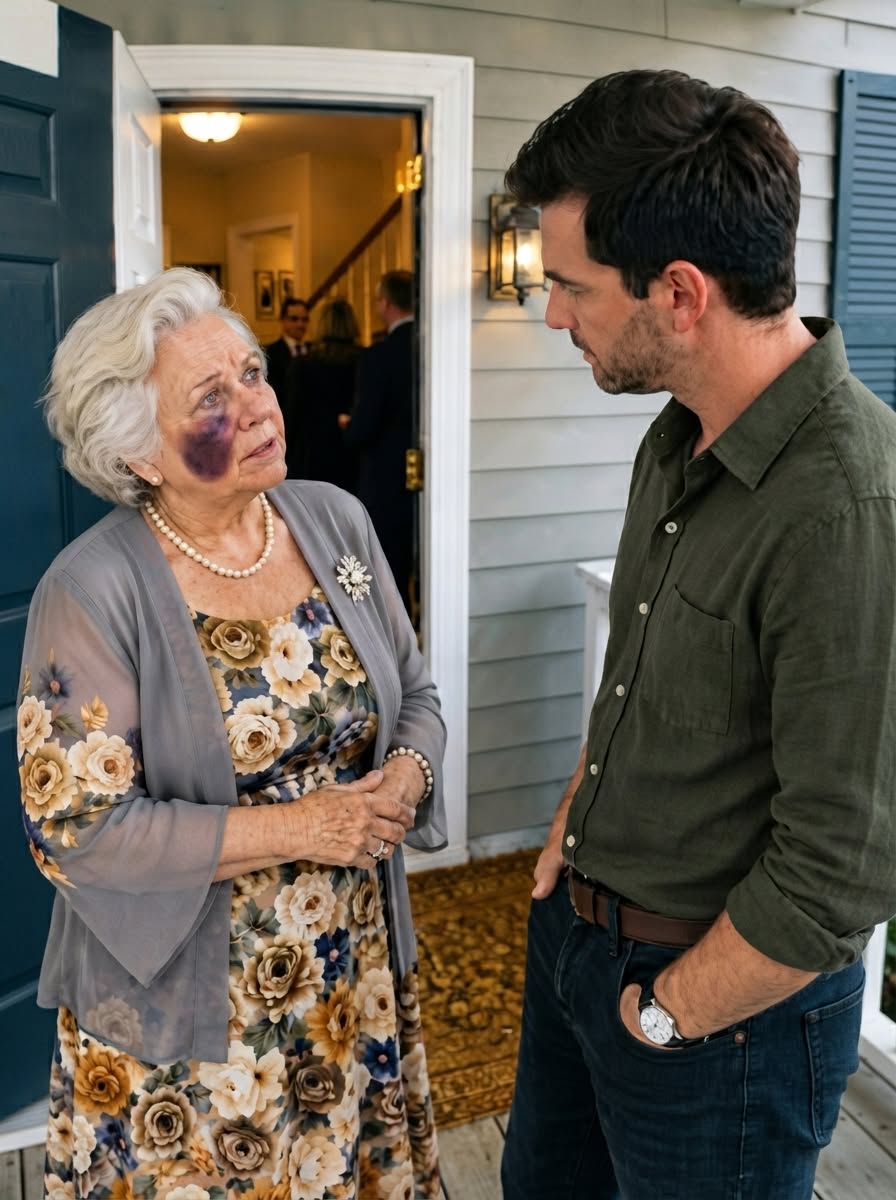
PART7
Meanwhile, Marcus helped me arrange a meeting with an independent financial adviser.
We reviewed my savings, investments, pension, and monthly expenses. I discovered that I had enough money to support myself comfortably if I planned carefully.
I was not rich.
But I was not helpless.
That distinction changed everything.
For years, I had been afraid that losing Daniel’s goodwill would leave me with nothing.
Instead, I found myself with a small apartment, a manageable budget, a circle of people who genuinely cared, and the freedom to choose how I wanted to spend my days.
Then Elena Ruiz arrived at my door.
She was forty-one now, with short dark hair, bright eyes, and a notebook tucked under one arm.
The moment I opened the door, she covered her mouth.
“Loretta?”
I smiled.
“Look at you.”
She laughed and burst into tears.
We hugged for so long that her notebook slipped to the floor.
She looked around my apartment, noticing the blue armchair, the photographs, the little bowl of lemons on the kitchen counter.
“It’s lovely,” she said.
“It’s small.”
“It’s yours.”
Those three words nearly undid me.
We spent the afternoon talking about her mother, her career, and the years we had lost.
Then she told me why she had been trying to find me.
She was working on a series about people who quietly changed lives without ever becoming famous.
She wanted to document the networks of ordinary kindness that helped young people survive difficult childhoods and build stable adult lives.
She had interviewed people I barely remembered helping.
A boy who had slept on a bus before I gave him a place to stay.
A girl who had nearly dropped out of school because her family couldn’t afford transport.
A young father who had been too ashamed to ask for food after losing his job.
They remembered me.
Not because I had done anything extraordinary.
Because I had made room for them when the world seemed determined to shut them out.
Elena listened as I described the years I spent working in the factory, the long shifts, the dust that damaged my lungs, and the nights I returned home too tired to stand.
Then she asked about Daniel.
I told her what had happened.
She did not interrupt.
When I finished, she put down her notebook.
“Loretta, you spent your life teaching people that kindness doesn’t require wealth or power. But kindness shouldn’t require you to tolerate being hurt.”
I looked out the window.
“I know that now.”
She reached across the table and held my hand.
“You should have been protected, too.”
For decades, I had been the person who protected everyone else.
Hearing those words felt like being given permission to rest.
Several weeks later, the community foundation contacted me.
They confirmed that an endowment had been established to support young people facing housing insecurity. Its history was complicated, and the foundation was still reviewing its records, but it wanted to invite me to help shape a new program.
The invitation did not come with a fortune.
It did not magically solve every problem.
But it offered something I had never expected: a chance to help others without sacrificing my own security.
I agreed to meet with them.
At the meeting, I sat at a long wooden table surrounded by people who had once been children in need of help themselves.
Some were now professionals.
Others worked in community services.
One young woman had become a social worker. A former student had started a small business. A man who once ate dinner at my kitchen table every Thursday was now helping people find affordable housing.
They had come because they remembered what it felt like to have someone believe in them.
And they wanted to offer that feeling to others.
I looked around the room and realized that the most important thing I had ever built was not a house, a bank account, or a perfect family.
It was a chain of kindness.
A chain that had continued long after I had forgotten the names of some of the people I helped.
When the foundation asked what I wanted the program to accomplish, I didn’t ask for a building named after me.
I didn’t ask for a plaque.
I said, “I want a young person who has nowhere to sleep to know that one bad night does not have to become an entire bad life.”
The room fell quiet.
Then someone began to clap.
Soon everyone was standing.
I had spent so many years believing that my life was shrinking.
But perhaps it had been growing all along, branching into places I could not see.
And then, one rainy Thursday afternoon, Daniel came to my apartment.
He stood outside my door holding a paper bag.
He looked tired.
His expensive jacket was wrinkled, and his hair was damp from the rain.
“Mom,” he said when I opened the door.
I stepped aside but did not hug him.
He placed the bag on the kitchen counter.
“It’s your favorite bakery,” he said. “The lemon cake.”
I looked at it.
For years, Daniel had brought me lemon cake on Mother’s Day.
He used to come home from school with a little box balanced in both hands, proud of himself for remembering what I liked.
I remembered those afternoons so clearly that my throat tightened.
“Thank you,” I said.
He looked around the apartment.
“You seem comfortable here.”
“I am.”
He nodded, then stared at the floor.
“I didn’t think you’d actually leave.”
There it was.
Not an apology.
Not yet.
An admission.
I folded my hands in front of me.
“Why?”
He swallowed.
“Because you’re my mother.”
I waited.
“I thought you’d always forgive me.”
The room became very still.
I looked at him for a long time.
“I will always love you, Daniel. But you cannot build a life on the assumption that love means I will accept anything you do.”
His eyes filled with tears.
“I know.”
“Do you?”
He looked up.
For the first time since I left, he did not immediately defend himself.
“I’ve been thinking about what happened,” he said. “I keep remembering your face. And I keep hearing myself say that you were being disrespectful.”
He rubbed his eyes.
“I don’t know why I said that.”
“Because it was easier than admitting you were wrong.”
He flinched.
I hated that I had hurt him.
And I hated that, for so long, I had believed avoiding that feeling was more important than telling the truth.
He sat down.


One Comment on “PART7: My son sturck me because I asked my daughter-in-law”
Comments are closed.