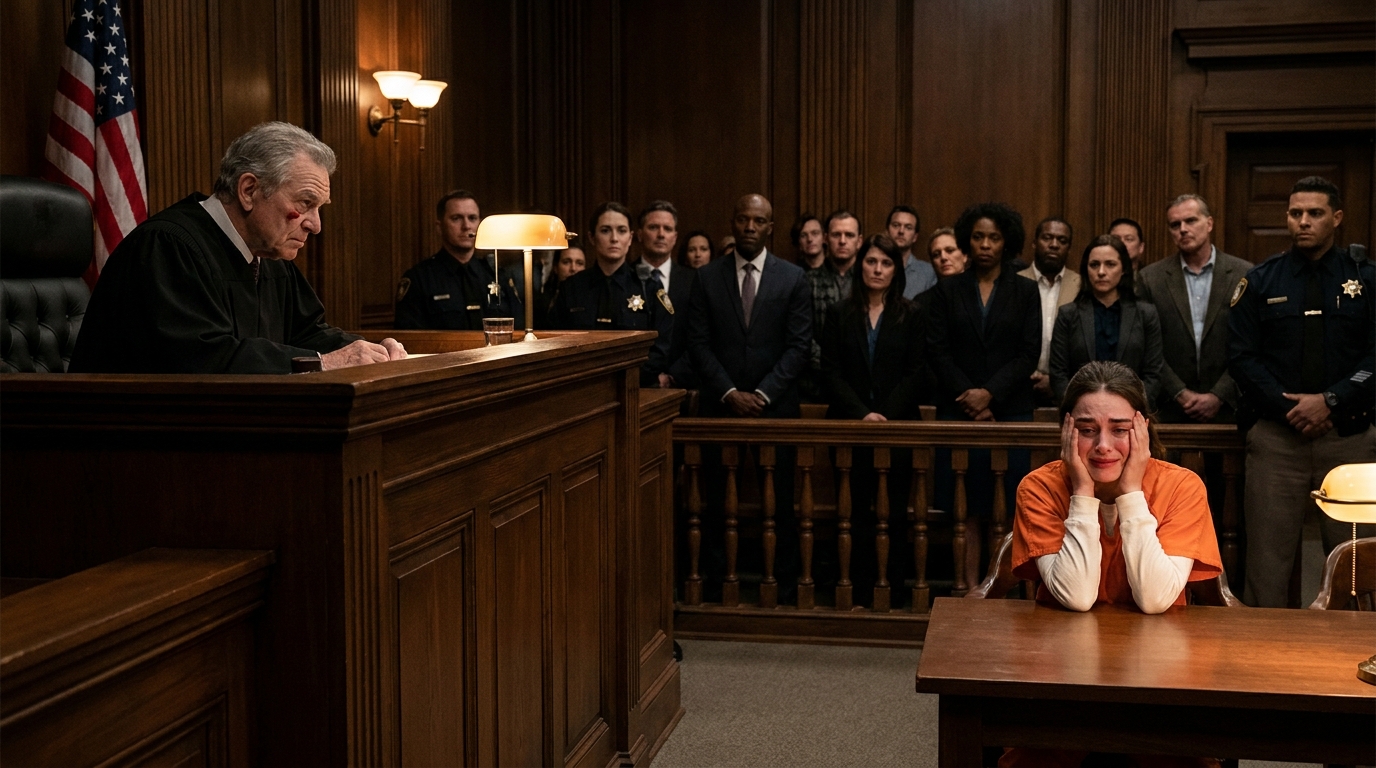
A Calculated Attempt at Leniency
During high-stakes criminal sentencings, defendants often attempt to project helplessness or deep remorse in hopes of receiving a lighter penalty. While genuine repentance can sometimes influence judicial discretion, experienced judges who have spent decades on the bench can easily distinguish between authentic sorrow and calculated performance designed to avoid accountability.
The Serious Nature of the Crime
The dramatic courtroom moment occurred during the sentencing hearing of a young woman convicted in connection with a high-profile armed robbery scheme. Despite her young age, evidence presented during the trial proved that she played an active and calculated role in planning the crime, which left an innocent store clerk injured.
Fake Tears at the Defense Table
As her defense attorney concluded his plea for probation, the young female defendant stood up at the defense table. In a sudden, dramatic display of emotion, she began sobbing loudly, covering her face and pleading directly to the bench for mercy, claiming she was merely an innocent bystander manipulated by others.
Unmoved by the Performance
However, the elderly presiding judge remained completely unmoved by the emotional outburst. Pointing to wiretapped phone recordings admitted into evidence—where the defendant was heard laughing and boasting about the robbery days after the event—the judge noted that her sudden display of tears was entirely insincere and manipulative.
The Strict Sentence Handed Down
With a firm strike of his wooden gavel, the veteran judge cut her off and delivered a strict sentence of fifteen years in a state penitentiary. The judge remarked that justice is guided by evidence and conduct, not theatrical courtroom performances. The young woman’s crying instantly stopped, her face turning pale as sheriffs placed her in handcuffs.
A Lesson in Judicial Integrity
This compelling case highlights the unwavering objectivity of the judicial process. Attempts to manipulate the court through insincere emotion rarely succeed when faced with overwhelming factual evidence and an experienced judge committed to upholding the law.