A Lack of Remorse at Sentencing
During a criminal trial, a defendant’s demeanor and attitude can heavily influence the final verdict, particularly during the sentencing phase. While judges are required to remain objective, evidence of a defendant’s total lack of remorse or empathy toward victims often leads to the harshest penalties allowed under the law.
Tensions in the Public Gallery
The dramatic moment occurred during a high-profile manslaughter trial. As the victim’s mother stood at the podium to deliver her heartbreaking victim impact statement, tears flowed throughout the courtroom gallery. She spoke directly about the devastating grief and hardship her family endured following the tragic loss of her child.
The Mocking Reaction
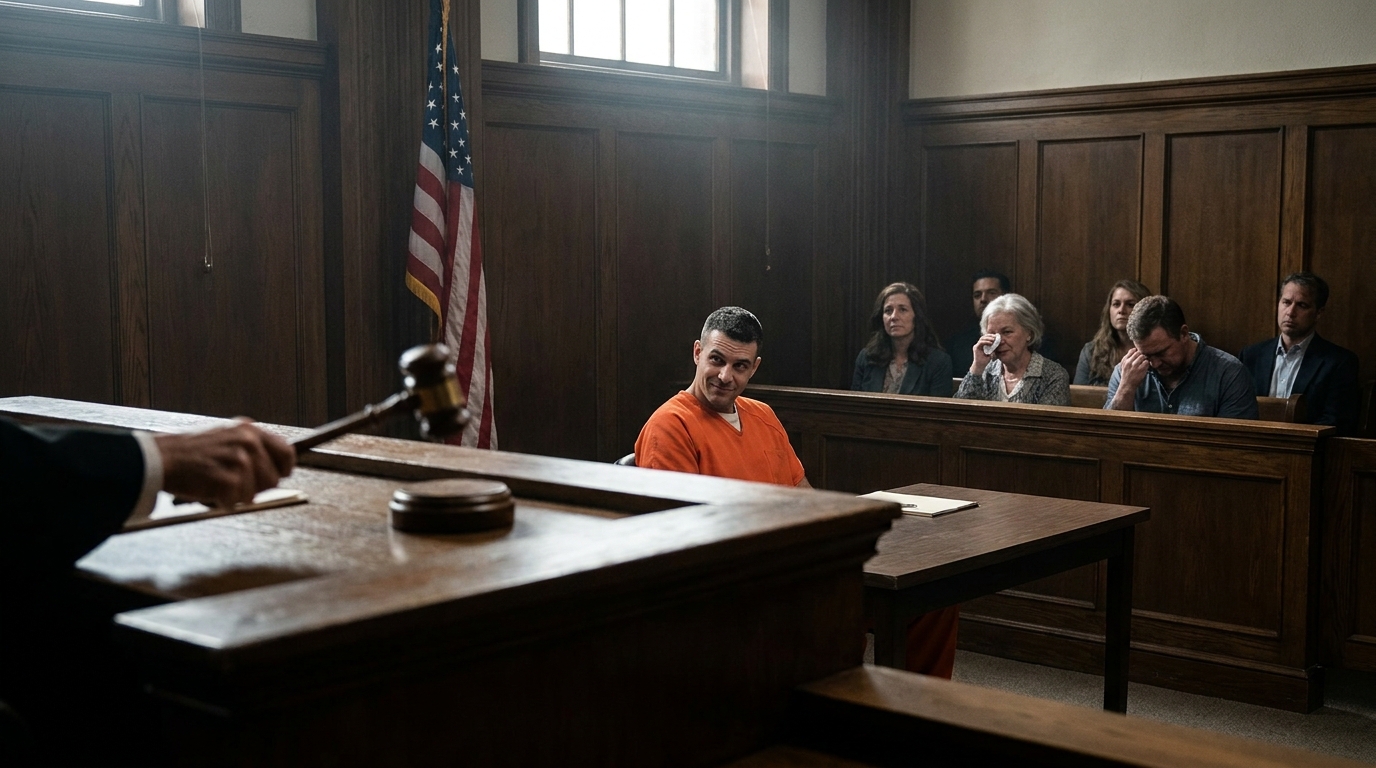
Instead of showing solemn respect or remorse, the defendant standing at the defense table displayed shocking disrespect. Looking back over his shoulder toward the grieving family seated in the gallery, the defendant smirked, rolled his eyes, and quietly laughed under his breath at the mother’s emotional testimony.
The Judge’s Furious Intervention
The cruel gesture did not escape the notice of the presiding judge. Outraged by the total lack of basic human decency, the judge slammed his gavel down with immense force, cutting off the defense counsel’s closing arguments. Addressing the defendant directly, the judge stated that his contemptuous behavior proved he was utterly irredeemable and a permanent threat to society.
The Maximum Life Sentence
Canceling any possibility of probation or a reduced term, the judge handed down the maximum consecutive sentence possible under state sentencing guidelines—life in prison without the possibility of parole. As the realization hit the defense table, the defendant’s arrogant smirk instantly vanished, replaced by pale horror as bailiffs handcuffed him and escorted him away.
The Weight of Courtroom Conduct
This compelling case serves as a powerful reminder of how personal character and conduct inside a court of law matter. A single display of cruelty can completely erase any chance of judicial leniency, sealing a defendant’s fate for the rest of their life.