The Risky Choice of Self-Representation
Under the United States Constitution, every criminal defendant has the legal right to represent themselves in court—a practice known as pro se defense. However, legal experts almost universally advise against it. Navigating complex legal procedure, rules of evidence, and courtroom etiquette requires years of specialized training. When an untrained defendant attempts to outsmart an experienced judge, the results are often disastrous.
A Overconfident Argument at the Podium
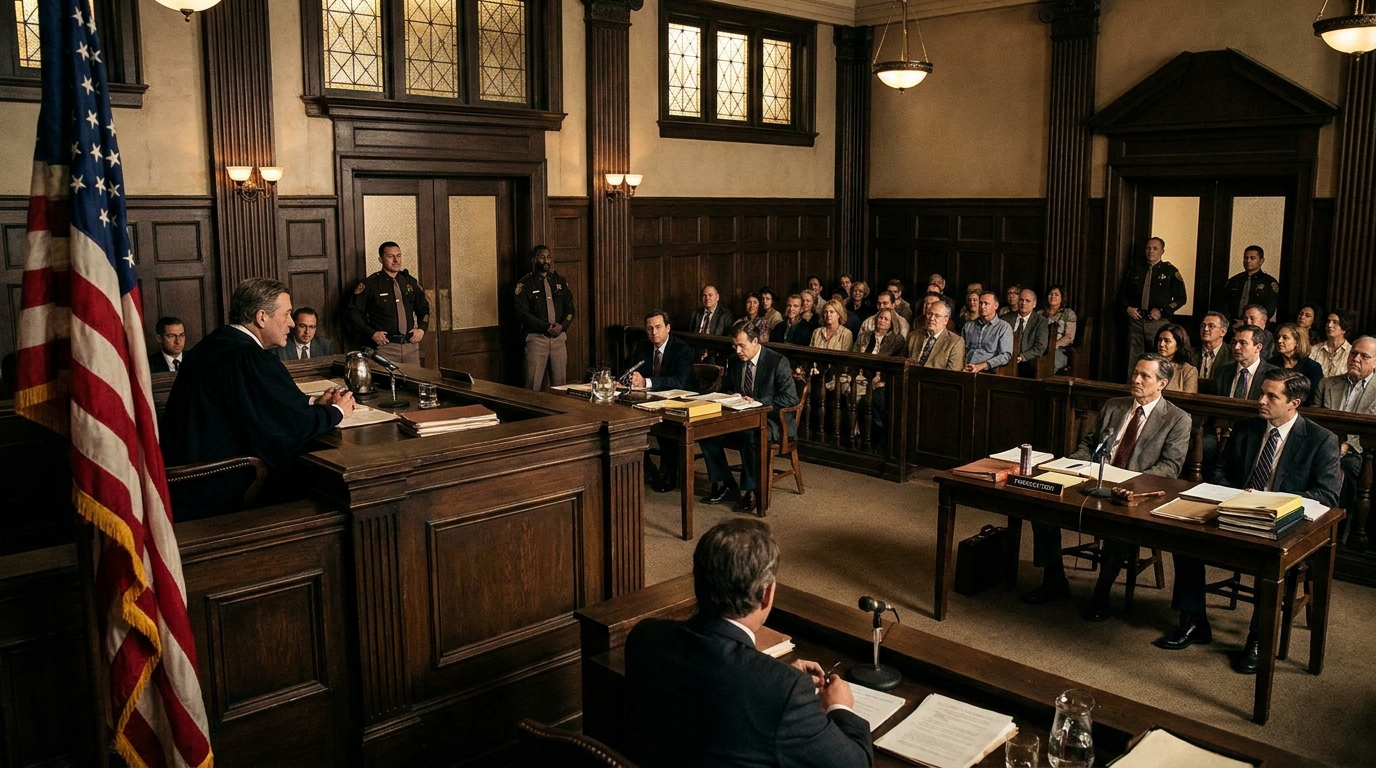
The dramatic exchange took place during a felony trial where the defendant decided to dismiss his public defender, believing he could argue his case better. Standing at the defense table with a stack of handwritten legal notes, the defendant began interrupting the prosecution and making rambling, baseless legal arguments, claiming that the court had no legal jurisdiction over his case.
Testing the Judge’s Patience
Rather than focusing on actual evidence, the defendant adopted a condescending tone toward the bench, repeatedly lecturing the judge on statutory interpretation and legal technicalities. He ignored multiple stern warnings to stick to standard courtroom procedure, incorrectly assuming his aggressive attitude would intimidate the court into dropping the charges.
The Judge’s Devastating Rebuttal
Having reached the limit of his patience, the presiding judge interjected. In a masterclass of legal precision, the judge systematically dismantled every single argument the defendant made, citing specific constitutional precedents and case law off the top of his head. The judge pointed out that the defendant’s flawed logic not only demonstrated a total misunderstanding of the law, but was actively incriminating him in front of the jury.
Stunned Silence and the Final Ruling
The courtroom gallery held its breath as the arrogant defendant stood frozen, unable to formulate a response to the judge’s razor-sharp counterargument. Realizing his entire strategy had collapsed, his overconfidence instantly turned into embarrassment. The judge sustained all of the prosecution’s objections and ordered the trial to proceed strictly under standard evidence rules.
A Crucial Lesson for Legal Defendants
This compelling courtroom interaction highlights the foolishness of treating legal defense as a game of rhetoric. The judicial system is governed by rigid principles, and attempting to represent oneself without proper legal knowledge usually leads to swift and severe legal defeat.