A Violent Reaction to Damaging Evidence
Destruction of evidence is a serious crime under any circumstances, but attempting to destroy official court documents during an active trial proceeding is an act of sheer desperation. In criminal trials, physical documents and prosecution exhibits are heavily protected, and any attempt to tamper with them inside the courtroom carries immediate and severe penalties.
The Prosecution Presents the Smoking Gun
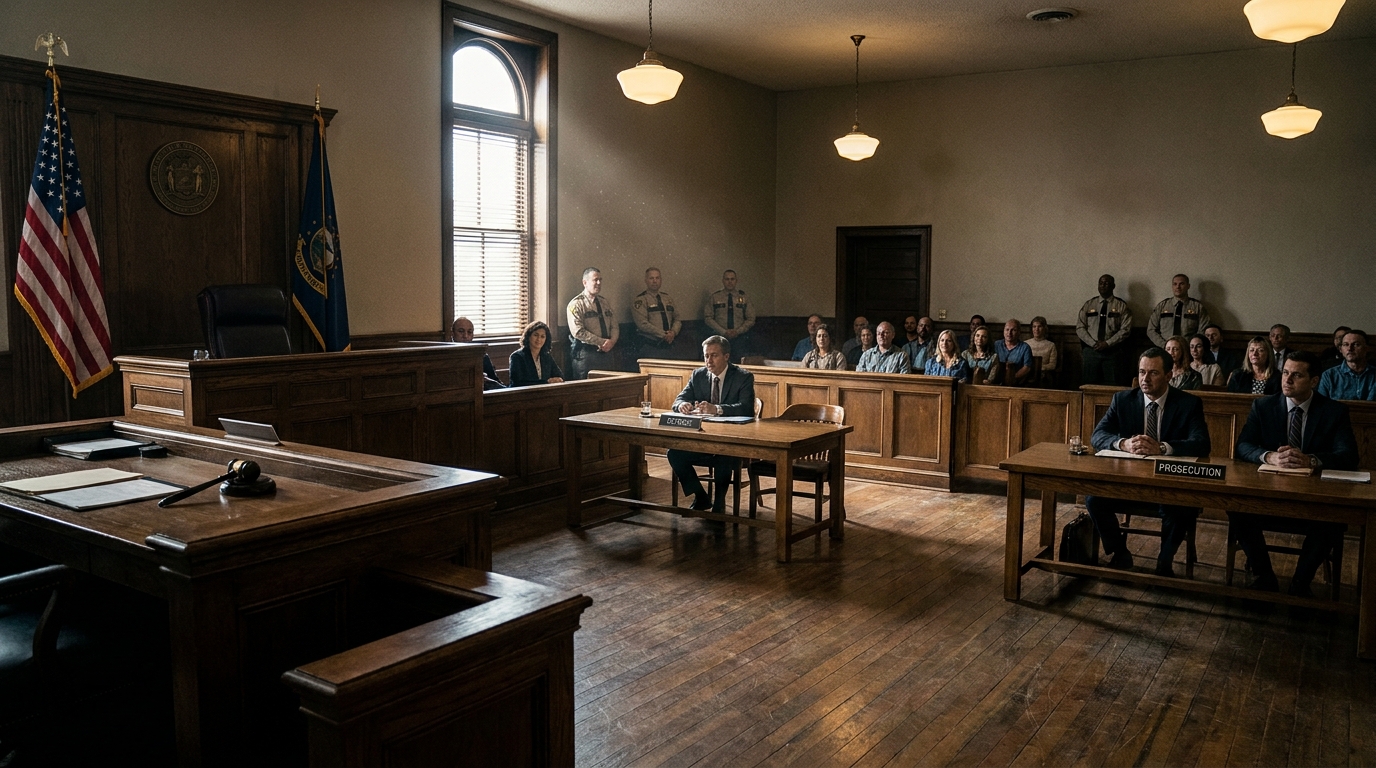
The dramatic incident occurred during a high-stakes felony fraud trial. State prosecutors were presenting a key piece of documentary evidence—a signed contract that directly linked the defendant to the illegal financial scheme. As the prosecutor handed a copy of the exhibit to the defense table for review, the weight of the evidence became undeniable.
The Impulsive Destruction
Realizing that the document severely undermined his defense strategy, the defendant lost control. In a sudden outburst, he snatched the multi-page document off the table, violently ripped it into pieces, and hurled the torn paper across the courtroom floor toward the prosecution’s desk, shouting angrily at the prosecutor.
Immediate Security Takedown
The reaction from courtroom security was instantaneous. Armed sheriffs stationed nearby surged forward, grabbing the defendant and tackling him firmly onto the carpeted floor. Within seconds, he was pinned down and placed in heavy wrists and ankle restraints as bailiffs gathered the torn pieces of paper off the floor to preserve the crime scene inside the court.
Severe New Felony Charges
After restoring order, the judge ordered the jury out of the room and immediately held the defendant in criminal contempt. Beyond the contempt charge, state prosecutors filed additional felony charges for evidence tampering, obstruction of justice, and destruction of court property. The judge also ordered that all duplicate copies and digital backups of the exhibit be admitted directly into evidence.
A Costly Mistake for the Defense
This shocking outburst proved completely counterproductive. Instead of hiding his guilt, the defendant’s violent behavior demonstrated a clear consciousness of guilt to the court, ensuring that his legal situation went from bad to significantly worse in a matter of seconds.