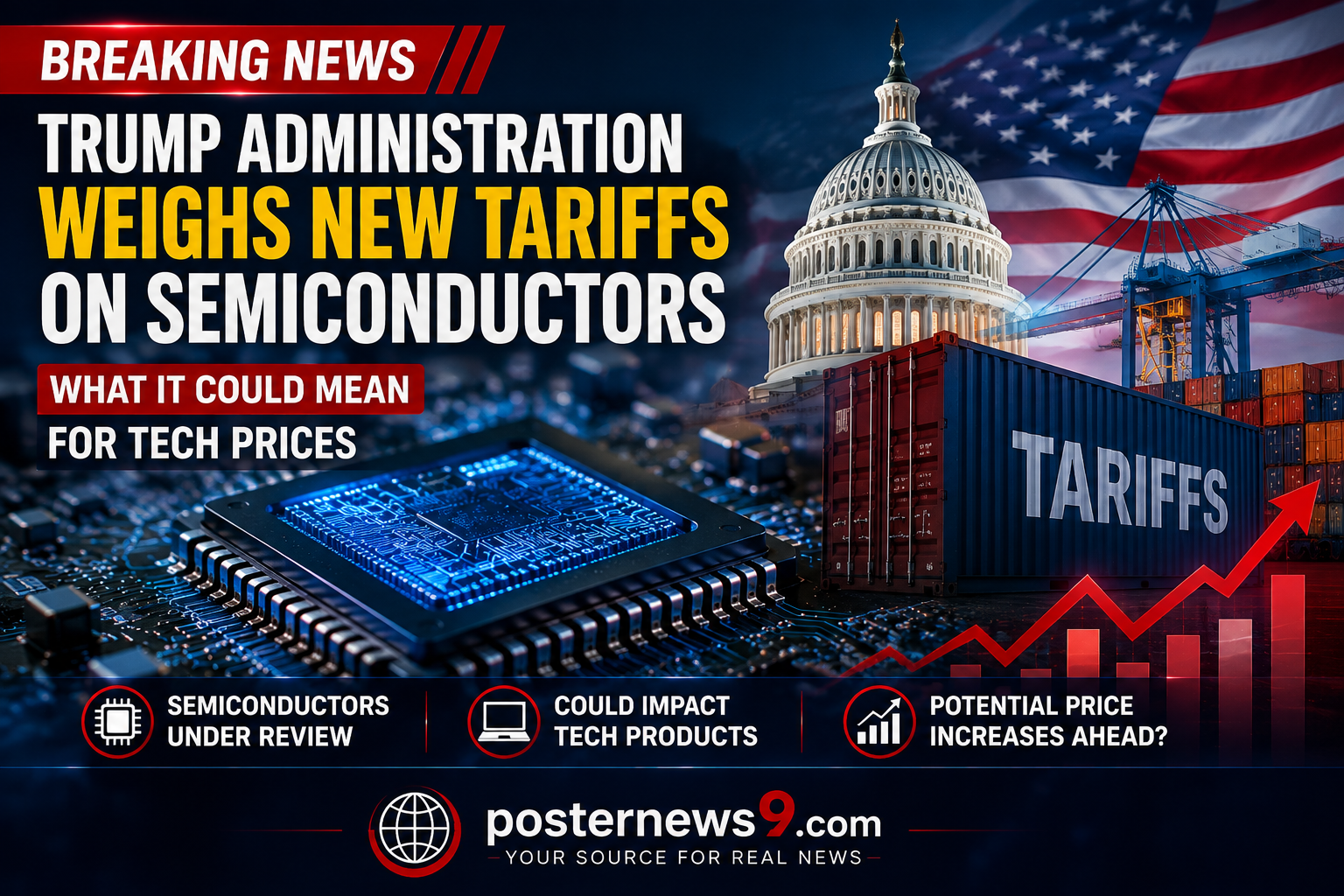
Trump Administration Weighs Sweeping New Semiconductor Tariffs — What It Could Mean for Tech Prices
WASHINGTON — The Trump administration is reportedly considering a sweeping new round of tariffs on imported semiconductors and technology products, a move that could have major implications for the U.S. technology industry and global supply chains.
According to a report cited by Reuters on Thursday, the potential tariffs could extend beyond individual computer chips and cover products containing semiconductors, including laptops, gaming consoles and data-center servers. The proposal remains under discussion and could still change before any final action is announced.
One approach reportedly under consideration would connect tariff relief to investment in U.S. semiconductor manufacturing. Commerce Secretary Howard Lutnick has backed an approach that could give foreign companies more favorable treatment when they commit to producing chips in the United States.
The latest discussion is part of a broader effort by the administration to expand domestic semiconductor manufacturing. Earlier this year, President Donald Trump invoked Section 232 and imposed a 25% tariff on a narrow category of advanced computing chips, while allowing exemptions for certain imports supporting expansion of the U.S. technology supply chain. The January action also contemplated a second phase involving broader semiconductor tariffs.
The administration has also recently acted on polysilicon, a material important to semiconductor and solar supply chains. On August 6, Trump ordered a 15% tariff on specified polysilicon derivative imports, scheduled to take effect on December 4, 2026, alongside other measures intended to encourage U.S. production.
Could consumers pay more?
That remains uncertain.
If broader semiconductor tariffs ultimately take effect, companies importing affected chips or finished technology products could face higher costs. How much of those costs would reach consumers would depend on the final tariff structure, exemptions, company responses and supply-chain adjustments.
Products potentially exposed could include computers and laptops, gaming hardware, data-center equipment and other electronics containing imported semiconductors, according to the current reporting.
What happens next?
For now, no final version of the newly reported broad tariff plan has been announced. Reuters noted that a White House official cautioned against treating discussions of unannounced tariffs as definitive, and the proposal could be revised in the coming weeks or months.