PART5
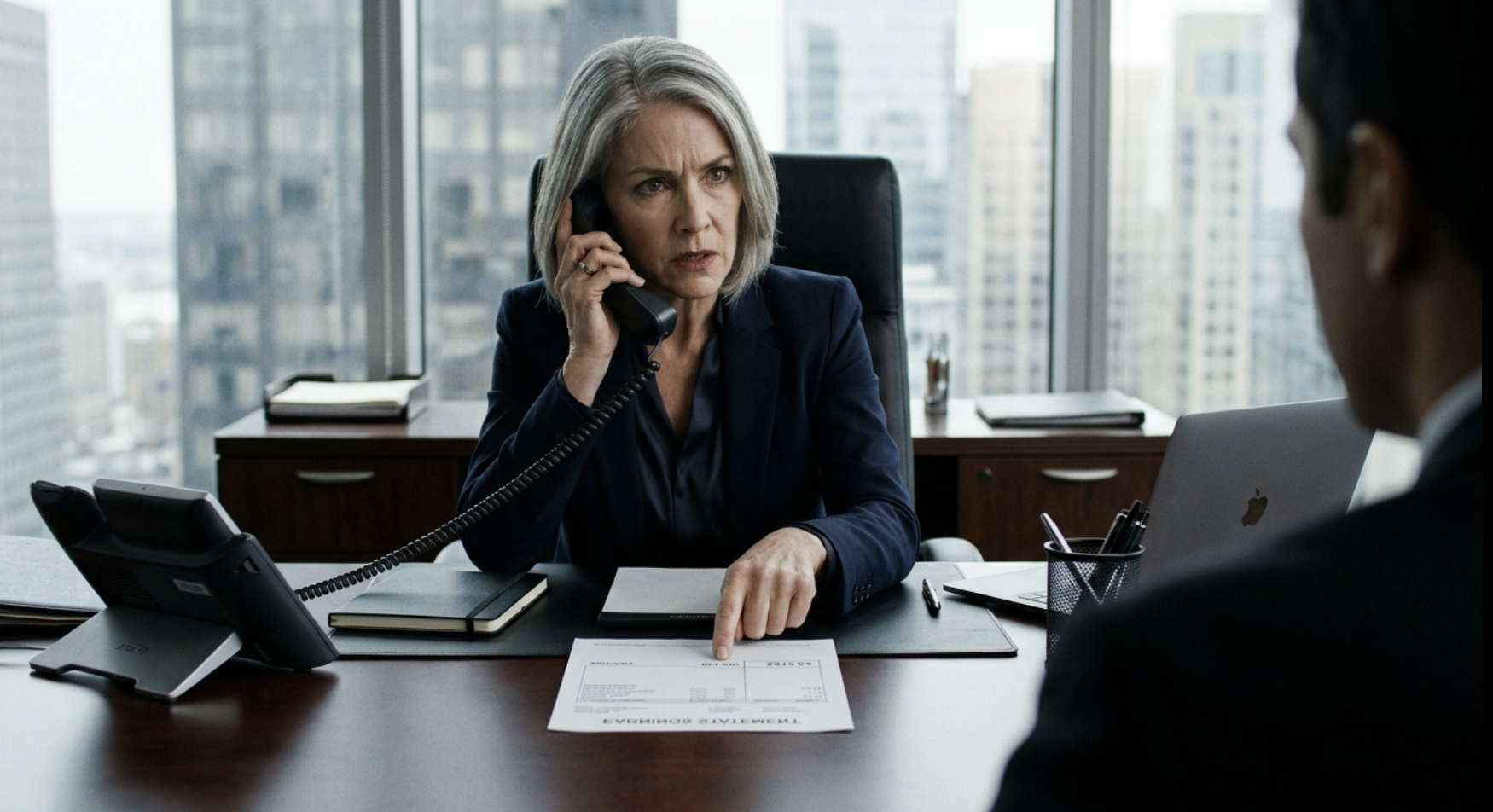
“Review it first. Verify his earned compensation, reconstruct every adjustment, and identify what must be corrected.”
Derek cleared his throat.
“Claire, that could create a serious precedent.”
She looked at him.
“Good. Perhaps the precedent should be that we investigate before we take money from people.”
I thought that was where the meeting would end.
I expected Claire to apologize again, ask HR to review my final paycheck, and allow me to leave.
I had another job waiting for me. I wanted to go home, tell Sarah what had happened, and put six difficult years behind me.
But when Martin closed his laptop, Claire asked one more question.
“Evan, do you have copies of the original Apex documentation?”
“Yes.”
“Everything?”
“Everything I collected during the service call.”
“Would you be willing to provide copies to the independent review team?”
“Of course.”
“And one more thing. Did anyone tell you not to retain those documents?”
I thought about it.
Derek had called my documentation excessive more than once. He had told me that taking so many photographs slowed down service calls. After Apex, he had instructed me to upload only the final service summary because the internal responsibility form was the official project record.
But he hadn’t explicitly told me to destroy my files.
“No,” I said. “Nobody told me to delete them.”
“Good. Keep the originals. Don’t alter them. We’ll arrange a secure transfer of copies.”
Blake stood again.
“This is becoming absurd. We are going to conduct a forensic review of a routine project because an employee decided he didn’t like a deduction?”
Claire’s expression became cold.
“No, Blake. We’re conducting a review because I have evidence that an employee may have been charged for a problem he didn’t cause, and nobody in this room can explain who authorized the process.”
She paused.
“And because our CFO has identified dozens of other employees whose pay records may require examination.”
Blake stared at her.
“You’re taking his word over mine?”
“I’m taking the evidence seriously. If the evidence supports your position, the review will show that. If it doesn’t, we will deal with that too.”
She turned toward Martin.
“Please have the independent team report directly to me and the board’s audit committee. Neither Operations nor HR should control the scope of the investigation.”
Martin nodded.
“Understood.”
That sentence changed the room.
Until then, Blake had acted as though the investigation was a temporary inconvenience he could manage.
Now, he understood that he wouldn’t be controlling what the investigators examined or what they reported.
Claire turned back to me.
“Evan, I know you’ve resigned. I’m not going to pressure you to stay. But I want you to understand something. Whatever we discover, you should not have had to resign to get someone to look at your paycheck.”
I looked at the cardboard box in my mind, sitting beneath my desk with my old mug and screwdrivers.
“I appreciate that,” I said.
Then I stood.
“Is there anything else you need from me today?”
Claire shook her head.
“Not right now. Someone from the review team will contact you about the documents. In the meantime, please keep copies of everything related to your compensation and the Apex assignment.”
I nodded.
I had come into her office expecting an uncomfortable conversation.
I left knowing that the company I’d spent six years serving might be forced to confront something much larger than my resignation.
But I didn’t yet know how large.
That evening, I drove home with my hands gripping the steering wheel a little too tightly.
Sarah was in the kitchen when I walked through the door. Lily sat at the table drawing a picture of a purple butterfly.
Sarah looked up.
“How did it go?”
I set my keys on the counter.
“I think something happened.”
She put down the dish towel.
“What kind of something?”
I told her everything.
The meeting. Blake’s excuses. The CFO’s spreadsheet. The sixty employees. The independent investigation.
Sarah listened without interrupting.
When I finished, she glanced at Lily, then lowered her voice.
“Does this mean they’re going to give you your money back?”
“I don’t know.”
“Could they?”
“If the adjustments weren’t justified, they should correct them. But I don’t know how long it’ll take.”
She looked at me for several seconds.
“Evan, I don’t need them to apologize in a conference room. I need us to stop living like one unexpected bill is going to ruin everything.”
I walked over and took her hand.
“I know.”
“And I don’t want you going back there because they suddenly decide they need you.”
“I won’t.”
“Promise me.”
I looked into her eyes.
“I promise.”
From the table, Lily held up her drawing.
“Daddy, look! I made a butterfly for your new office.”
I walked over and examined it.
The butterfly had enormous purple wings, six tiny legs, and a smiling face.
“It’s beautiful.”
“Will you put it on your desk?”
“Absolutely.”
Sarah turned away for a moment, wiping her eyes.
That small drawing reminded me why I had resigned in the first place.
It wasn’t because I hated engineering.
It wasn’t because I wanted revenge on Derek or Blake.
I wanted to come home and be a father who could say yes when his daughter asked to attend art class.
I wanted my wife to shop for groceries without worrying that our account might be empty.
I wanted to do honest work and receive the compensation I had earned.
That shouldn’t have been too much to ask.
And I had no intention of forgetting it.
Three days later, my phone rang while I was unpacking my tools at the new company.
The number was unfamiliar.
“Evan Carter?”
“Yes.”
“My name is Natalie Brooks. I’m with the independent review team retained by Sterling Robotics. Claire Sterling has asked us to examine the compensation adjustments associated with the Apex Logistics project and related payroll practices.”
I stepped away from the workbench.
“All right.”
“We’ve reviewed the service report and several supporting records provided by the company. We would like to speak with you about the timeline of the assignment.”
“That’s fine.”
“Do you still have the photographs you took at the customer site?”
“Yes.”
“Would you be able to provide the original files, including the timestamps and metadata?”
“I have them backed up.”
“Excellent. Please don’t edit or rename the originals. We’ll send you instructions for transferring copies securely.”
I agreed.
Then she asked a question I hadn’t expected.
“Mr. Carter, did you receive any written explanation identifying the specific amount of loss that Sterling Robotics attributed to your actions?”
“No. Derek said the project had additional costs and that I was responsible for the outcome.”
“Did he provide an itemized calculation?”
“No.”
“Did anyone explain how the amount charged to you was calculated?”
“No.”
There was a pause as she typed.
“Thank you. We may need to contact you again.”
Before ending the call, she added something that stayed with me.
“We’re also examining whether the same adjustment codes were used in circumstances unrelated to employee performance.”
“What does that mean?”
“It means we’re not assuming your case is isolated.”
After the call, I sat quietly for a moment.
For six years, I had assumed that the deductions were simply the price of keeping my job.
Now, someone was finally examining whether the system itself had been designed in a way that made employees afraid to question it.
I returned to my workbench and began organizing the Apex files.
There were photographs of the mismatched sensors, pictures showing the cable routes, copies of the service report, and messages documenting the emergency call.
Everything had timestamps.
Everything told the same story.
And for the first time, I wasn’t trying to convince a manager who had already made up his mind.
I was giving evidence to people whose job was to examine it.
What I didn’t know was that, on the same afternoon, another Sterling Robotics employee had contacted the review team with a complaint that sounded remarkably familiar.
His name was Marcus Reed.
And unlike me, Marcus had never resigned.
He had stayed at Sterling for eleven years.
He had kept every disputed pay stub, every email, and every written warning.
And in the final email he sent to the investigators, he included a spreadsheet with a subject line that made Natalie Brooks immediately request an emergency meeting with the audit committee.
The subject line read:
“Thirty-Seven Adjustments. Three Years. One Manager.”
And the manager’s name wasn’t Derek Vance.
It was Blake Sterling.



One Comment on “PART5: My CEO Saw My $312 Paycheck and Launched an Investigation—What She Discovered About Her Own Brother Shocked the Entire Company”
Comments are closed.