Curtis looked at the open rear door. “What is in the folder?”
“Ask your wife,” I said.
He did not move toward Bridget. “Bridget?”
“It is paperwork.”
“For what?”
She folded the church bulletin in half, then unfolded it again. “This is not the place to do this.”
“You said you were coming to talk to me about paperwork,” Curtis said.
“What paperwork?”
I held up the folder. “The paperwork you were supposed to sign Tuesday.”
Curtis looked at me. “She told me it was related to your care.”
“That is not what she told Denise.”
Bridget’s face changed again. This time she did not manage to make it patient.
“You were listening to a private conversation,” she said.
“I was in my hallway.”
“You were eavesdropping.”
“I was walking to the bathroom.”
Curtis rubbed his forehead. “What did you tell Denise?”
Bridget looked at him. “I told her your mother needs more support.”
“That is not what I asked.”
“You know how Denise is. She makes everything sound worse.”
“Did you tell her Mom would be at Fairview by Christmas?”
That was enough for me.
I opened the folder. I did not try to read the pages. I knew better than to pretend I could. But I saw the name Fairview printed on the top sheet, along with the documents Bridget had called Medicare forms.
Curtis took one step toward me.
“Mom, let me see that.”
“Who is Rosalind?”
“You have met her.”
“The bridge lady?”
“She is the person who reads my mail.”
Bridget shook her head. “This is ridiculous. She is filling your head with suspicion.”
“No,” I said. “You filled my house with papers and expected me not to understand them.”
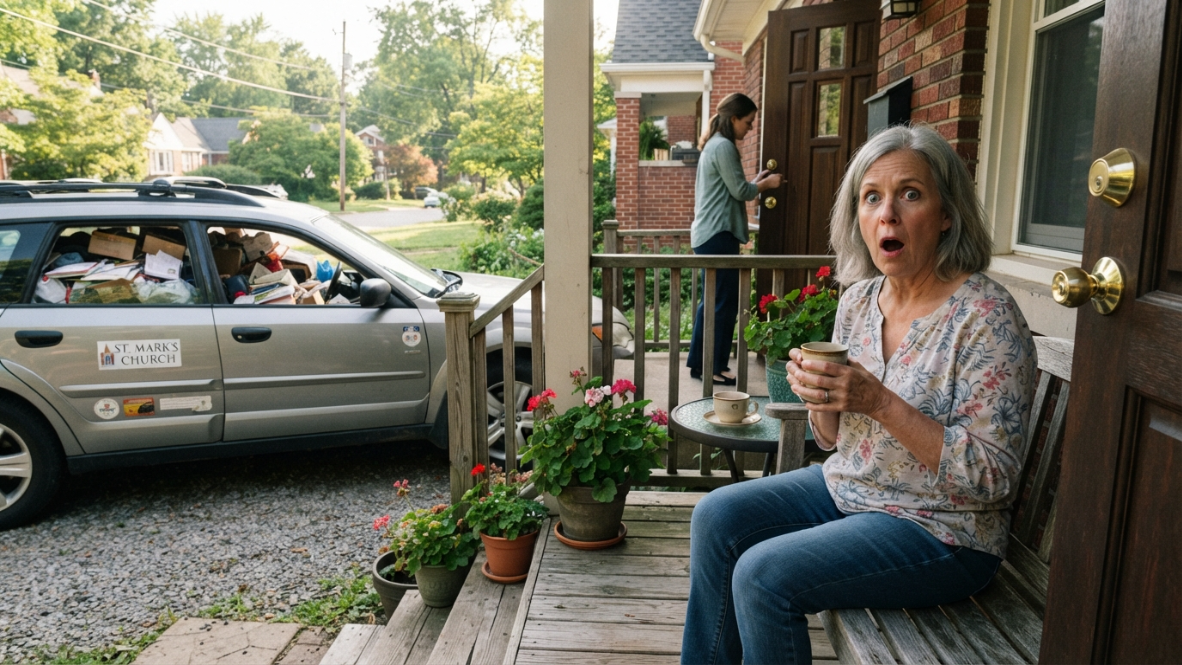
Curtis looked at the silver chest. “Why is that in the car?”
Bridget answered too quickly. “I was moving things out of the way.”
“Out of the way for what?”
She looked at him with an expression I had seen many times over the past year, the one that meant she expected him to take her side without needing the whole story.
“Curtis, I have been doing everything here.”
“That is not what she thinks.”
“I did not say that.”
“You do not have to. She changed the locks.”
I kept my voice steady. “I changed them because I heard you planning to put me in Fairview and take the house.”
“No one was taking the house,” Curtis said.
“Then you were not supposed to sign anything.”
He looked down.
That was the first answer I got from him.
I had spent six months refusing to sign papers I could not read. He had been scheduled to sign the last one because Bridget told him it was necessary. Whether he understood the document or not, he had agreed to put his name on it. I did not need to guess at his intentions to know I could not let that happen.
“I am not signing anything,” he said.
Bridget turned toward him. “You do not know what you are saying.”
“I know I am not signing something I have not read.”
“You have read it.”
“Not with Mom.”
“You said you trusted me.”