My Brother Cremated Dad Before I Could Say Goodbye, Then Claimed There Was No Will—Until a Crematorium Found the Sealed Envelope With My Name on It…
PART 3
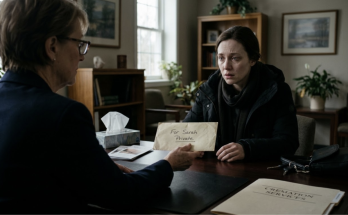
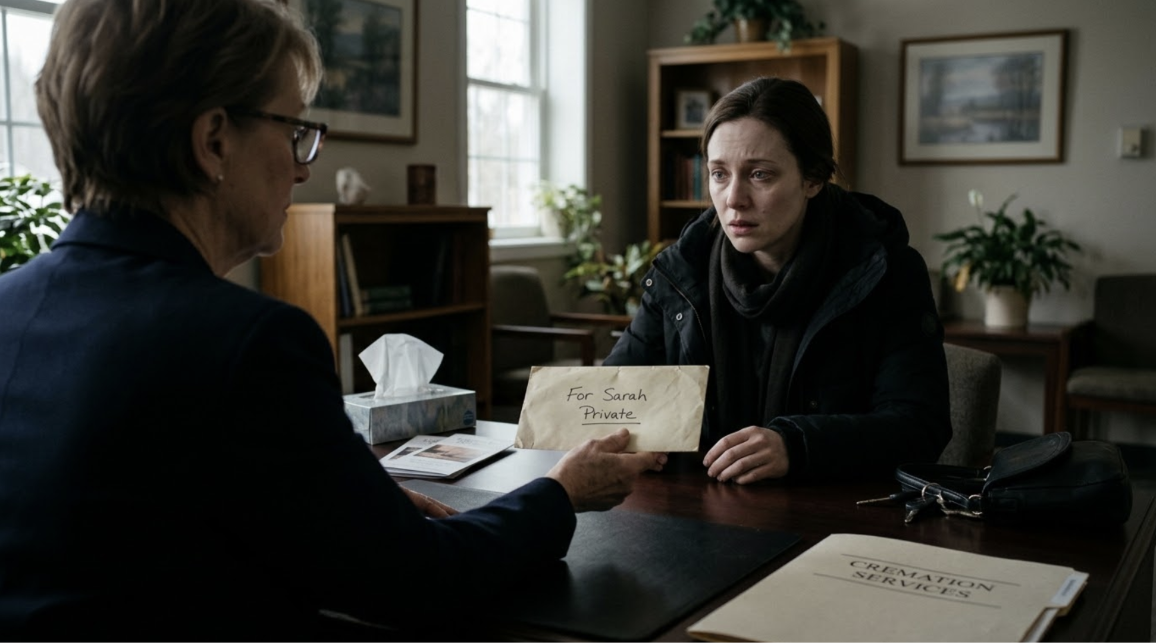
I looked at Pete. “Did my brother know about this envelope?” Pete shook his head.
“Not according to our records. Your father was wearing that jacket when he arrived. We documented the belongings, and the envelope was discovered during our standard inspection.”
“Can you tell me anything else?” He hesitated.
“Only that your father seemed very particular about keeping that jacket with him. Your brother brought him in, but your father was still wearing it when he was transferred to our care.”
I looked down at the letter again. My hands were trembling.
I started reading.
November 3rd.
My eyes filled with tears.
Dad had never been a man who apologized easily. He was a quiet, stubborn man who believed that providing for his family was the same thing as telling them he loved them.
He fixed my car without being asked. He drove through snowstorms to attend my school plays. He kept every birthday card I’d ever sent him in a drawer beside his bed.
But something happened inside that office.
My stomach tightened.
The bank manager asked me whether I understood that I was transferring control of several accounts to Ray. I told her I had not agreed to transfer anything. Ray became angry.
He said I was confused.
He said I had been forgetting things.
Janet, I may be old, but I am not confused.
I covered my mouth.
The next paragraph was even worse.
Your brother brought documents for me to sign. He said they were routine banking forms. When I refused, he told me that I was making things difficult for everyone.
Then he said something I cannot forget.
He said you would never know what happened because you lived too far away.
I felt something cold move through my chest.
I read that sentence three times.
Then I turned the page.
I asked him why he kept bringing up your distance. He told me that you had your own life and your own problems. He said you didn’t need to be involved in my affairs.
I told him that being six hours away did not make you any less my daughter.
He didn’t answer.
My tears fell onto the paper.
I had spent years believing that Ray was simply the child who stayed close to Dad while I built my life somewhere else.
Ray attended doctor’s appointments. Ray picked up groceries. Ray took Dad to the barber.
And I had been grateful.
I had even sent Ray money several times to help with Dad’s expenses.
I’d never questioned where it went.
The letter continued.
I went back to the bank two days later, alone. I spoke with the manager, and she helped me correct the documents Ray had brought.
I also met with an attorney.
I sat straighter.
An attorney.
Dad had secretly hired an attorney.
Janet, I have prepared a new estate plan. It is legal, signed, witnessed, and registered according to the requirements of this county.
I glanced at the official county document beside the letter.
My fingers reached for it.
It was a certified copy of a document titled:
LAST WILL AND TESTAMENT OF WILLIAM MORROW.
My father’s full name.
His signature.
Two witnesses.
A notary seal.
And a date.
November 6th.
Three days after the bank appointment.
My heart began pounding.
I looked back at the letter.
I know Ray will tell you there is no will. He may even believe that himself.
But there is one.
And I have made arrangements to ensure that it cannot simply disappear.
I swallowed.
Then I reached the next paragraph.
The house is not what you think it is.
I stopped reading.
The house.
The little white house with the blue shutters where I had grown up.
The house where Mom had planted roses along the front walkway.
The house Ray had always claimed would eventually belong to him because he was the one who stayed in town.
Dad continued:
Your mother and I bought that house together. After she died, I placed it into a trust because I wanted to protect it from unnecessary complications.
Ray knows about the house, but he does not know about the trust.
He believes it is worth approximately $310,000.
It is not the only property I own.
I stared at the page.
There was another property?
I had never heard about another property.
Dad had lived modestly. He drove a twelve-year-old pickup truck, bought his clothes from discount stores, and complained whenever the electricity bill went up by ten dollars.
I turned the page.
When your grandfather passed away, he left me a small parcel of land outside town. I never sold it. Over the years, the area developed, and the property became considerably more valuable.
I have also maintained several investment accounts that I never discussed with either of you.
I felt dizzy.
How much money had Dad actually possessed?
And why had he hidden it?
Then I reached the sentence that made me put the letter down.
Ray has already withdrawn $18,500 from one of my accounts.
I stared at the number.
Eighteen thousand five hundred dollars.
I immediately remembered something.
Three months earlier, Dad had called me and asked whether I had received a transfer from him.
I told him no.
He had gone quiet.
Then he said, “Never mind. I must have made a mistake.”
At the time, I assumed he had confused the numbers.
Now I understood.
I picked up the letter again.
I discovered the withdrawal when I reviewed my statements. Ray told me he used the money to repair the roof and replace the heating system.
The roof was never repaired.
The heating system is the same one I have had for fourteen years.
My hands tightened around the paper.
I wanted to call Ray immediately.
I wanted to scream at him.
I wanted to ask how he could stand beside our father’s grave—or what should have been our father’s grave—and pretend he had done everything out of love.
But I kept reading.
Because Dad wasn’t finished.
Janet, I am not writing this because I want you to hate your brother.
He is still your brother. I remember when you were children and he would stand outside your bedroom whenever you had nightmares. I remember how you two used to fight over the last piece of apple pie.
But somewhere along the way, Ray began believing that everything I owned was already his.
I cannot change him.
I can only make sure that he does not take what was never his.
I wiped my eyes.
Then came the final page.
The official document in this envelope is a certified copy of my will.
The original is held by my attorney, Margaret Ellis.
Do not confront Ray until you have spoken with her.
There is another envelope in this package. It is addressed to him.
Give it to Margaret. She will know what to do.
I looked at the smaller envelope.
“For Ray. Open only in front of a lawyer.”
My father’s handwriting looked unusually firm.
At the bottom of the letter, there was one final paragraph.
There is one more thing you need to know, sweetheart.
The morning I went to the bank, Ray told me something that frightened me.
He said he had already spoken to someone about selling the house.
And he said the buyer was willing to pay cash.
Janet, I never agreed to sell.
If something happens to me before this is resolved, please find out who that buyer is.
I have a feeling Ray is not working alone.
I love you, sweetheart. I always have.
Dad.
I couldn’t move.
For several minutes, the only sound in Pete’s office was the ticking of a wall clock.
Finally, I folded the letter carefully.
“Do you know an attorney named Margaret Ellis?” I asked.
Pete shook his head.
“No, ma’am. But I can help you make copies of everything before you leave.”
“Please.”
He nodded.
As he gathered the documents, I took out my phone.
Ray’s name was still near the top of my recent calls.
I almost pressed it.
Then I remembered Dad’s warning.
Do not confront Ray.
Instead, I searched for Margaret Ellis.
The first result was an address in the county courthouse district. A law office that had been operating for nearly forty years.
I called.
A woman answered after three rings.
“Ellis and Carter Law. How may I help you?”
“My name is Janet Morrow. I’m William Morrow’s daughter.”
There was silence.
Then her voice changed.
“Janet?”
“Yes.”
“Where are you right now?”
“I’m at the cremation center. I just received a letter from my father.”
Another pause.
Then she said something that made my blood run cold.
“Your father told me you might call. He also instructed me to contact you if he passed away before November 30th.”
I gripped the phone.
“Why November 30th?”
“Because he believed your brother was planning something, and he wanted certain legal protections in place before that date.”
“What protections?”
“I would rather explain that in person. Can you come to my office this afternoon?”
“Yes.”
“Good. Bring every document you found in your father’s jacket.”
She lowered her voice.
“And Janet?”
“Yes?”
“Do not sign anything your brother gives you. Do not agree to meet anyone about the house. And whatever you do, do not let Ray know that you have the envelope.”
My stomach dropped.
“Does he know about the will?”
“I don’t believe so.”
“Then why are you worried?”
Margaret took a slow breath.
“Because yesterday morning, someone called my office claiming to represent your father and requested a copy of his estate documents.”
“Who?”
“Your brother, Ray.”
I closed my eyes.
Of course.
He was already looking for something.
“Did you give it to him?”
“No. I told him I needed written authorization from your father.”
“But Dad is dead.”
“Exactly.”
I looked at the small envelope lying beside the certified will.
Then Margaret said something else.
“Janet, there’s something about your father’s estate that your brother may not understand. The will is important, but the trust is even more important.”
I felt my throat tighten.
“What do you mean?”
“Your father didn’t simply leave instructions about who should receive his property. He created a structure that prevents anyone from selling certain assets without the trustee’s approval.”
“Who is the trustee?”
There was a long silence.
Then Margaret answered.
“Your father named you.”
I stared at the wall.
Me?
I had never managed a trust.
I wasn’t wealthy.
I didn’t even know how much money Dad had.
“Why would he choose me?”
“Because he trusted you to protect what he spent his entire life building.”
I looked down at his letter.
For the first time since his death, I felt something other than grief.
I felt responsibility.
And beneath it, something much stronger.
Determination.
“Margaret,” I said, “I need to know everything.”
“You will.”
She paused.
“But I want you to be prepared. Your father left one more instruction. It concerns the envelope addressed to Ray.”
“What instruction?”
Margaret’s voice became very quiet.
“He specifically requested that we open it only after confirming that you had received the original letter.”
I looked at the smaller envelope.
The one my father had hidden in his jacket.
The one my brother didn’t know existed.
“Why?”
“Because your father believed Ray would deny everything.”
I swallowed.
“And what’s inside?”
Margaret didn’t answer immediately.
Then she said:
“An account of a conversation your father secretly recorded. A conversation that may explain exactly why your brother wanted him cremated so quickly.”
My entire body went cold.
“What conversation?”
“The one Ray had with your father the night before the stroke.”
I looked at Pete.
He was standing by the filing cabinet, pretending not to listen.
I lowered my voice.
“Did Dad know he was going to die?”
“No, Janet. But he knew something was wrong.”
Margaret paused.
“And according to the instructions he left me, the recording is only part of the evidence.”
I closed my eyes.
“What else is there?”
Her answer changed everything.
“Your father left us the name of the person who was supposed to buy his house.”
And then she added:
“Janet, it’s someone you know.”
I looked at the envelope addressed to Ray, and for the first time, I wondered whether my brother had been afraid of something far bigger than losing his inheritance.
I didn’t speak for several seconds.
“Someone I know?” I finally asked.
“Yes,” Margaret replied. “But I don’t want to tell you over the phone. Come to my office. Bring the envelope, and don’t open it.”
I looked at the small package lying on Pete’s desk.
My brother’s name was written across the front in Dad’s familiar handwriting.
For years, I had believed Ray was simply the son who stayed close to our father. The responsible one. The one who handled the difficult things while I lived six hours away.
Now I wasn’t sure I knew my brother at all.
“I’ll be there within an hour,” I told Margaret.
Before leaving, I asked Pete to make copies of everything. He placed the original documents in a protective folder and handed it to me.
“Your father must have loved you very much,” he said quietly.
I nodded.
“He did. I just wish I’d understood how much he was worried before it was too late.”
Pete looked down.
“There’s something else I should tell you.”
I turned around.
“When your brother brought your father here, he was in a hurry. He kept asking how quickly everything could be completed. He didn’t want a viewing, and he didn’t want a delay.”
“Did Dad say anything?”
Pete thought for a moment.
“Your father was weak, but he was conscious when he arrived. He asked me whether his jacket would remain with him until the preparation process.”
My heart tightened.
“Why?”
Pete shook his head.
“I don’t know. But when I told him we would inventory his belongings first, he looked relieved.”
I held the folder against my chest.
Suddenly, I understood something.
Dad had known there was a chance he wouldn’t get another opportunity to protect his documents.
He had put his final message where nobody would think to look.
In the jacket he was wearing.
And somehow, even after his death, he had found a way to reach me.
Margaret Ellis’s office was on the second floor of an old brick building near the courthouse.
She was a woman in her late sixties with silver hair, reading glasses, and the kind of expression that made people think carefully before answering her questions.
When I entered, she stood immediately.
“Janet.”
She came around her desk and hugged me.
“I’m so sorry about your father.”
I started crying.
Not the quiet tears I’d shed in Pete’s office.
These were the tears I’d been holding back since the morning Ray called.
Margaret let me cry.
When I finally sat down, she placed a glass of water in front of me.
Then she looked at the folder.
“Did you bring everything?”
I nodded.
She examined the certified will, then the letter.
Finally, her eyes settled on the small envelope.
“That’s the one.”
“What’s inside?”
“Let’s find out.”
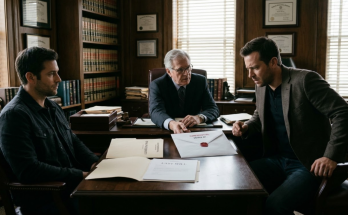
She called her paralegal, who brought in another attorney named Daniel Carter.
Margaret explained that Dad had specifically requested two legal witnesses when the envelope was opened.
Daniel closed the office door.
Margaret carefully examined the seal before cutting it.