PART 4
By Friday evening, my father had called me eleven times.
I knew because I counted.
The first three calls were angry. The next four were carefully worded warnings about embarrassment, family reputation, and my grandmother’s age. The final four came with a strange urgency I had never heard in his voice before.
On the last voicemail, he said, “Daniel, whatever you think you’ve discovered, don’t sign anything. You don’t understand what you’re getting yourself involved in.”
I replayed that message twice.
Then I put my phone away.
For the first time, I wondered whether Dad knew something about Grandma’s money that the rest of us didn’t.
Saturday morning, I drove back to Wyoming.
When I reached the cabin, Grandma was sitting beside the window with a blanket over her knees. Her white hair was neatly combed, and a pot of tea sat on the table beside her.
She looked pleased to see me, but I noticed how carefully she pushed herself up from her chair.
“There’s my boy.”
I hugged her longer than usual.
“You should have told me you weren’t feeling well.”
She smiled against my shoulder.
“And miss the opportunity to have you worry about me? Never.”
I pulled back.
“Grandma.”
Her smile faded a little.
“I know, sweetheart. I know.”
We sat together for a while, drinking tea and watching the snow fall over the pine trees.
Eventually, she reached beneath the coffee table and pulled out an old wooden box.
It was the same box I remembered seeing in Grandpa’s study when I was a child. Its brass corners had darkened with age, and a small brass key hung from a ribbon around Grandma’s neck.
She unlocked it.
Inside were photographs, letters, property documents, and a thick folder bearing my grandfather’s handwriting.
She placed the folder in front of me.
“Your grandfather started his business with almost nothing,” she began. “He repaired farm equipment, sold tools, and eventually opened a small supply company. He worked hard, but he never cared much about becoming rich.”
I remembered Grandpa Walter as a quiet man who smelled of cedarwood and coffee. He’d taught me to use a hammer when I was seven and once spent an entire afternoon helping me build a birdhouse that leaned so badly it looked like it might collapse in the wind.
He’d never talked about money.
“He sold that business when he was sixty,” Grandma continued. “The money was invested over the years. Some went into property, some into other investments, and some was placed into trusts. We lived simply because we liked our life that way.”
I turned the first page.
There were account summaries, legal agreements, and records of investments going back decades.
The figures made my head spin.
“Grandma, how much money did you and Grandpa actually have?”
She took a sip of tea.
“Enough to be comfortable.”
I gave her a look.
She laughed softly.
“All right. Enough to be more than comfortable.”
“Six million dollars for each of us?”
“That was the amount I decided to distribute directly to the five beneficiaries named in my current estate plan.”
I looked up.
“Five?”
“Yes, dear. You, your father, your mother, Eric, and Olivia.”
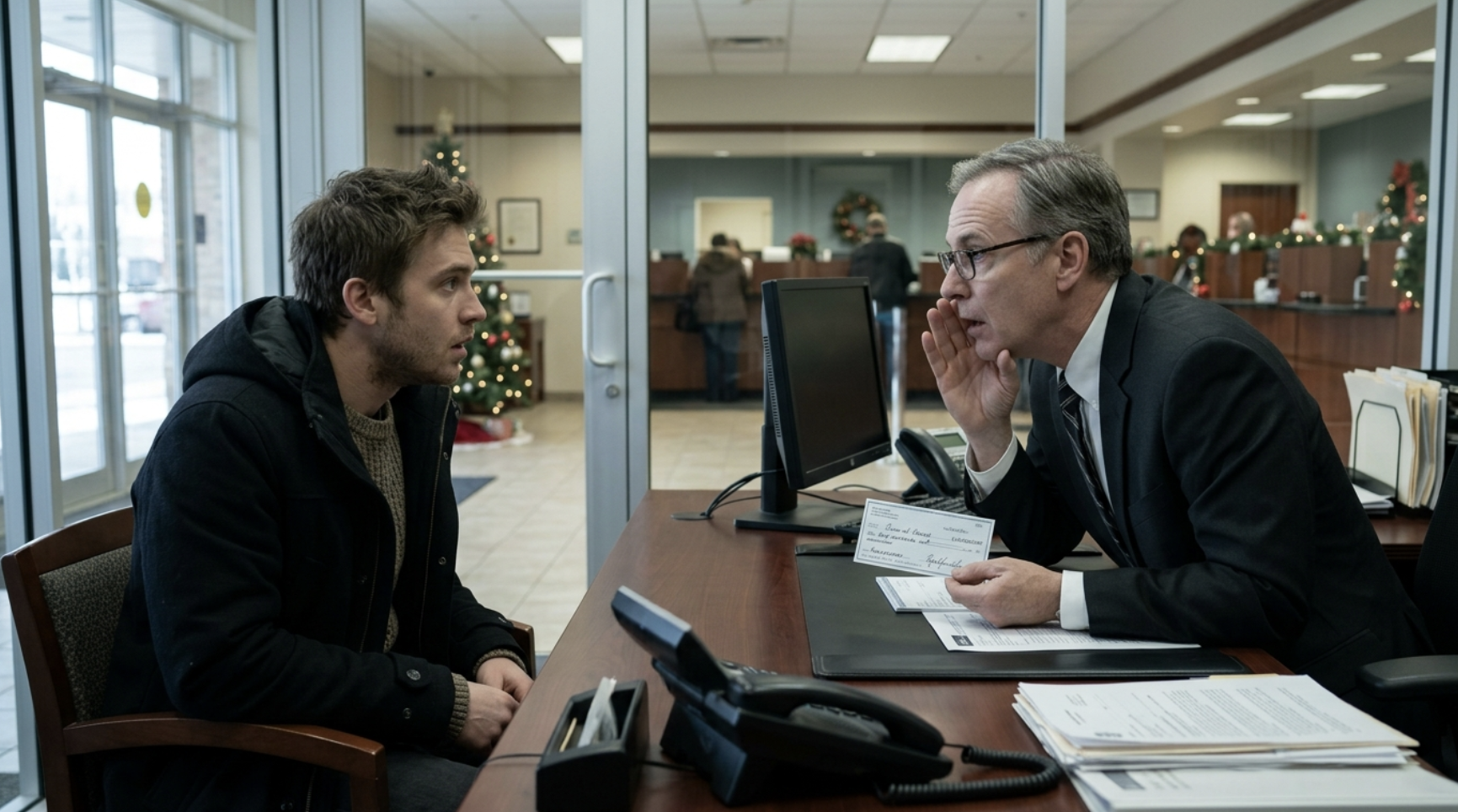
“But you said four at the bank—”
“The bank manager was discussing the four other family members besides you. I imagine you misunderstood one another.”
I nodded, embarrassed.
Then I looked at the documents again.
There was something else.
A property description listed a large tract of land in northern Wyoming. The legal description included the area surrounding Grandma’s cabin and extended far beyond the trees I could see from the porch.
“What’s this?”
She leaned closer.
“Your grandfather bought that land decades ago. At the time, everyone thought he was foolish. It was remote, difficult to access, and covered in trees. He liked the quiet.”
I looked at the map.
The property covered thousands of acres.
“Grandma, how much is this land worth?”
“That depends on what someone wants to do with it. Some of it is protected woodland. Some has development restrictions. Some contains mineral rights that your grandfather retained.”
She paused.
“Your grandfather always said land should be valued for what it can give future generations, not merely what someone might pay for it tomorrow.”
I turned another page.
Then I found the document.
It was a recent appraisal, accompanied by an attorney’s letter.
My eyes moved down the page.
I read the estimated valuation once.
Then again.
I couldn’t make sense of the number.
“Grandma.”
“Yes?”
“Is this saying the property and associated rights are worth more than forty million dollars?”
She didn’t look surprised.
“Approximately, according to that appraisal. The final value would depend on the assets involved, restrictions, market conditions, and any future transactions.”
I sat back.
Forty million dollars.
And that was separate from the investments that had funded the checks.
“Why didn’t you ever tell anyone?”
“Because I didn’t want my grandchildren growing up believing they were entitled to wealth they hadn’t earned.”
She reached for my hand.
“I wanted you to learn how to work, how to treat people, and how to build a life you could be proud of. Your grandfather and I had money, Daniel. But money was never the thing we wanted to leave behind most.”
I swallowed.
“What did you want to leave behind?”
She squeezed my hand.
“People who remember that kindness matters, even when there is nothing to gain from it.”
I looked away because my eyes were beginning to sting.
Then she opened a second folder.
“This is the part your father may have been looking for.”
Inside were copies of correspondence between Grandpa and an attorney, along with records of an offer to purchase part of the property.
The offer had been made years earlier.
The proposed buyer was a development company interested in the land’s potential.
At the bottom of one letter was my father’s name.
I recognized his signature immediately.
I stared at it.
“Why is Dad’s name here?”


